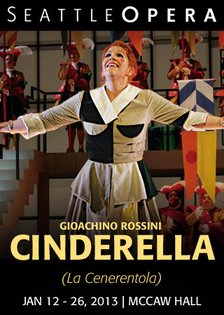
On Sunday, 13 January, it was time for my wife and me (opera novices) to be re-introduced to Gioachino Antonio Rossini, the  composer whose nickname was “The Italian Mozart.” We were both familiar with The Barber of Seville, but it was so long ago, we can hardly be sure of when, where and what. So off we drove to McCaw Hall not knowing what to expect to see and hear at the Seattle Opera’s matinee performance of Cinderella (La Cenerentola)—almost 200 years after it premiered at Teatro Valle, Rome, 25 January 1817.

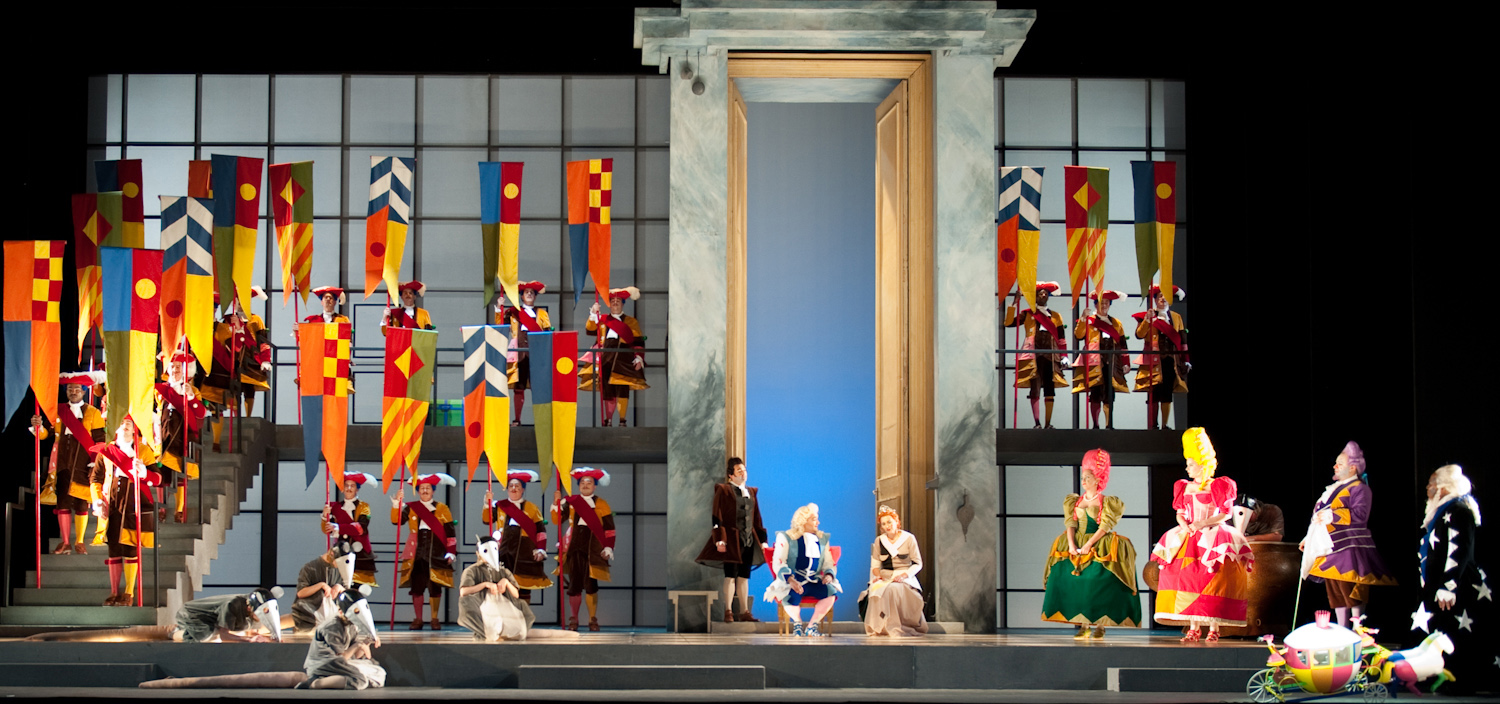
Prince Ramiro wins Cinderella in Seattle Opera’s “La Cenerentola,” with sets and costumes designed by Joan Guillén – Photo © Elise Bakketun
It turns out that Rossini’s Cinderella is a romantic comedy of the bel canto (“Beautiful Singing”) kind. The story was altered by librettist Jacopo Ferretti both in characters and in plot, but yes, in the end, the prince does get the lovely, virtuous Cinderella as his bride. This takes two acts stretched over three hours (including a half-hour intermission). During the pursuit, there are lots of laughs and some extraordinary singing.
The basic premise of the opera, writes Spreight Jenkins, General Director of the Seattle Opera, is that the prince wants to marry someone who loves him for himself, not his position, power or wealth. That romantic ideal still plays well in 2013 in Western society, does it not? Cinderella, called Angelina in this opera, is a forward-looking person who also will marry only for love but wants respect, too. She is not a male-dominated person, and she is not ambitious to become a princess. She stands up for herself, knows what she wants, and wins it fair and square on her terms—her man must be willing to make an effort to win her. This idea of feminity is still modern and plays well in 2013 in America and elsewhere, does it not? Jenkins writes in Encore, “There’s a lot of humor, but we see in Angelina a far more recognizable and believable young woman than many created in the nineteenth century. She is generous when she wins, and altogether she is a really charming person who might fit very well into the twenty-first century.”
Here’s what the bel canto style meant when it was dominant from the 18th century until about 1840, according to the experts at Wikipedia:
- an impeccable legato production throughout the singer’s (seamless) range
- the use of a light tone in the higher registers
- an agile, flexible technique capable of dispatching ornate embellishments
- the ability to execute fast, accurate divisions
- the avoidance of aspirates and eschewing a loose vibrato
- a pleasing, well-focused timbre
- a clean attack
- limpid diction
- graceful phrasing rooted in a complete mastery of breath control

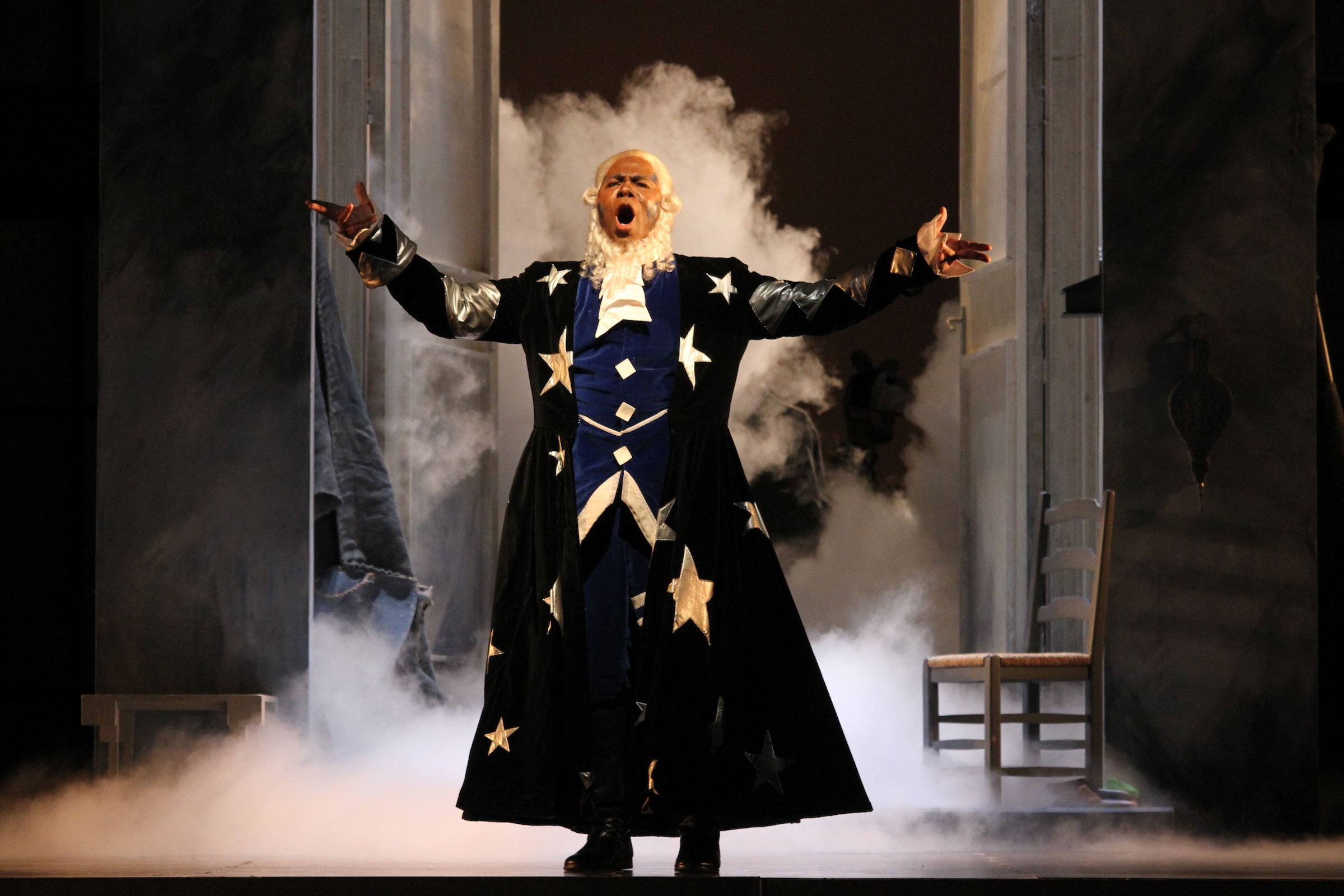
Alidoro (Arthur Woodleyj), tutor to Prince Ramiro, has other plans for Cinderella – Photo by Alan Alabastro.
The music was written to show off the exceptional quality of the singers’ voices. I especially enjoyed the various ensembles. The precision of the attacks, phrasing, and breath control were remarkable and often, as intended, funny! I imagine it would be quite challenging and possibly exhausting to sing for so long in that style. Among the voices I enjoyed the most were those of Angelina (Cinderella), mezzo-soprano; Alidoro, bass; Dandini, baritone; and Don Magnifico, bass.

Courtesy of Seattle Symphony & Opera Players’ Organization
I enjoyed listening to the orchestra, too, hearing and watching how the music from the pit matched the action on stage. It’s great fun to play trumpet in the orchestra of a musical or an opera. I did both long ago on the college level—but now I’m just a happy spectator. I wonder if any of my trumpet students will ever have that wonderful experience. I hope so. That would please me, as did this . 😉 Please click on any photo to enlarge it:
-

-
Daniela Pini (Cenerentola) – Photo © Elise Bakketun
-

-
Father and daughters plot for one to wed the prince – Dana Pundt (Clorinda), Patrick Carfizzi (Don Magnifico), Sarah Larsen (Tisbe), and Daniela Pini (Cenerentola) – Photo © Alan Alabastro
-
-
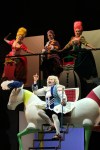
The real valet, Dandini (Brett Polegato), pretending to be the prince, invites Tisbe (Sarah Larsen), Don Magnifico (Patrick Carfizzi), and Clorinda (Dana Pundt) to his ball. – Photo by Alan Alabastro
-

-
Gioachino Rossini, painted c. 1815 by Vincenzo Camuccini
-

-
Portrait of Gioachino Rossini in 1820, International Museum and Library of Music, Bologna, Italy
-
-
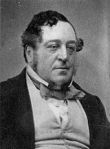
Photograph of Gioachino Rossini (Ransom Humanities Research Center, The University of Texas at Austin), USA
-

-
Gioachino Rossini, photographed by Félix Nadar, 1858
-

-
Gioachino Rossini, photographed by Étienne Carjat, 1865
-
-
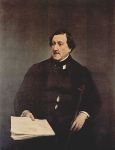
Portrait of Gioachino Rossini by Francesco Hayez, 1870
Pinacoteca di Brera, Milan, Italy
-

-
Rossini’s now-empty tomb at Père Lachaise Cemetery in Paris, France
-

-
Rossini’s final resting place, in the Basilica of Santa Croce, Florence, Italy



 Glenn's Trumpet Notes