
In Paris, there’s a music museum. A friend told me about it several years ago, and finally, I found it and went to see it on 7 May—the Musee de la Musique in the 19th arrondissement, northeast of the Louvre and Eiffel Tower.
A docent on the second floor, who plays trumpet, told me about a special trumpet on display on the fourth floor. She said it was used at the premier of Verdi’s Aida in Cairo, Egypt in 1871, over the objections of Verdi himself. She could not leave her post and come upstairs to show it to me.
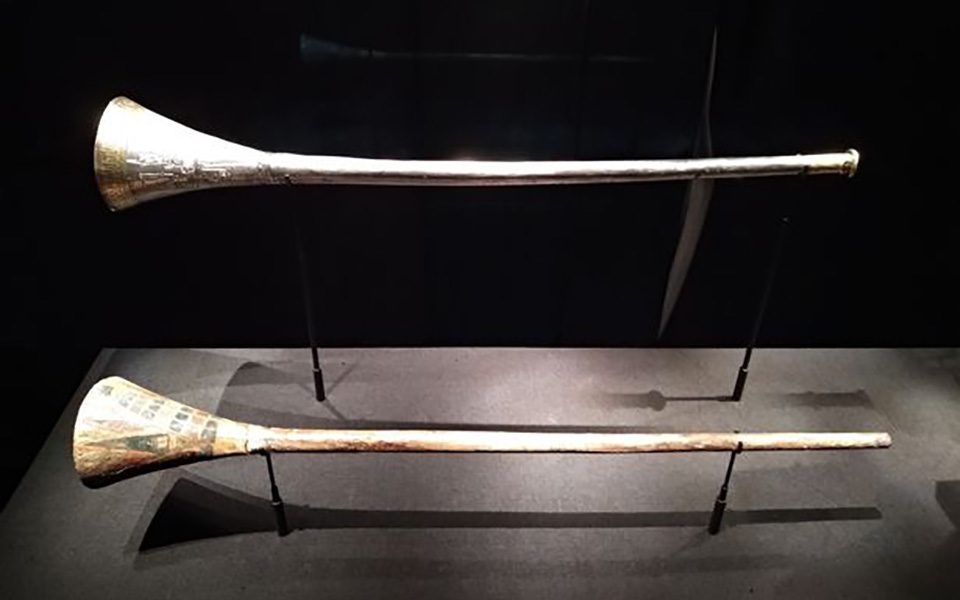
But before I repeat what else the docent said, let me say something about the opera itself. The orchestral instrumentation calls for 6 Egyptian trumpets. They play the melody of the now-famous “Triumphal March,” when the victorious Egyptian troops parade into the city of Thebes after defeating the Ethiopian army.
The docent’s story was that Verdi insisted that the orchestra use authentic period trumpets which had no valves. The lead trumpeter, however, did not want to use them. So, in rehearsals the trumpeters used the Egyptian instruments, but at the premier, they brought trumpets with one valve. Verdi was furious, but there was nothing he could do. These trumpets became known as “Egyptian trumpets” or “Aida trumpets.”
So, I spent my time on the fourth floor. Until then, I had thought that valves were not added to natural trumpets until the 1830s. But I was thinking three valves, and I had always wondered how trumpeters could play the “Trumpet Voluntary,” written by the English composer, Jeremiah Clarke in the 1690s, without valves. Well, it turns out that that piece was the originally written for keyboard instruments. An organist would simply use the trumpet stop. [Maybe trumpeters at that time used keyed trumpets—but that’s another story for me to learn.] I did not see any four-valved trumpets on display.
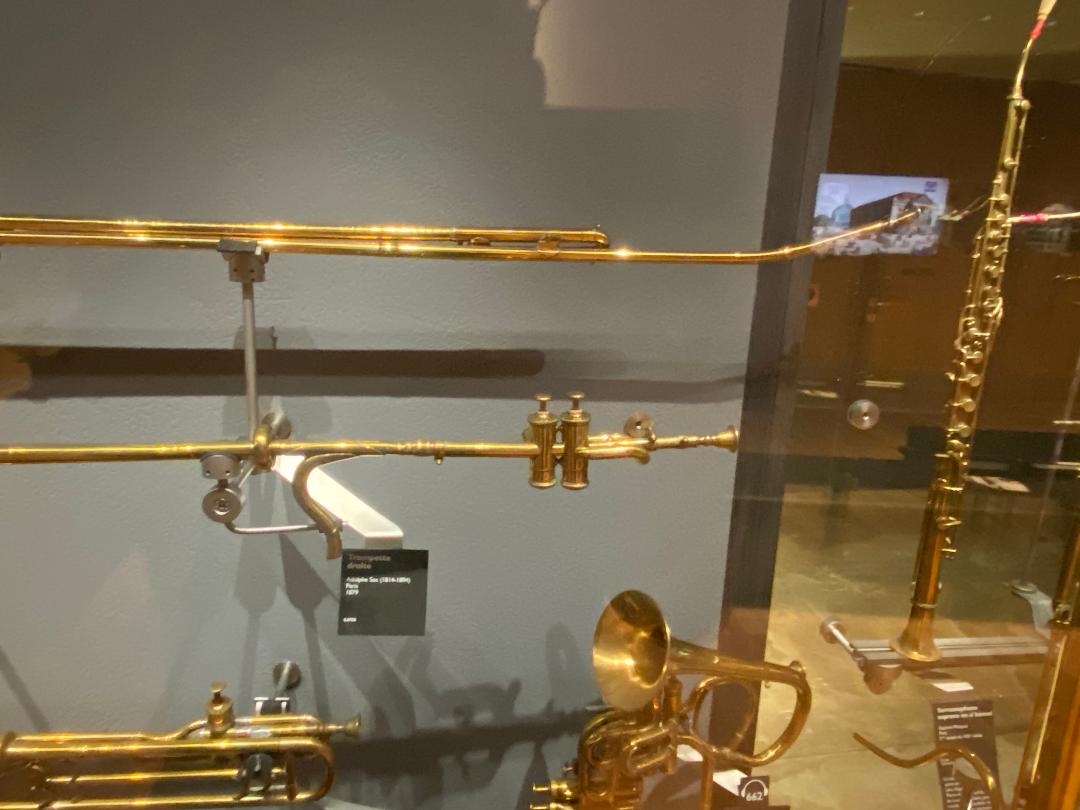
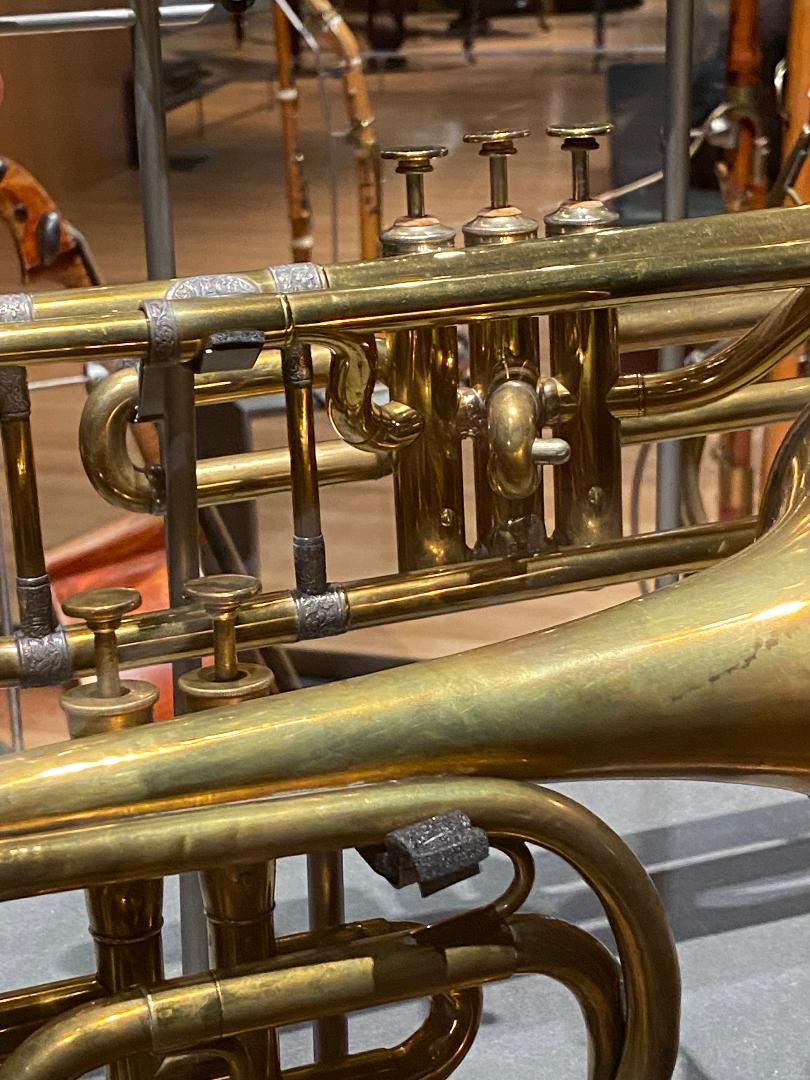
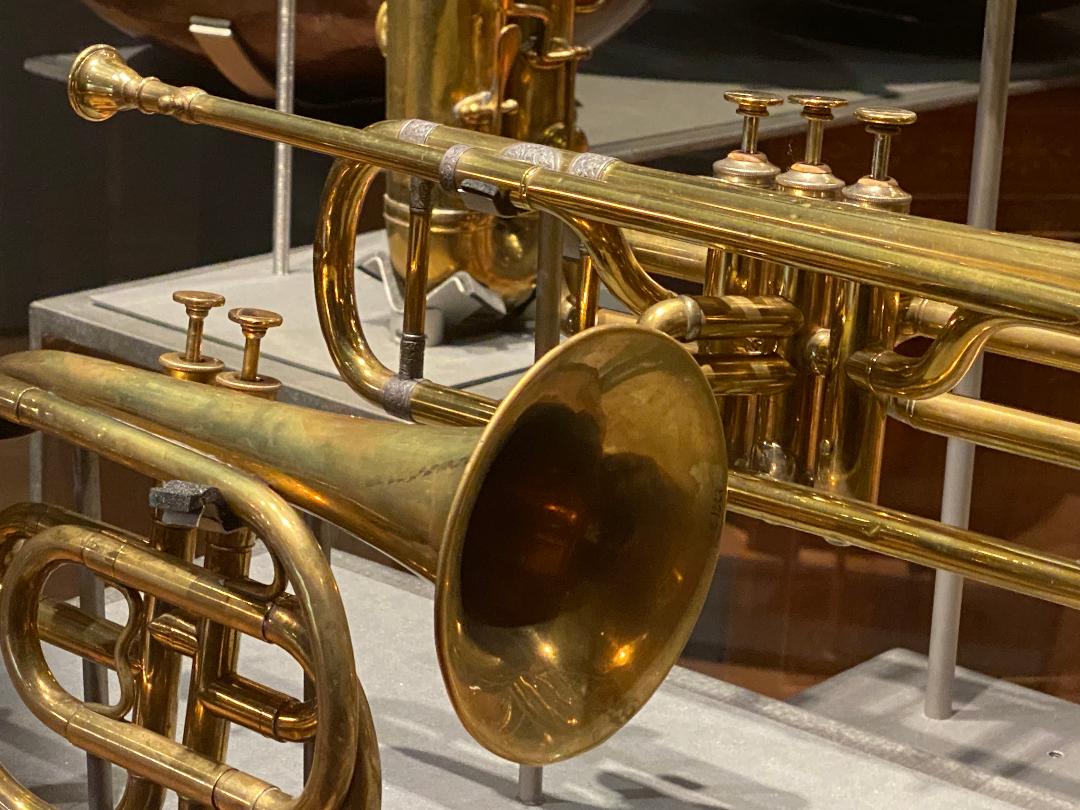
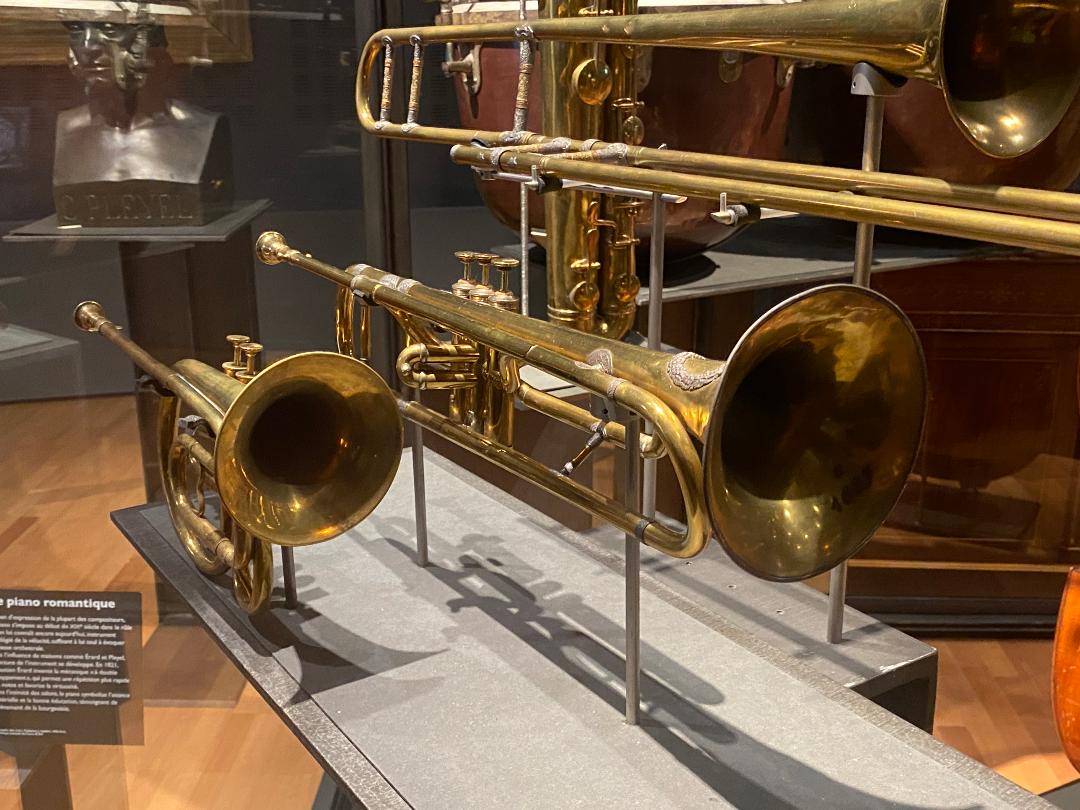
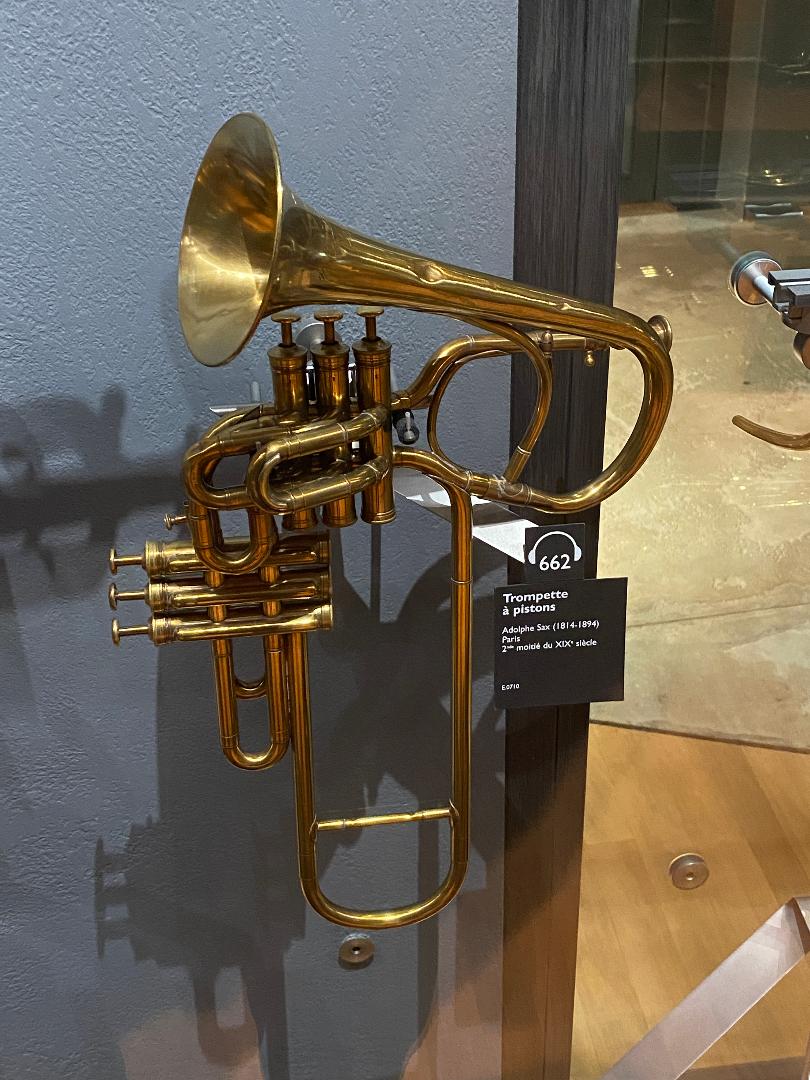
It also turns out that the transformation of the trumpet (from its natural straight or curved tubal shapes without values to curved, looped shapes with valves) did not take one giant leap from no valves to three valves in the 1830s. In other words, it did not suddenly leap from being able to sound only harmonic tones (like a bugle) to sound all notes in the chromatic scale. It progressed from having no valves to one valve, to two valves, to three valves during the period 1788-1830s. And for the first time in my life, I saw samples of such trumpets in the Paris Music Museum!


When did trumpeters begin to play “Trumpet Voluntary” on actual valved trumpets—does it take one, two or three values to play it? In the key of C, I think you could play it on a two-valved trumpet, if the first value permitted you to play the Ds and Fs and the second value permitted you to play the A (along with the first valve) and F#.
The most prolific baroque composer for trumpet was Giuseppi Torelli. He is thought to have composed his Sinfonia with Trumpet in D (G. 8) in the 1690s. Henry Purcell’s The Fairy-Queen was first performed in 1692. Handel’s Water Music Suite No. 2 heavily features trumpets. It premiered in 1717. Vivaldi composed his Concerto for Two Trumpets in ~1720s. Jean-Joseph Mouret composed his Suite de Symphonies in 1729. Its Rondeau is used as the theme music for PBS’s program, Masterpiece. Handel composed his Messiah in 1741. His Music for the Royal Fireworks (1749), especially movements 1 and 4, features trumpets. Leopold Mozart composed his Concerto for Trumpet in D Major in 1762. Hadyn composed his Trumpet Concerto in E-flat major in 1796. Hummel composed his Trumpet Concerto in E Major in 1803. Beethoven composed his Ninth Symphony in 1822-24. What kind of trumpets did trumpeters play for each of these? The first valve was invented in 1788. The second valve was added in 1815.
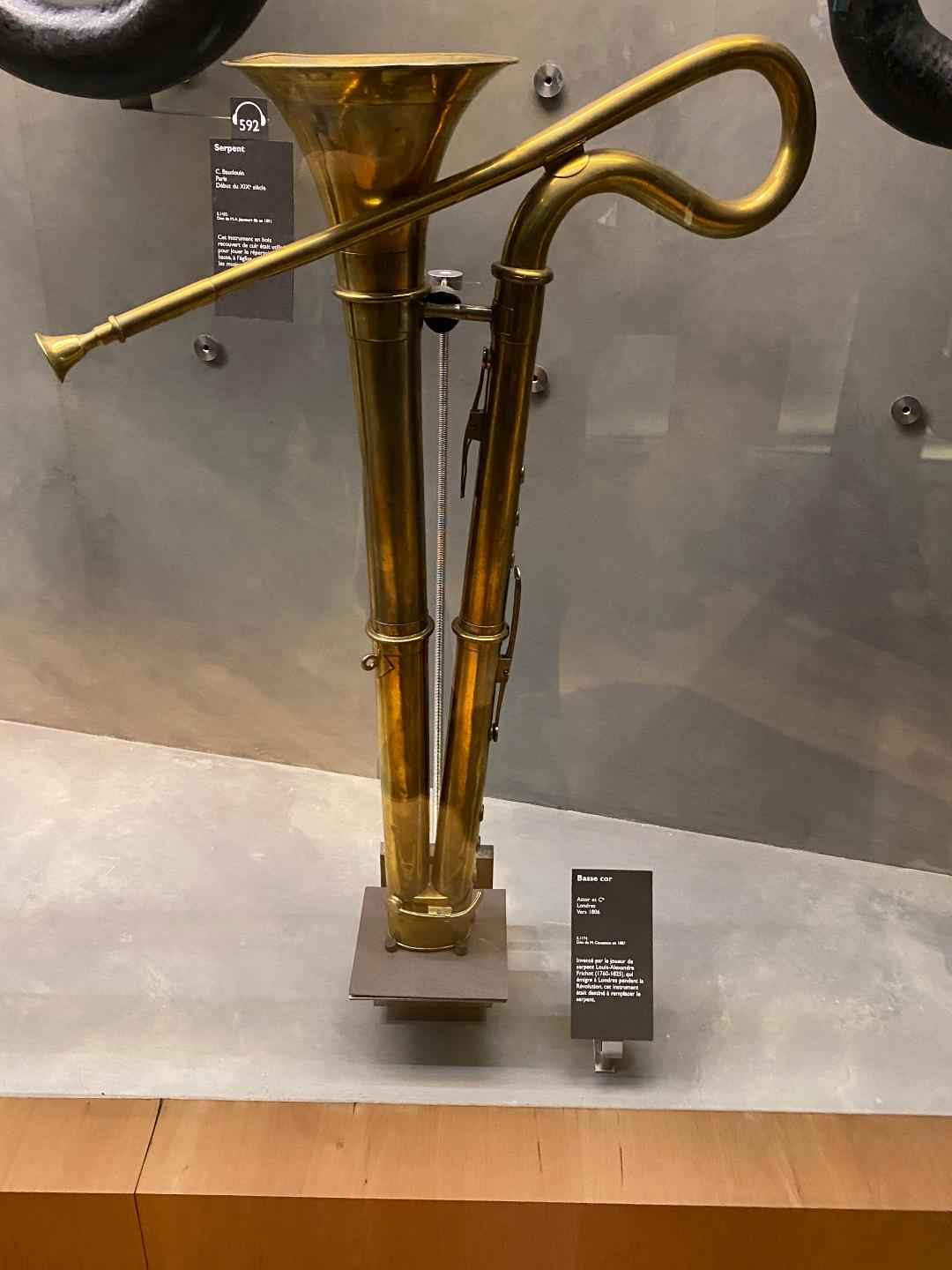
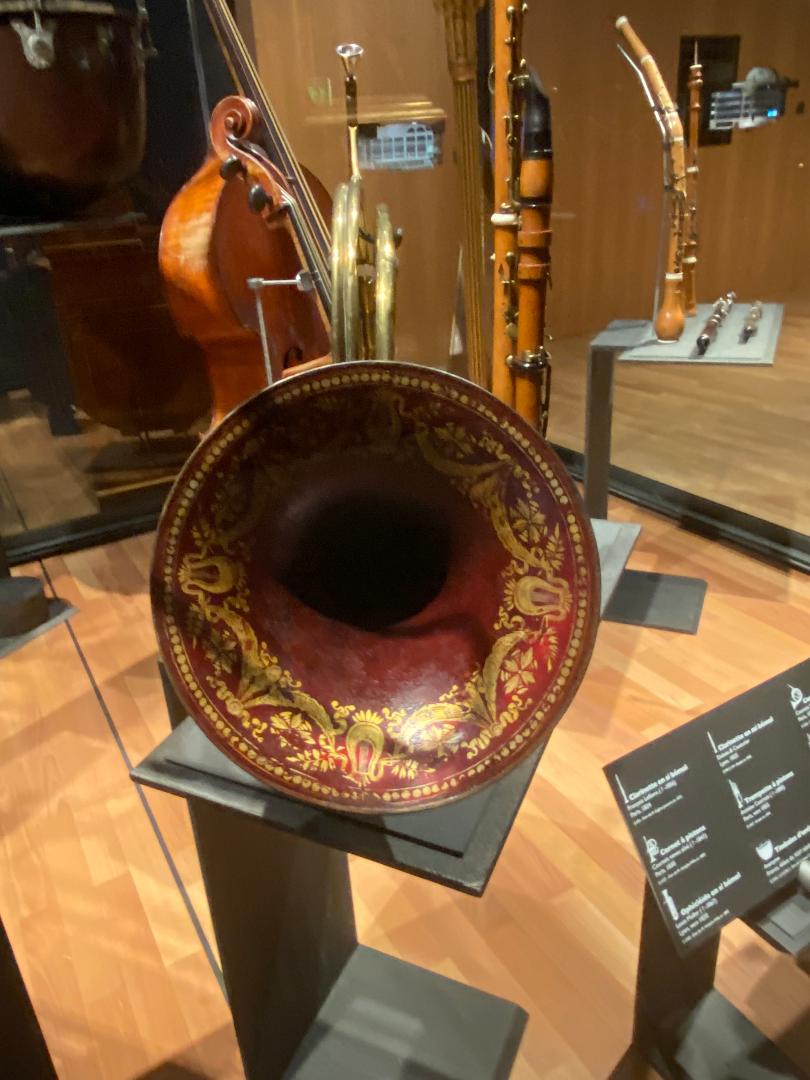
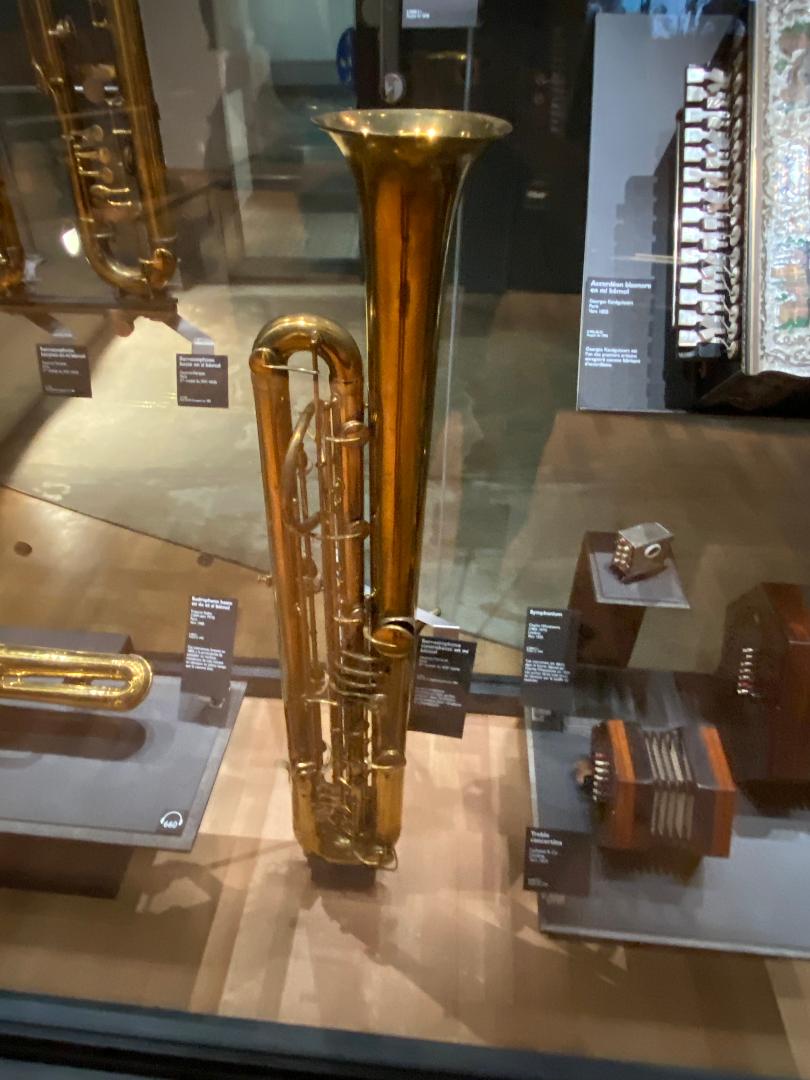
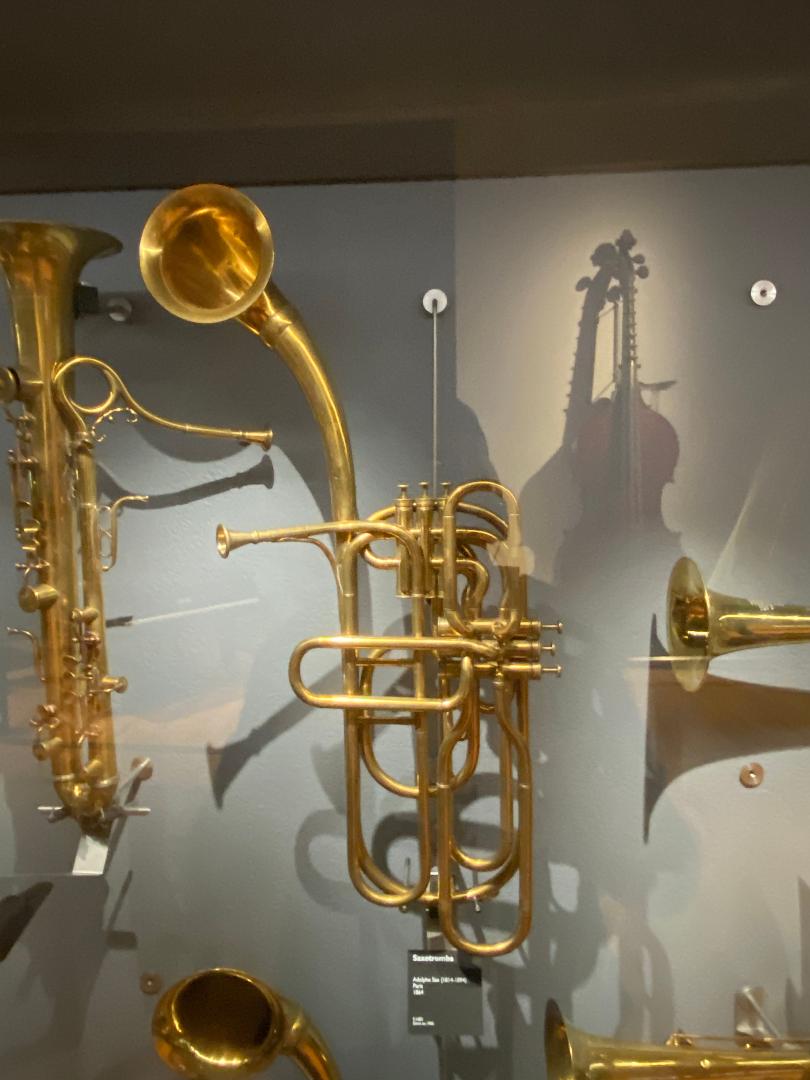
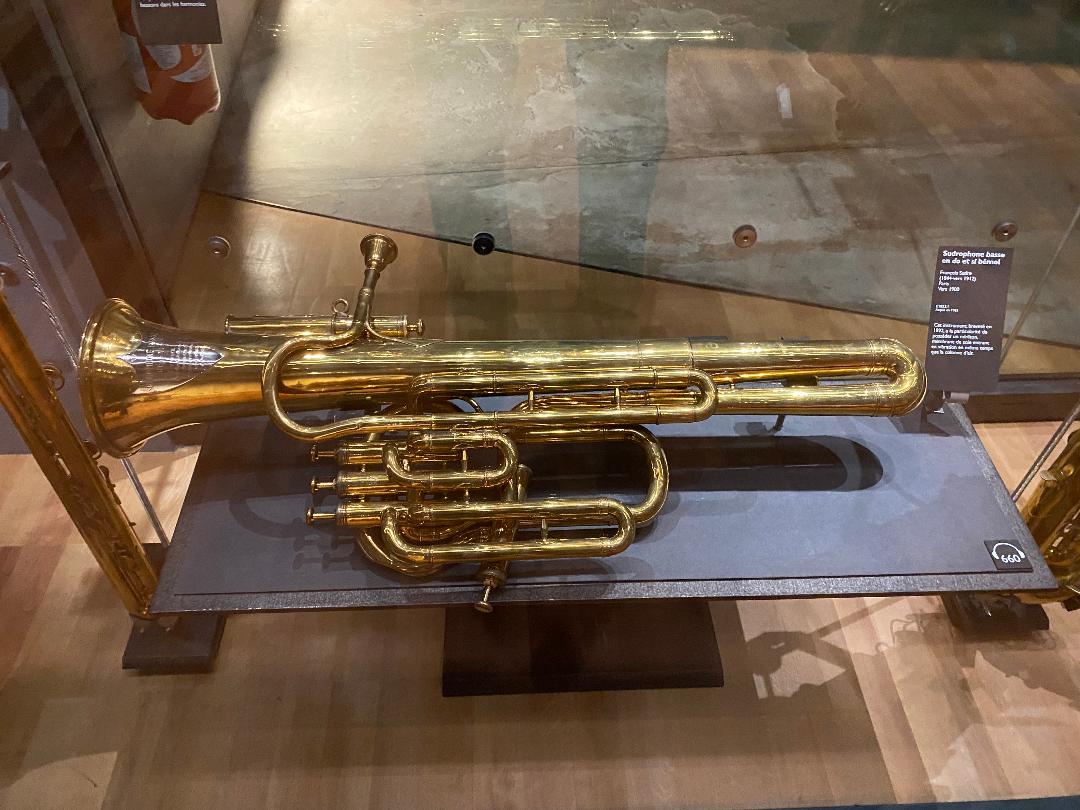
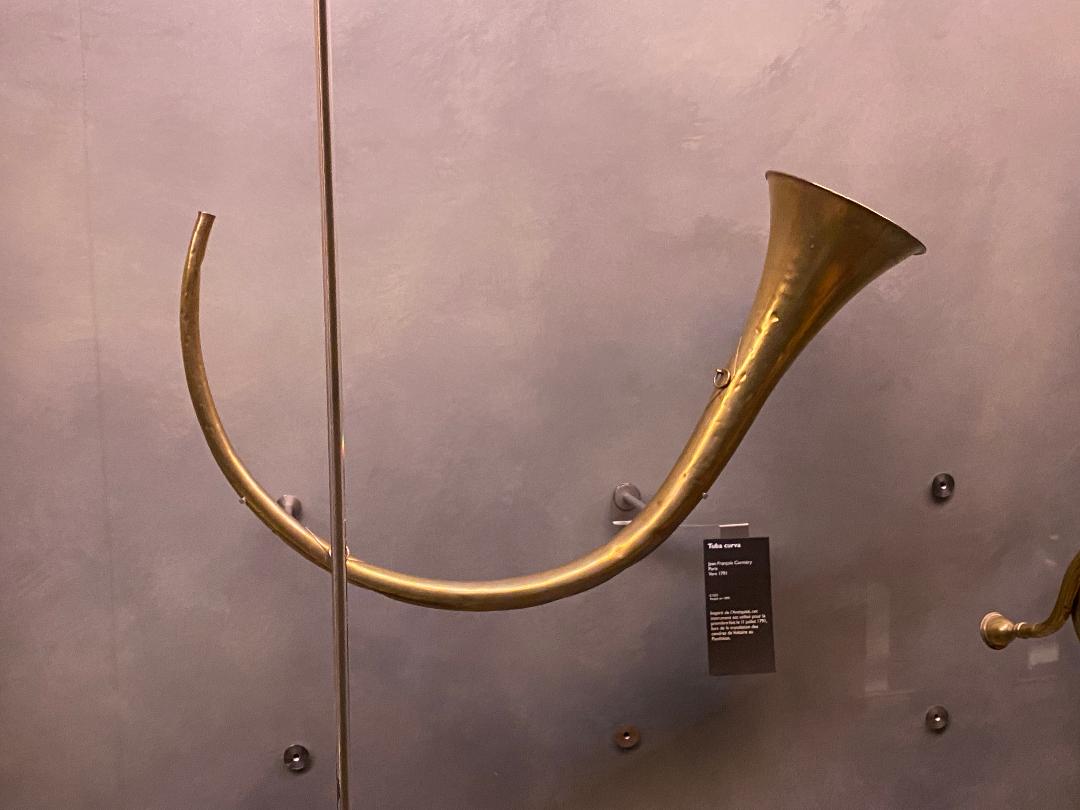
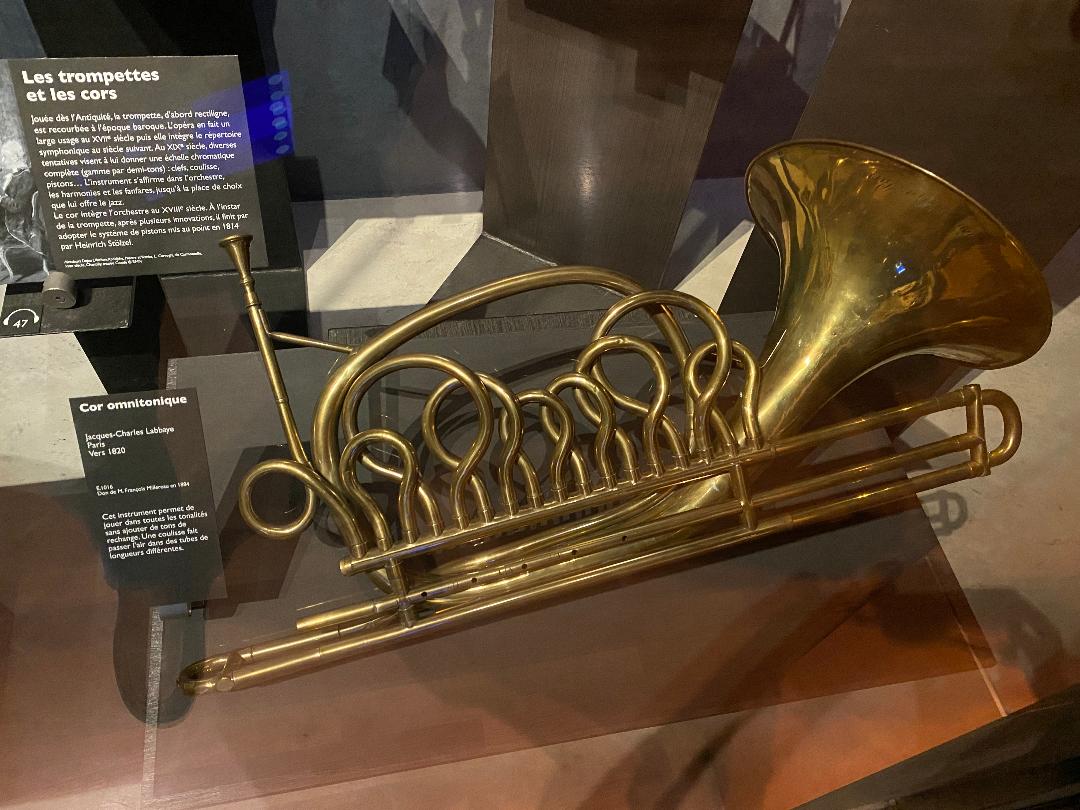
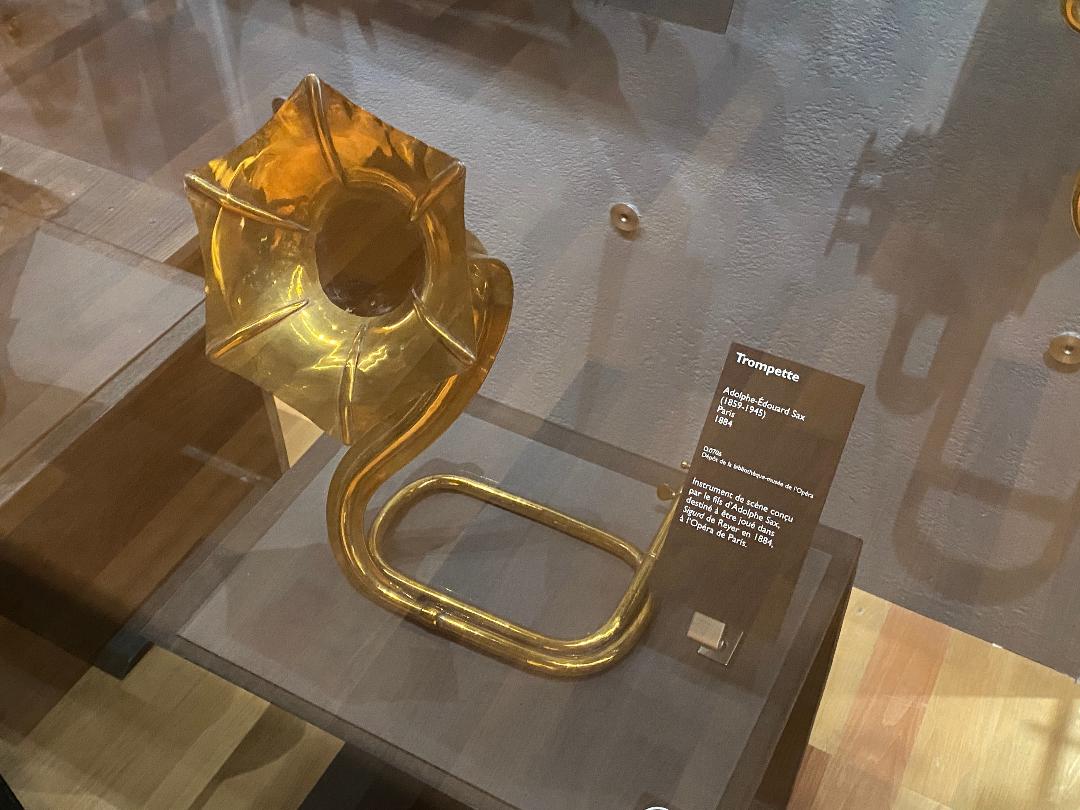
In the museum, I took many photos so that I can now give you a rudimentary tour showing the evolution of the trumpet. There are photos of some very weird-looking instruments, as well as shots of Chopin’s piano, some portraits of composers, and a video of a guest musician playing a forerunner to the French horn that looks somewhat like the modern mellophone. Please click on any photo to enlarge it.







 Glenn's Trumpet Notes