Glenn’s Trumpet Notes

News & Tips for Trumpet & Cornet Students

  • December 2025
    S M T W T F S
     123456
    78910111213
    14151617181920
    21222324252627
    28293031  
  • Enter your email address to subscribe to this blog and receive notifications of new posts by email.

    Join 89 other subscribers
  • Subscribe

Posts Tagged ‘instrument’

Music Museum in Paris Has Trumpets with 0,1,2, & 3 Valves

Posted by glennled on June 18, 2024

In Paris, there’s a music museum. A friend told me about it several years ago, and finally, I found it and went to see it on 7 May—the Musee de la Musique in the 19th arrondissement, northeast of the Louvre and Eiffel Tower.

A docent on the second floor, who plays trumpet, told me about a special trumpet on display on the fourth floor. She said it was used at the premier of Verdi’s Aida in Cairo, Egypt in 1871, over the objections of Verdi himself. She could not leave her post and come upstairs to show it to me.
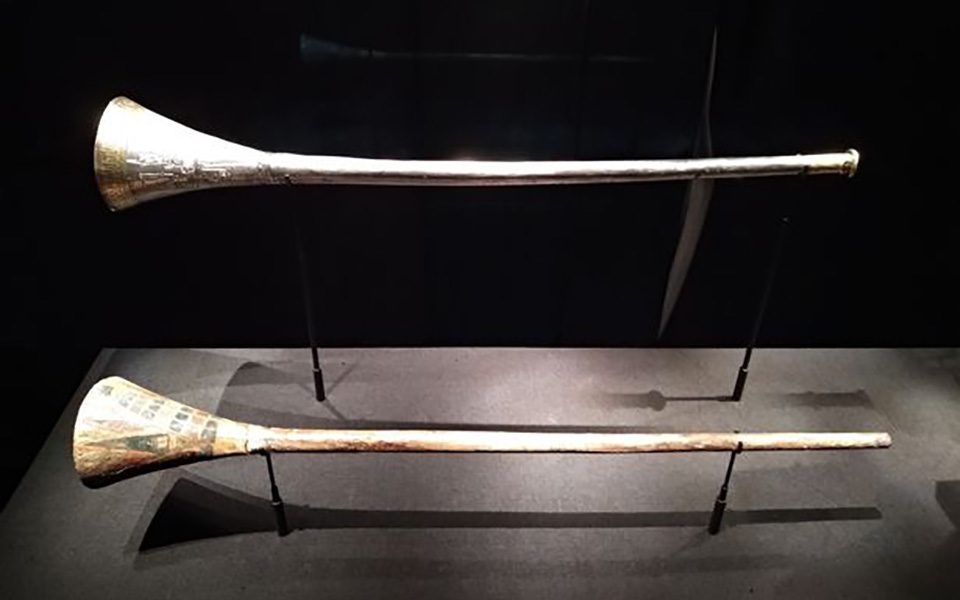
Egyptian trumpets found in King Tutankhamun’s tomb

But before I repeat what else the docent said, let me say something about the opera itself. The orchestral instrumentation calls for 6 Egyptian trumpets. They play the melody of the now-famous “Triumphal March,” when the victorious Egyptian troops parade into the city of Thebes after defeating the Ethiopian army.

The docent’s story was that Verdi insisted that the orchestra use authentic period trumpets which had no valves. The lead trumpeter, however, did not want to use them. So, in rehearsals the trumpeters used the Egyptian instruments, but at the premier, they brought trumpets with one valve. Verdi was furious, but there was nothing he could do. These trumpets became known as “Egyptian trumpets” or “Aida trumpets.”

So, I spent my time on the fourth floor. Until then, I had thought that valves were not added to natural trumpets until the 1830s. But I was thinking three valves, and I had always wondered how trumpeters could play the “Trumpet Voluntary,” written by the English composer, Jeremiah Clarke in the 1690s, without valves. Well, it turns out that that piece was the originally written for keyboard instruments. An organist would simply use the trumpet stop. [Maybe trumpeters at that time used keyed trumpets—but that’s another story for me to learn.] I did not see any four-valved trumpets on display.

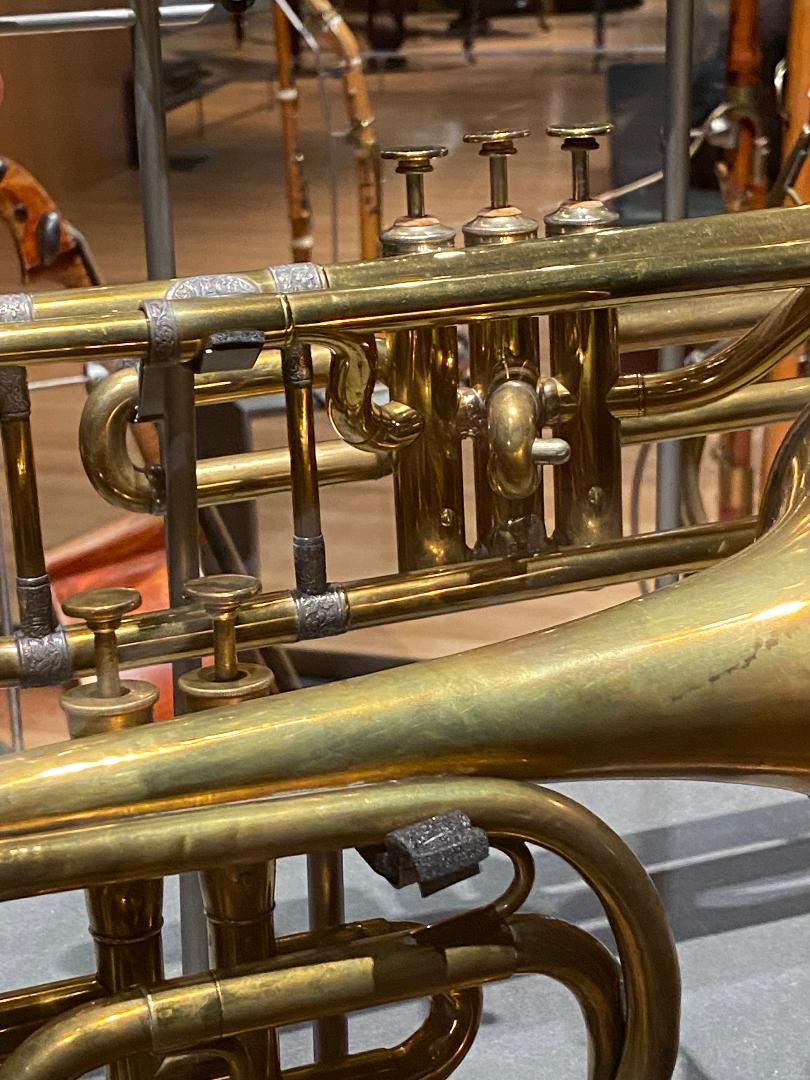
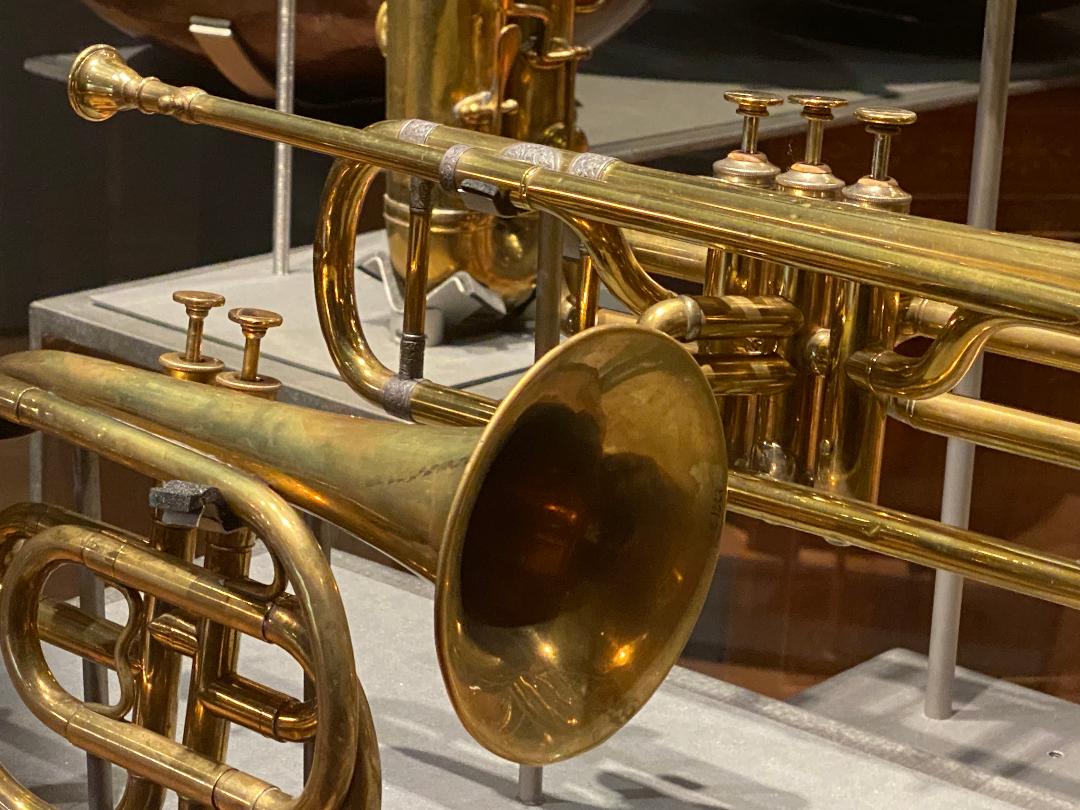
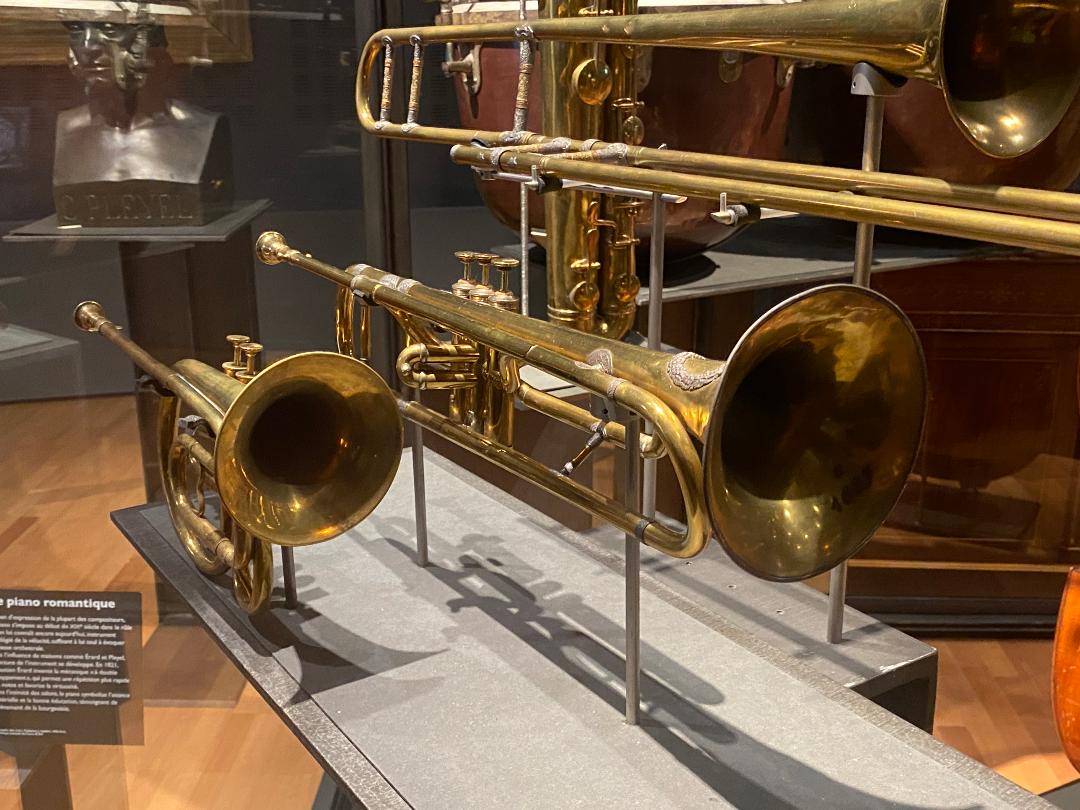
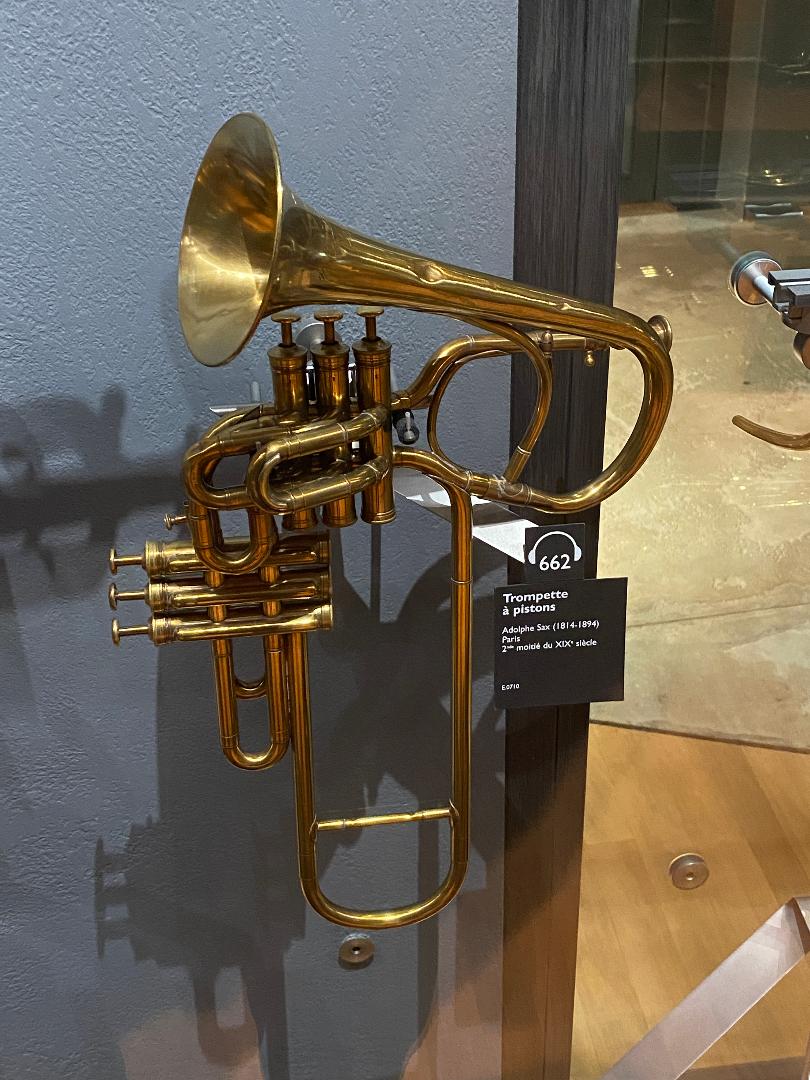
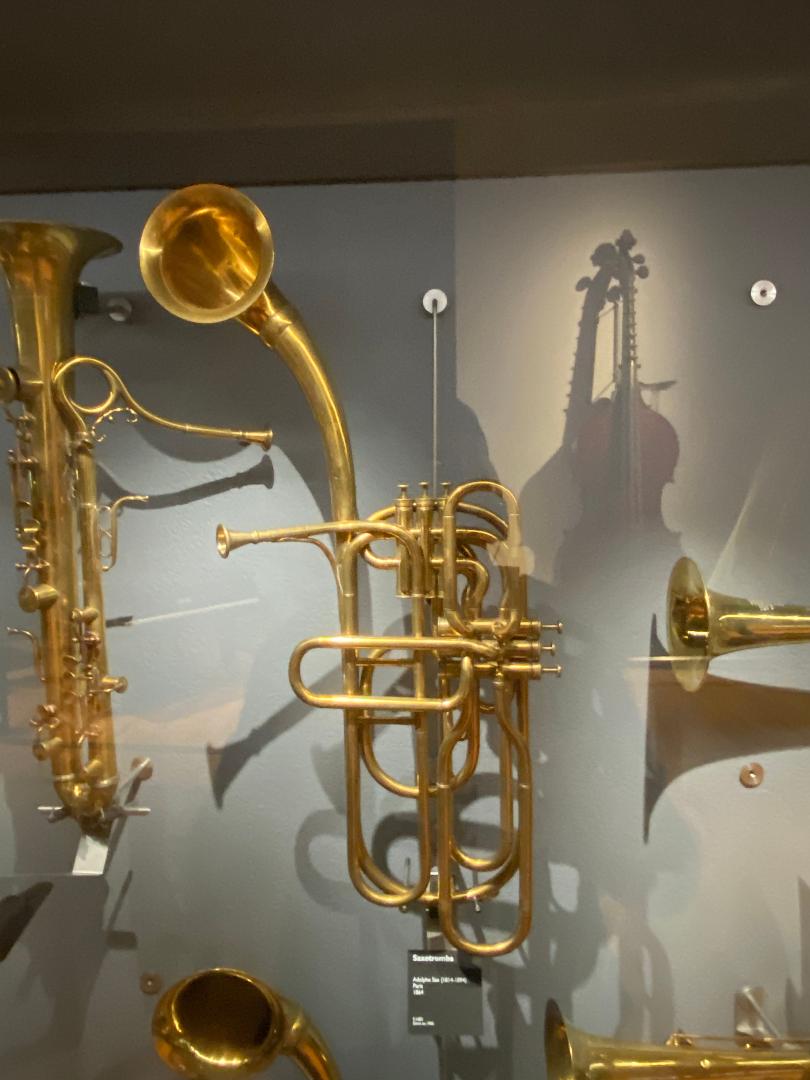
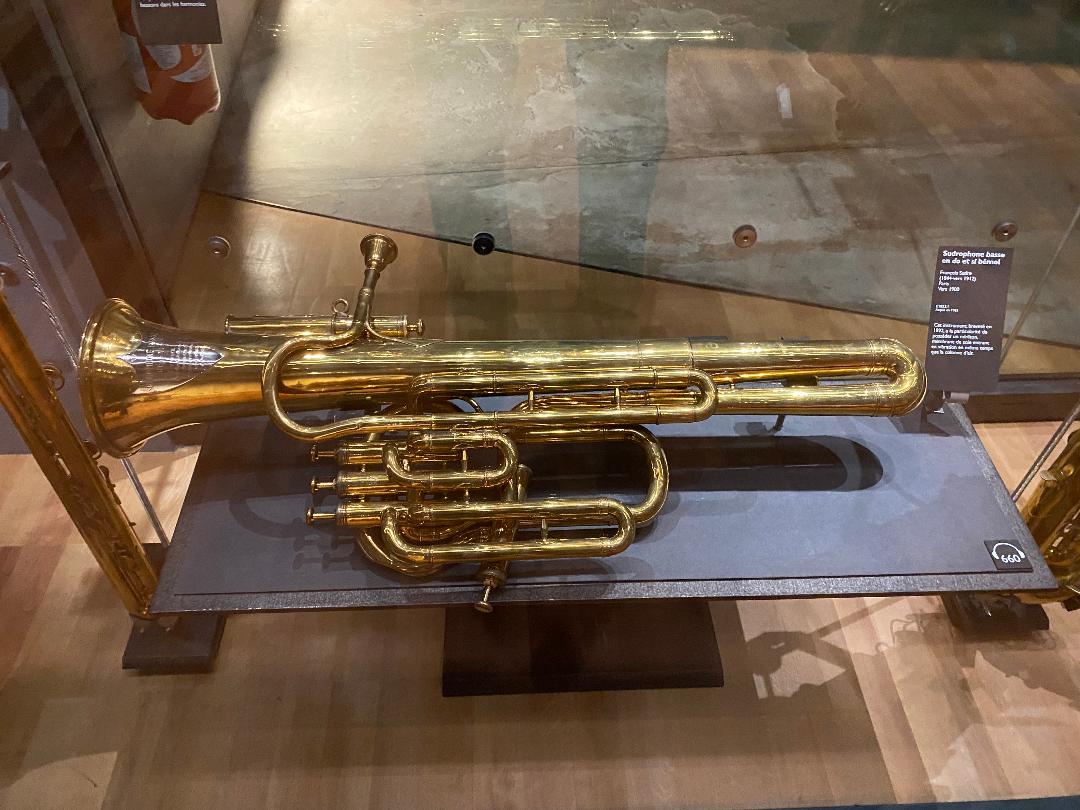
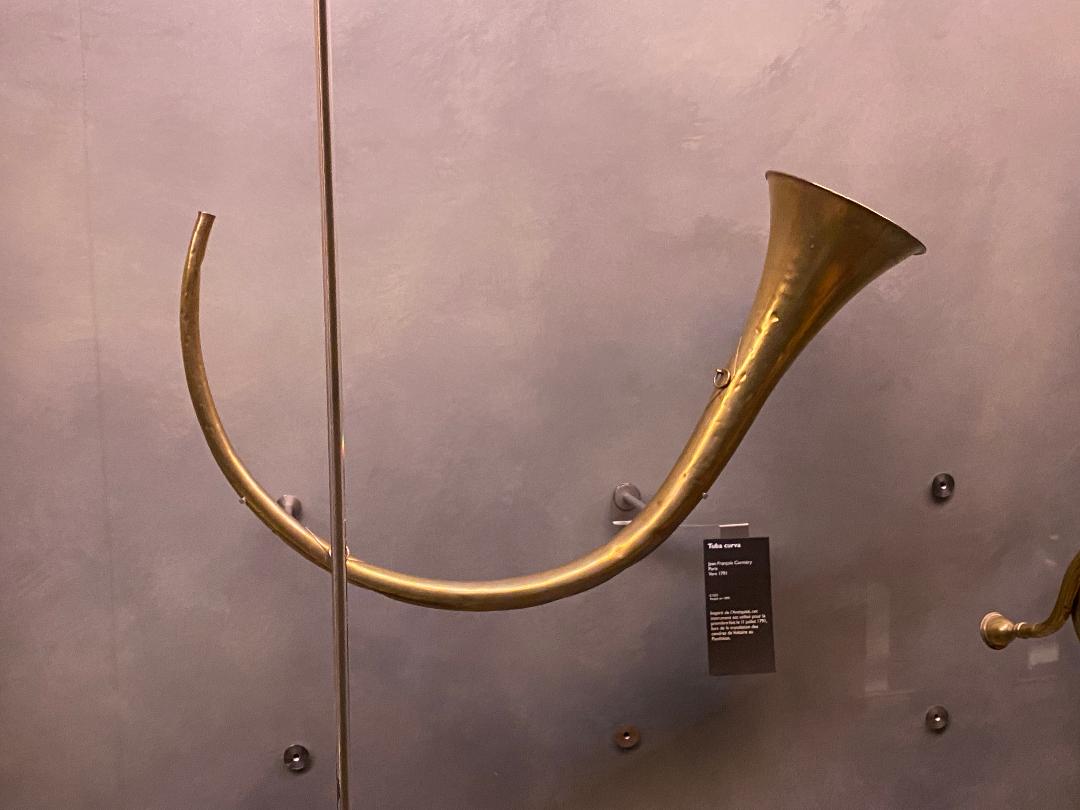
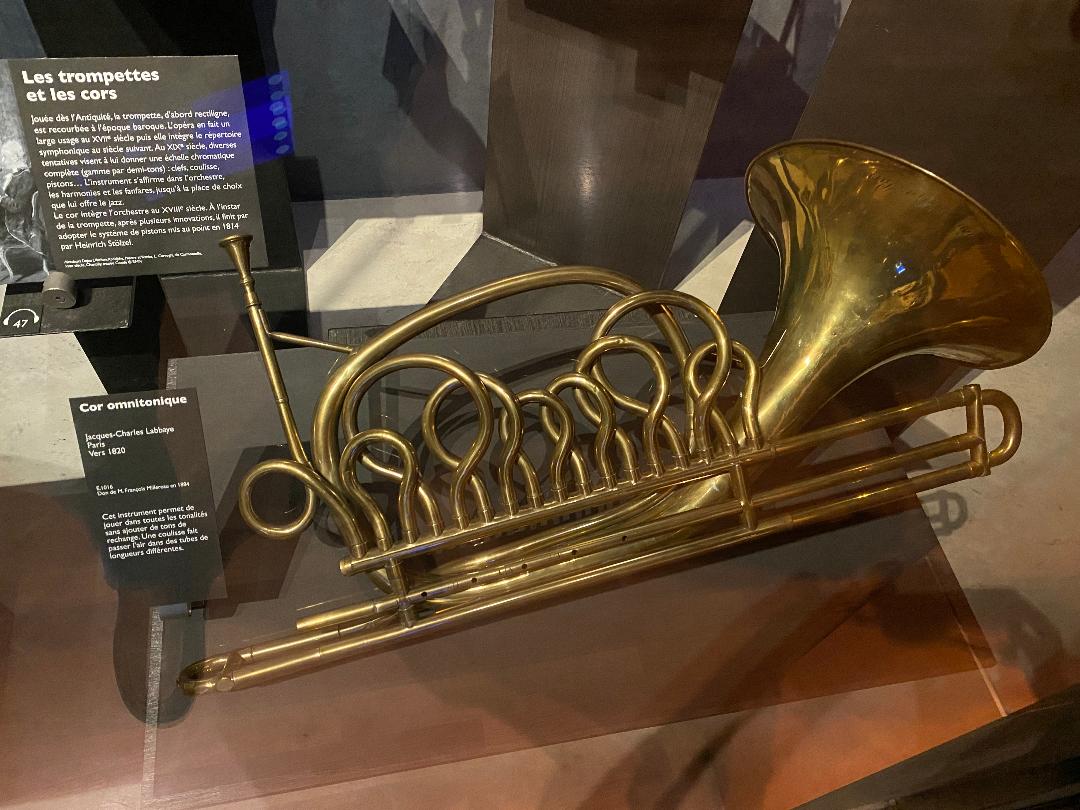
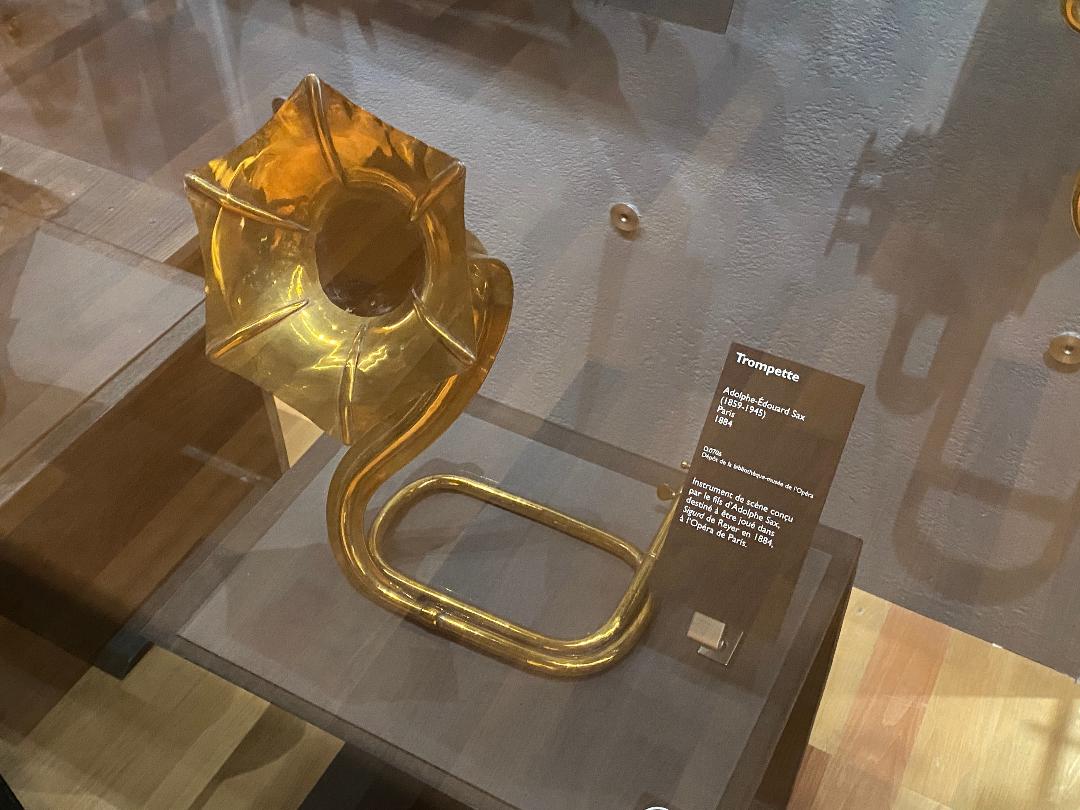
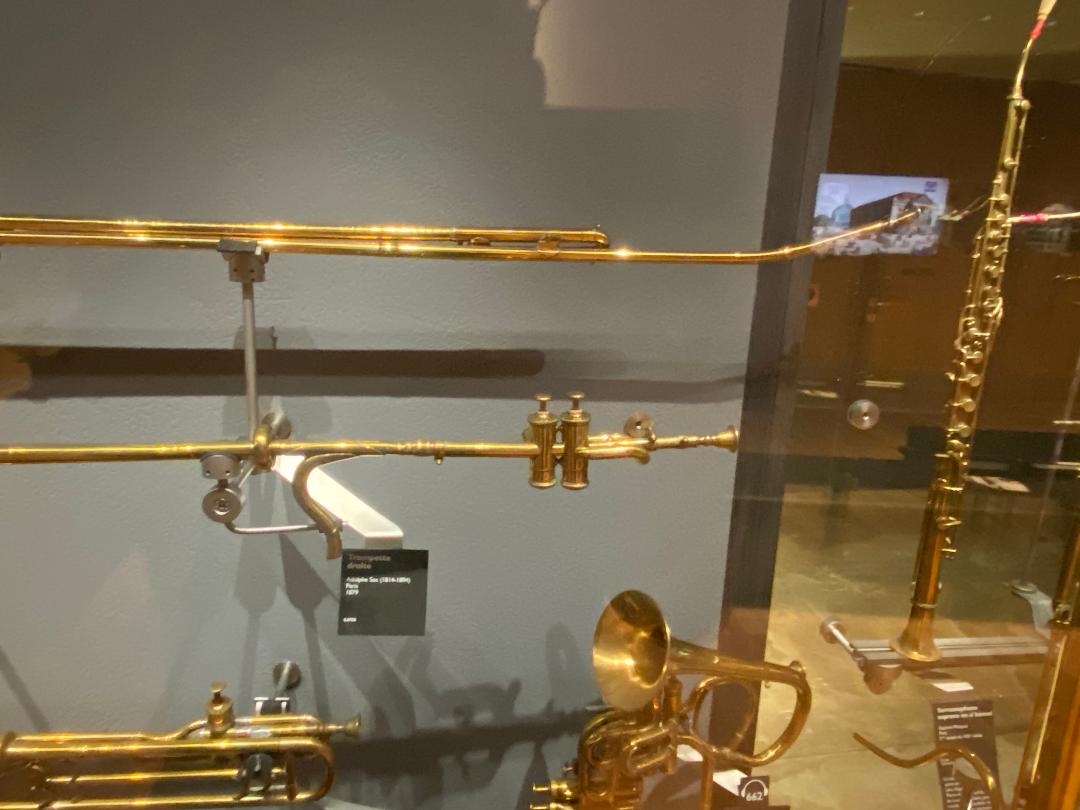
It also turns out that the transformation of the trumpet (from its natural straight or curved tubal shapes without values to curved, looped shapes with valves) did not take one giant leap from no valves to three valves in the 1830s. In other words, it did not suddenly leap from being able to sound only harmonic tones (like a bugle) to sound all notes in the chromatic scale. It progressed from having no valves to one valve, to two valves, to three valves during the period 1788-1830s. And for the first time in my life, I saw samples of such trumpets in the Paris Music Museum!

Classic 1871 “Egyptian” or “Aida” trumpet
Is this the display spoken of by the Museum Docent?

When did trumpeters begin to play “Trumpet Voluntary” on actual valved trumpets—does it take one, two or three values to play it? In the key of C, I think you could play it on a two-valved trumpet, if the first value permitted you to play the Ds and Fs and the second value permitted you to play the A (along with the first valve) and F#.

The most prolific baroque composer for trumpet was Giuseppi Torelli. He is thought to have composed his Sinfonia with Trumpet in D (G. 8) in the 1690s. Henry Purcell’s The Fairy-Queen was first performed in 1692. Handel’s Water Music Suite No. 2 heavily features trumpets. It premiered in 1717. Vivaldi composed his Concerto for Two Trumpets in ~1720s. Jean-Joseph Mouret composed his Suite de Symphonies in 1729. Its Rondeau is used as the theme music for PBS’s program, Masterpiece. Handel composed his Messiah in 1741. His Music for the Royal Fireworks (1749), especially movements 1 and 4, features trumpets. Leopold Mozart composed his Concerto for Trumpet in D Major in 1762. Hadyn composed his Trumpet Concerto in E-flat major in 1796. Hummel composed his Trumpet Concerto in E Major in 1803. Beethoven composed his Ninth Symphony in 1822-24. What kind of trumpets did trumpeters play for each of these? The first valve was invented in 1788. The second valve was added in 1815.

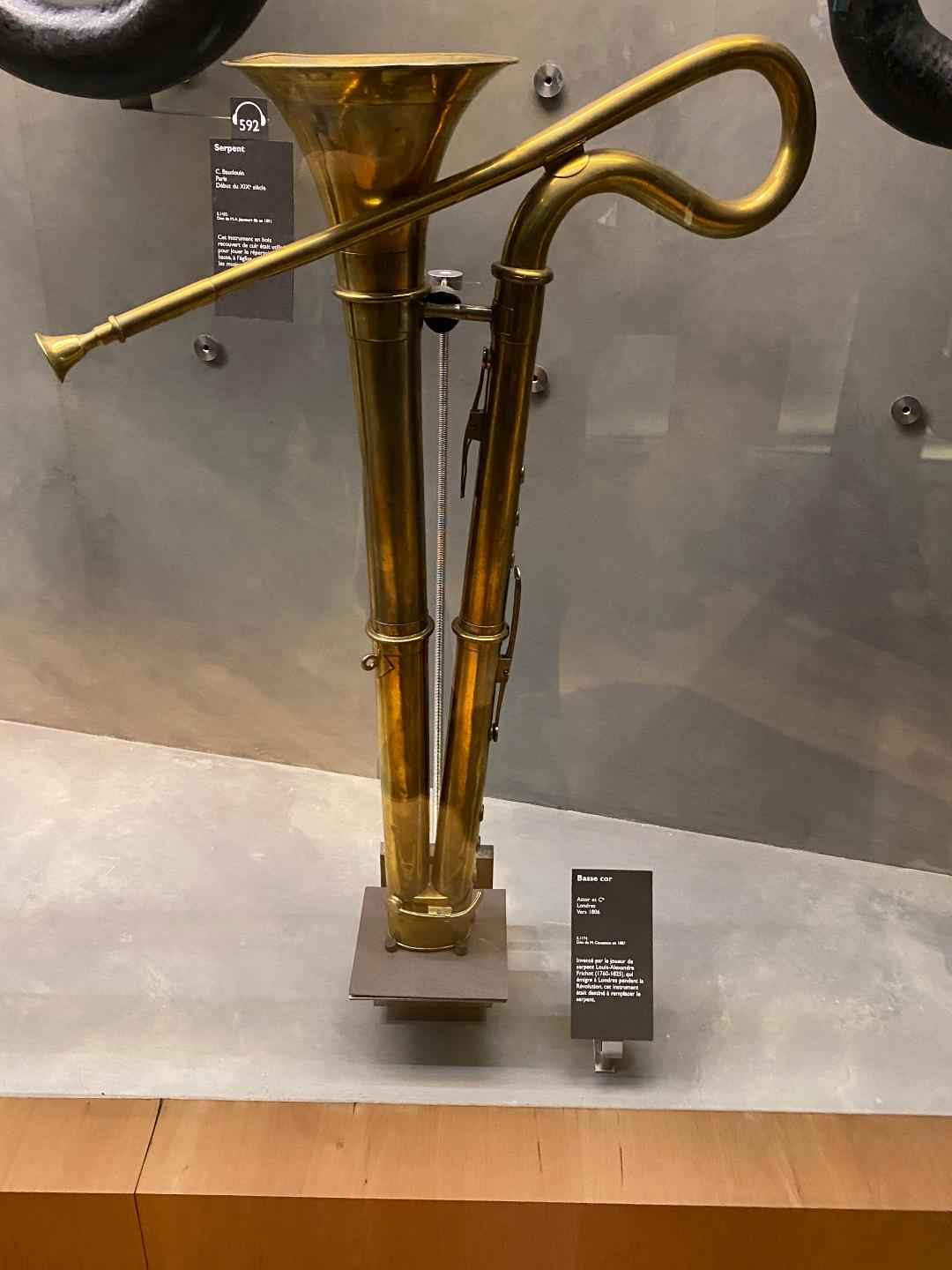
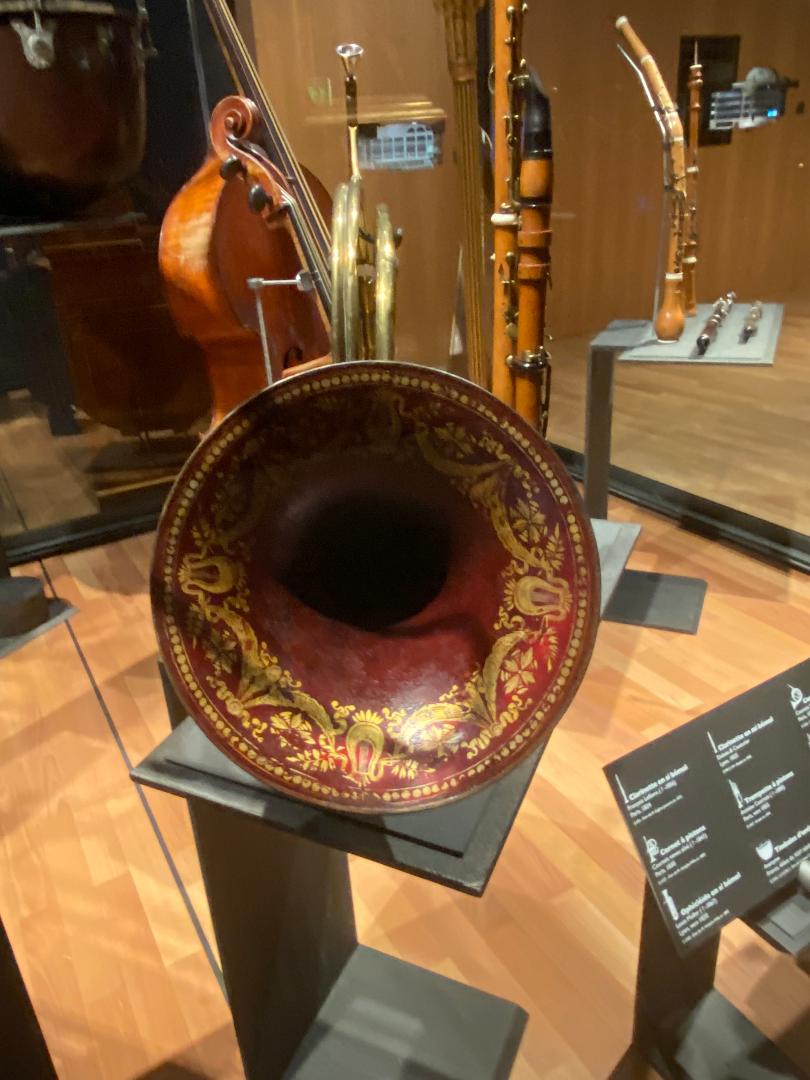
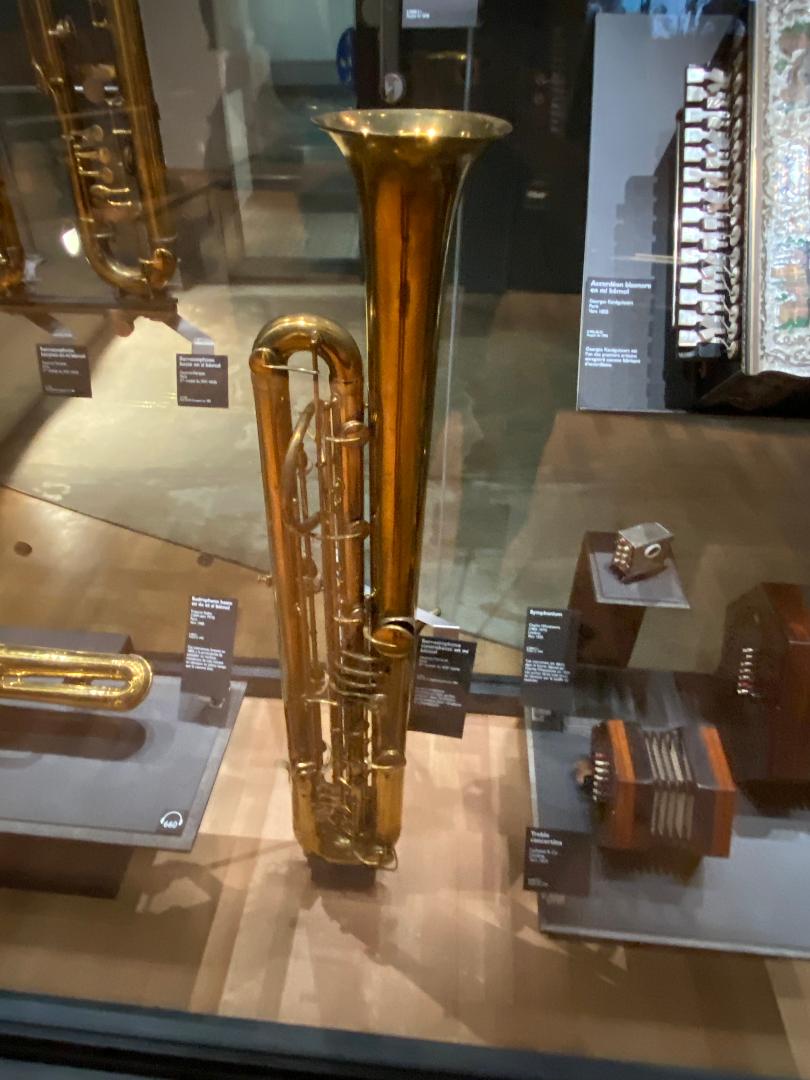
In the museum, I took many photos so that I can now give you a rudimentary tour showing the evolution of the trumpet. There are photos of some very weird-looking instruments, as well as shots of Chopin’s piano, some portraits of composers, and a video of a guest musician playing a forerunner to the French horn that looks somewhat like the modern mellophone. Please click on any photo to enlarge it.

Posted in Museums, trumpets | Tagged: , , , , , , , , , , , , , , , , , , , | 2 Comments »

42nd Trumpet Student is 4th Grader at Bryant Elementary School in Seattle

Posted by glennled on May 12, 2018

He likes trumpet because of its sound—it’s “jazzy” to him.  My 42nd trumpet student is 10 years old and a fourth grader at Bryant Elementary School, located in the Ravenna-Bryant neighborhood of northeast Seattle. When he first tried out several different instruments at boyplayingtrumpetbw_pthe music orientation session at school, it was easy to make a sound on many of them, but not so the trumpet. Making notes by buzzing into the mouthpiece was a challenge, and he likes challenges. The fact that it has only three valves did not matter. Ten valves would have been ok. The trumpet’s jazzy sound is what he liked. And as soon as he’s old enough to attend nearby Eckstein Middle School, he wants to play in the school Jazz Band. Our private lessons will help him qualify. We held our first one on 2 May.

At Bryant Elementary, he attends a 30-minute music class once a week. There are about 10 trumpeters in this class, according to Elizabeth Harris Scruggs, the Instrumental Music teacher. “It’s a pull-out class,” she said, “meaning students miss 30 minutes of regular class to come to instrumental music.” There is no full 4th grade band—“just a few classes with either one or two different instrument types (for example, saxophone and clarinet). However, at the end of this year, they will all combine for the first time for a rehearsal and a concert to see what playing in a full band is like.” The Spring Concert will be on Wednesday, 6 June at 6:45 p.m. Fourth-graders will participate, along with the general music, instrumental music, and choir groups.

Next year, my student will be able to join the fifth-grade elementary school band. Neither of his parents play an instrument, but his older brother plays saxophone at Eckstein Middle School.

His other interests and activities include swimming, basketball, Frisbee, chess, and dance. He has taken lessons in ballet, tap, and hip-hop dancing since he was 4 years old. On 16 June, he will tap dance in a recital at Shorecrest High School in Shoreline.

Bryant Elementary opened in 1918—100 years ago—and was recently remodeled. The school and the neighborhood are named after William Cullen Bryant (1794-1878), an American poet, journalist and editor whose most notable work is Thanatopsis.

Posted in New Students - Intro Posts | Tagged: , , , , , , , , , , | Leave a Comment »

9th Grade Trumpeter Making a Comeback Towards Rejoining Band

Posted by glennled on March 12, 2012

Lots of people start band and drop out, only to regret it in later years. My 19th trumpet student did just that—dropped out after his first year in band when he was a 5th grader at John Muir Elementary School. Now he’s a 9th grader at Kamiakin Junior High in Kirkland, and his goal is to join the band next year as a sophomore at Juanita High School. He’s given himself one year to catch up and be ready. It’s a rare, ambitious attempt. So far, so good.

Last September at the start of the new school year, he found himself eating lunch alone—all his best friends were in band rehearsal during his lunch period. Well then, rejoin band, his mother suggested. “Ok, I’ll try,” was his response.

His mom contacted the high school band director, Mariko Lane, to determine whether she would accept him into band. Yes! Kids join at all levels of performance, she said enthusiastically. She then advised him to stay with his original instrument, the trumpet, and to find a good tutor right away. In our first meeting, I listened to the story of why he quit and why he wants to start again. I wondered, is this his goal or someone else’s? Is this realistic or just a pipe dream? So I grilled him thoroughly with tough questions and provactive comments, giving him every opportunity to drop the idea or select a different tutor. But he stayed cool and stood fast, which pleased me, so we embarked on the challenge together.

Our first weekly lesson was on 3 November 2011. They ordered the instruction book I prefer for beginners, “Progressive Trumpet,” by Peter Gelling. It happened to be out of stock in local music stores and took a few weeks to arrive on special order. Why is this important? Because he is now finishing that book after about only three and a half months! A fifth grader takes much longer. He is now more mature, he is more dedicated, he has more self-discipline–in other words, he practices regularly! He works at it, so he’s on the fast track. It’s that simple. But simple is not always easy, is it? Simple can be the most difficult.

What does he think of his progress so far? “It’s more possible than I originally thought,” he said. Yes, it is. He has finished the first instruction book faster than any of my other students. When he finishes the second book, he’ll be ready to join high school band. Immediately, he’ll have to learn to march while playing. Then he’ll get three, fun, high school band years full of wonderful, lifelong memories with his friends—just by playing music, and that’s fun in itself. It’s one of those things that’s better “The Second Time Around.”

Posted in New Students - Intro Posts | Tagged: , , , , , , , , , , , | 2 Comments »