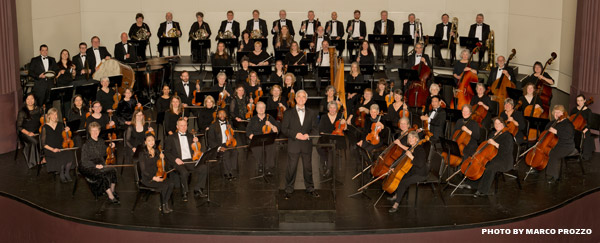
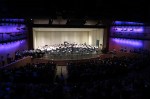
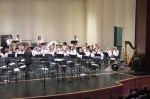
Cascade Symphony Orchestra at Edmonds Center for the Arts
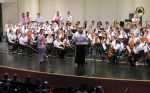
My wife and I have lived in Edmonds for 13 years and had never heard of the Cascade Symphony Orchestra until this month. That says a lot more about us than about the CSO which was formed in 1962. But it’s never too late to discover another of the good things in life, is it? How did this one finally happen?
Well, I’d been thinking about taking her out on a date, and one evening I was talking with the outstanding principal horn player in the Alderwood Community Church Orchestra. “What other orchestra do you play in?” I asked. “The Cascade Symphony Orchestra,” he replied, and that took me to the internet the next day. I found out that CSO was presenting its “Holiday Pops” concert in Edmonds on 11-12 December. My wife said yes, so I drove to the ticket office at the Edmonds Center for the Arts (ECA), bought two tickets for Sunday night, peaked inside to see the dark auditorium, and picked up a booklet on the ECA to educate myself a little.
The Edmonds Center for the Arts, with its new 700-seat auditorium, held its Grand Opening on 6 Jan 2007 (see http://www.facebook.com/edmondscenterforthearts). Originally, in 1910, the building was the Edmonds High School. This is now ECA’s 10th Anniversary Season.


CSO is a non-professional orchestra, composed of accomplished musicians with careers in other fields who “perform purely for the joy of it.” The orchestra was formed in 1962, and led by Robert Anderson, the original conductor (see http://www.cascadesymphony.org). That was the year of the Seattle World’s Fair and opening of the Space Needle. It was also the year I graduated from the University of Washington, joined the Navy, and reported for duty at Officer’s Candidate School in Newport, Rhode Island. There was no freeway in Seattle then. The Seattle portion of I-5 opened in 1967, the year I returned to Seattle to teach Naval ROTC at the University of Washington for the final two years of my active duty.
Several musicians in the original orchestra were still members in 2011-12, the 50th-Anniversary season. The 2016 Holiday Pops program lists 86 musicians in CSO. Of those, 17 members have played in CSO for 30 years or more. And of those, five members (two violinists, two violists, and one cellist) have been members for 50 years or more! The trumpeters are George Steward, Principal; Rocklyn Meredith; and Delsin Thomas. Annual auditions are held in August; individual auditions are scheduled by appointment. At least four CSO members also play in the Alderwood Community Church Orchestra: Lance Ellis (Principal, French Horn); Rob Rankin (Principal, Trumpet); Madison Bromel (Cello); and Heather Hoskins (Bass).
CSO’s 2016-17 concert season (September through May) consists of five symphony performances, all at ECA in Edmonds. The orchestra rehearses every Monday night during the concert season—it’s known as “Cascade night.” Maestro Michael Miropolsky (a Russian violinist) is the Music Director and current Conductor.
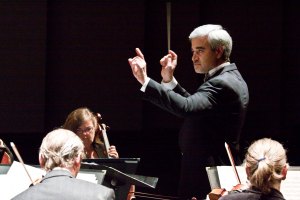
Michael Miropolsky
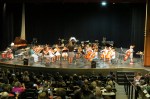
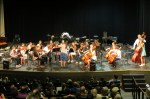
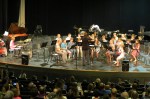
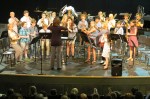
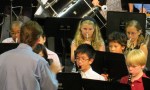
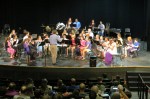
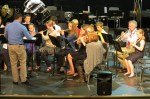
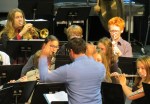
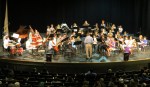
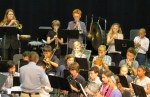
As for the concert itself, the program included works by Johann Strauss, Peter Tchaikovsky, Leroy Anderson, Victor Herbert, and Robin Seletsky/Ed Marcus, as well as five “Holiday Sing-Along” songs led by the Maestro playing his violin. The orchestra is composed of accomplished musicians and is well-rehearsed. It was a good reminder of how widespread musical talent is shared among all societies, nationalities, and races throughout the world. To me, that has a divine purpose. No wonder music is called the “universal language.”
The piece arranged by Robin Seletsky and orchestrated by Ed Marcus is called “Chanukah [Hanukah] Klezmer Medley” was extraordinary. It features a Klezmer clarinet solo, expertly performed by Beverly Setzer, who made her clarinet talk like a person—amazing! Klezmer is a musical tradition of the Ashkenazi Jews that reflects the emotional vocal and dance music of Eastern Europe, especially Romania, and is most often played at Jewish weddings and celebrations.


The two Leroy Anderson pieces, “Sleigh Ride” and “Chicken Reel,” showcased the composer’s catchy tunes and playful orchestrations. We learned from the program that Anderson was a linguist who specialized in Scandanavian and German languages. He was Chief of the Scandinavian Desk of Military Intelligence at the Pentagon. But, like the CSO musicians, he pursued a second career simultaneously—in his case, with the Boston Pops Orchestra. He wrote “Sleigh Ride” in 1946. “Chicken Reel” is a dance tune written in 1910 by Joseph M. Daly which Anderson then orchestrated.
Learning more about Victor Herbert was also a treat for me. A composer, conductor, and cellist, he was Irish-born in 1859 and died in Connecticut in 1924. CSO concluded the concert with his march, “Auditorium Festival,” which premiered in 1901 in Chicago with Herbert conducting the Pittsburg Symphony Orchestra on tour. It incorporates the familiar folk song melody, “Auld Lang Syne.” Among his many compositions are 43 operettas, including Naughty Marietta (1910), Sweethearts (1913), and his best-known Babes in Toyland (1903).
Oh, by the way, the date was a success. When we returned home, I got a kiss from my bride, and she accepted when I asked for another date. Perhaps I’ll suggest Monday, 9 January 2017 at 7:30 p.m. when CSO presents Mozart’s Horn Concerto No. 3 in Eb major, featuring Jeffrey Fair, soloist, and Tchaikovsky’s Symphony No. 6 in B minor (Pathetique). Maybe we’ll see you there.
Most of these photos can be enlarged simply by clicking on them.

 Earlier, the residents and staff of Skyline had been invited to submit the names of veterans and others whom they wished to be remembered in advance of Veterans Day, 11 November. Their names—about 200—were read aloud, interspersed with periodic bell ringing, before the audience. Twenty, mostly elderly people gathered in the Madrona Community Room: two men, 18 women, silent in their memories of their dear veterans of WWI, WWII, and every conflict since, and others.







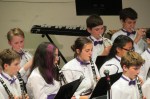
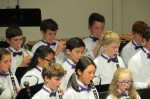
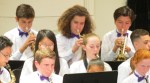
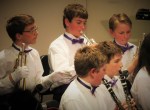
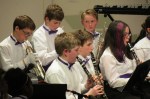
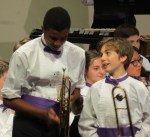
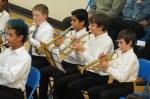
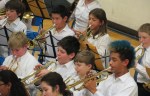
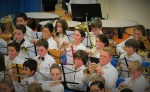
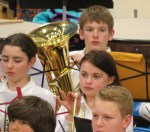
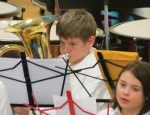
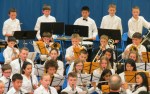
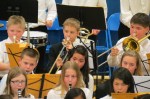
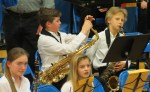
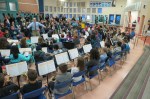
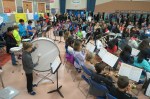
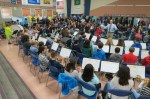
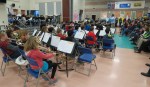
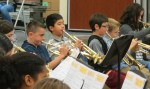
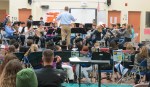
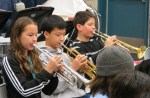
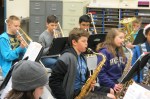
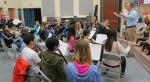
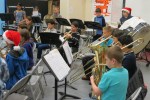
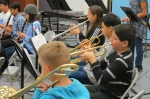
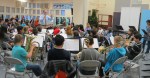
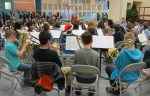
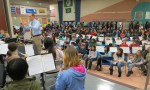
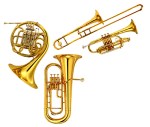 Lucky me! Under the guidance of Charlie Fix, Band and Orchestra Director, I get to teach beginning brass again to 5th and 6th graders in the two elementary bands that practice and perform at Skyview Jr. High School in Bothell. Classes for 2nd-year band members began on 12 September and for 1st-year band members, today, 4 October.
















 trumpet sitting in your closet. Your parents bought it new for you when you were in about 5th grade in St. Louis. You played it until the 9th grade. After graduating from Yale, you earned a J.D. degree from the University of Texas School of Law, taught a law course in Miami, took a job teaching law at Southern Illinois University (SIU) in Carbondale, IL, got married, and had a family. It’s there at SIU that you held tenure. Later, your son played your trumpet for a few years before he specialized in piano and sports and gave the trumpet back to you. And there it sat in the house while you taught law for 34 years. Then, in 2011, USD offered both you and your wife positions on the law school faculty. You’re now in your 40th year of teaching up to 7 different law courses. You’ve been a Visiting Professor at a dozen university law schools, including Seattle University in the summer of 2012. At USD, you are now the J. Lawrence Irving Distinguished Senior Teaching Fellow and Professor-in-Residence. (Please see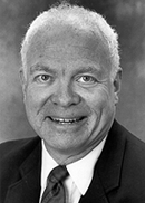
 and enjoyment. He is a competitive person and generally likes to perform at the highest level he is capable of, but as for trumpet, he has no ambition or plans to play in an orchestra or band. If he did, he would prefer to play classical music, but he also loves marches and musicals. He’d love to play The Music Man, and to his surprise, he’s come to enjoy opera.






















 Until now, I’ve never had a trumpet or cornet student who is older than I am! Holy cow, we’re 156 years old! Bob was born in 1934, and is my 26th student. We held his first lesson in his living room on 2 February.











 Glenn's Trumpet Notes