Glenn’s Trumpet Notes

News & Tips for Trumpet & Cornet Students

  • December 2025
    S M T W T F S
     123456
    78910111213
    14151617181920
    21222324252627
    28293031  
  • Enter your email address to subscribe to this blog and receive notifications of new posts by email.

    Join 89 other subscribers
  • Subscribe

Posts Tagged ‘trumpeter’

Fundraising for VFW—Busking Again at Veterans Plaza in Edmonds

Posted by glennled on August 24, 2025

Glenn Ledbetter busks again at Veterans Plaza on Saturday’s Market Day, Edmonds

Last Saturday, 23 August, I got out there again, using my horns to raise money for VFW Posts 8870 (Edmonds) and 1040 (Lynnwood). The yellow sign reads, “All Donations go to VFW (Veterans of Foreign Wars),” and people gave generously, as usual. I started busking here in 2017, but I missed a few years, starting with Covid-19 in 2020. My last appearance was in June 2022.

I played for more than one and half hours. My busking book contains some 100 songs, and I played about half of them, some more than once, as the large crowd kept changing in and out, mingling, sitting, eating, coming and going. I always play in the Veterans Plaza in downtown Edmonds, adjacent to the Edmonds Museum Summer Market (please see https://historicedmonds.org/summer-market). The warm, clear summer day was perfect.

The crowd responses are always great fun. For example, parents give their little kids a few dollars to toss in the trumpet case. They approach carefully, one eye on the open case and one eye on me, quickly drop the money onto the pile, and run back to their parents! Other kids will dance to the music, and both kids and adults will talk to me. Remember being taught to donate to charities? Remember teaching your kids the same? Often, people just say, “Thank you for your service,” and I reply, “You’re welcome.” (I’m a Navy vet who served on three ships in the Pacific and taught NROTC at the University of Washington.)

After I played “Summertime,” a woman came up and told me that’s her favorite song. After “Wand’rin’ Star,” one man shouted “Lee Marvin!” [the actor (and a Marine) who sang it in the movie, “Paint Your Wagon.”] We waved to each other. An elderly lady in a motorized wheelchair came up and asked me if I have seen the movie, “The Legend of 1900.” I have not. She said there’s a great trumpeter in that movie. “That’s when I fell in love with the trumpet and that trumpet player,” she said.

I brought only two of my five horns this time–my cornet and flugelhorn. One song got stuck in my mind, and so I played “I’m Always Chasing Rainbows” three times. It was written in 1917, shortly before WWI ended. I always loved the tune but never paid attention to the words. So, I looked up the lyrics. It’s about a depressed person who always dreams about success and happiness but is just a natural-born loser who always fails. But I remember it from the MGM musical, “Ziegfeld Girls,” in 1941, early during WWII. Judy Garland sings the song, but eventually her character does become the top showgirl in the Ziegfeld Follies.

As is my custom as VFW Post 1040 Bugler, I split the donations in two and gave half to each VFW Post (please see https://vfw1040.org and https://vfw8870.org).

Posted in Busking | Tagged: , , , , , , , , , | 4 Comments »

Four Bugle Calls on Memorial Day in Lynnwood, Everett and Seattle

Posted by glennled on June 21, 2024

On Memorial Day this year, I sounded four bugle calls:

MorningStar Senior Living at Silver Lake, Everett
  • “Assembly” and “Echo Taps” at the ceremony hosted by VFW Post 1040 at Veterans Park in Lynnwood.
  • “Taps” at the retirement community, MorningStar Senior Living at Silver Lake, in Everett.
  • “Taps” at the Seattle Mariners baseball game at T-Mobile Park in Seattle.

Judah Deuman, a senior trumpeter at Lynnwood High School, played the “echo” part of “Echo Taps” with me.

Veterans Park, Lynnwood

These were very significant, “comeback” performances for me. I had not played in public for the past five months.

In my previous blog article, I divulged that during last December, I was having trouble playing my horns. My orthodontist predicted that I should be able to play my horns again by Memorial Day. Sure enough, it happened!

Now, what else could happen? Sciatica, that’s what. While sounding “Assembly” during the morning ceremony in Lynnwood, I discovered I could not hold a steady tone while standing, due to my lower back pain. So, for the rest of the day, I sounded “Taps” while seated on my walker and did just fine.

Who said that old age is just a number? Well, if that’s true, then jail is just a room.

The privilege of sounding “Taps” at the Mariners game that evening is presented in my next blog article.

Please click on any photo to enlarge it.

Posted in Ceremonies & Celebrations | Tagged: , , , , , , | Leave a Comment »

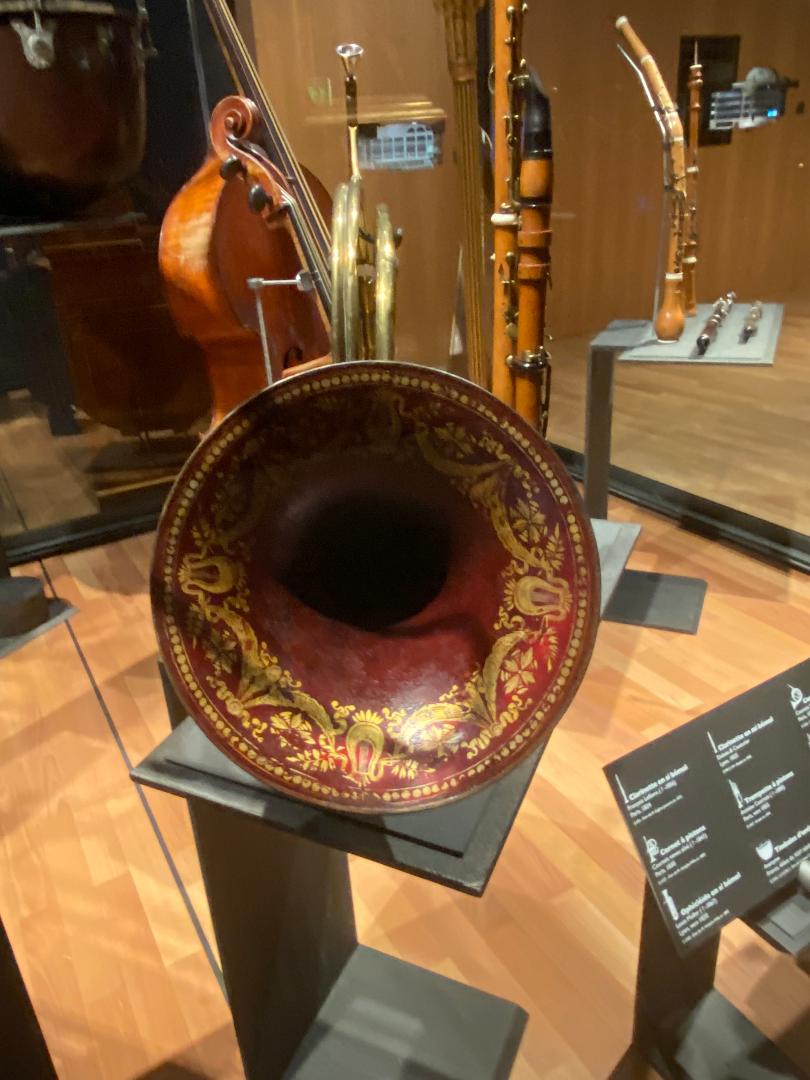
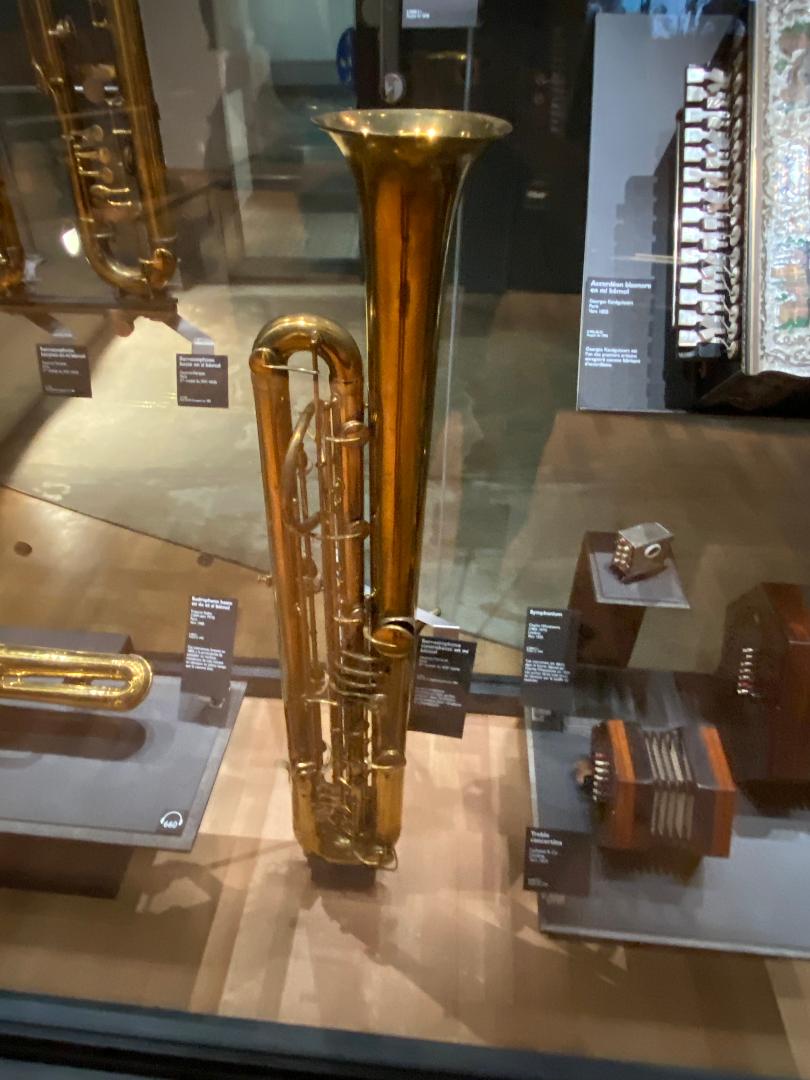
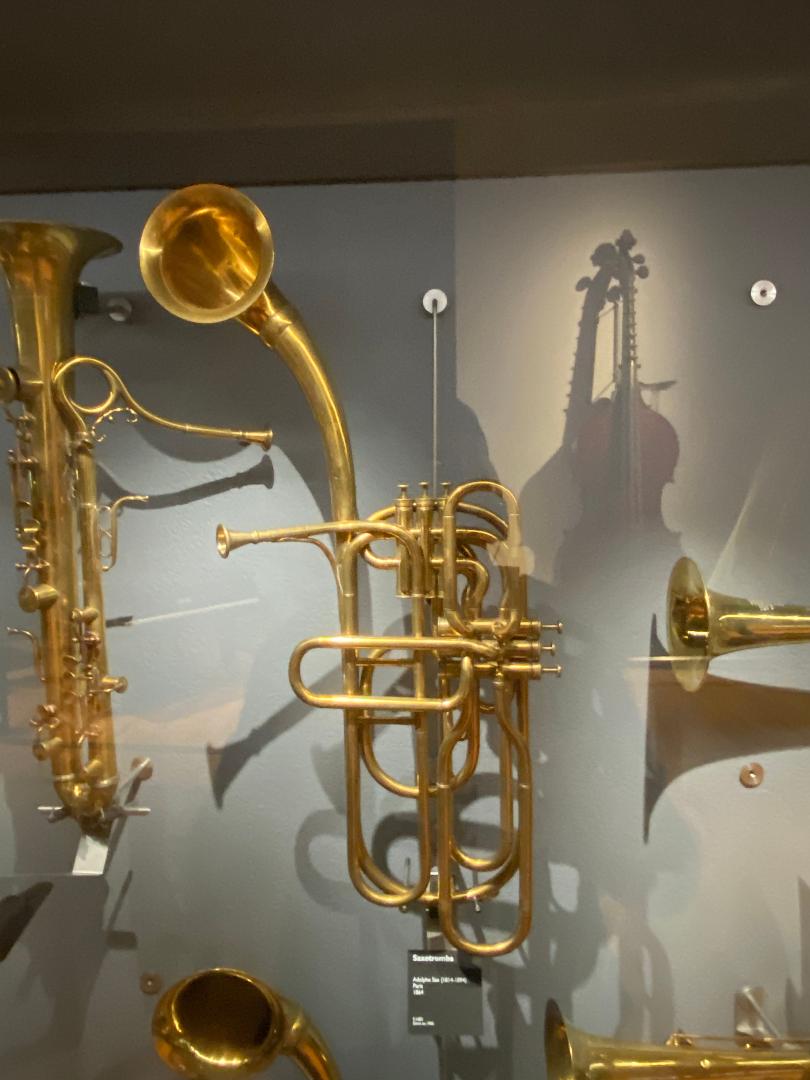
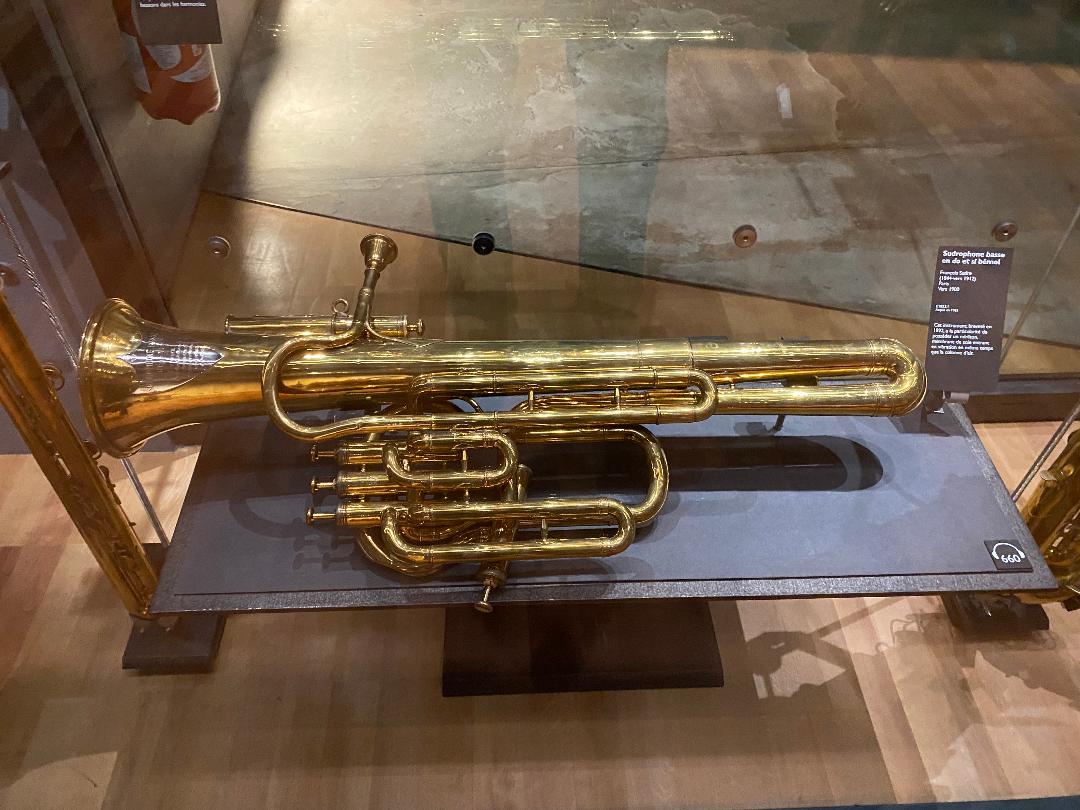
Music Museum in Paris Has Trumpets with 0,1,2, & 3 Valves

Posted by glennled on June 18, 2024

In Paris, there’s a music museum. A friend told me about it several years ago, and finally, I found it and went to see it on 7 May—the Musee de la Musique in the 19th arrondissement, northeast of the Louvre and Eiffel Tower.

A docent on the second floor, who plays trumpet, told me about a special trumpet on display on the fourth floor. She said it was used at the premier of Verdi’s Aida in Cairo, Egypt in 1871, over the objections of Verdi himself. She could not leave her post and come upstairs to show it to me.

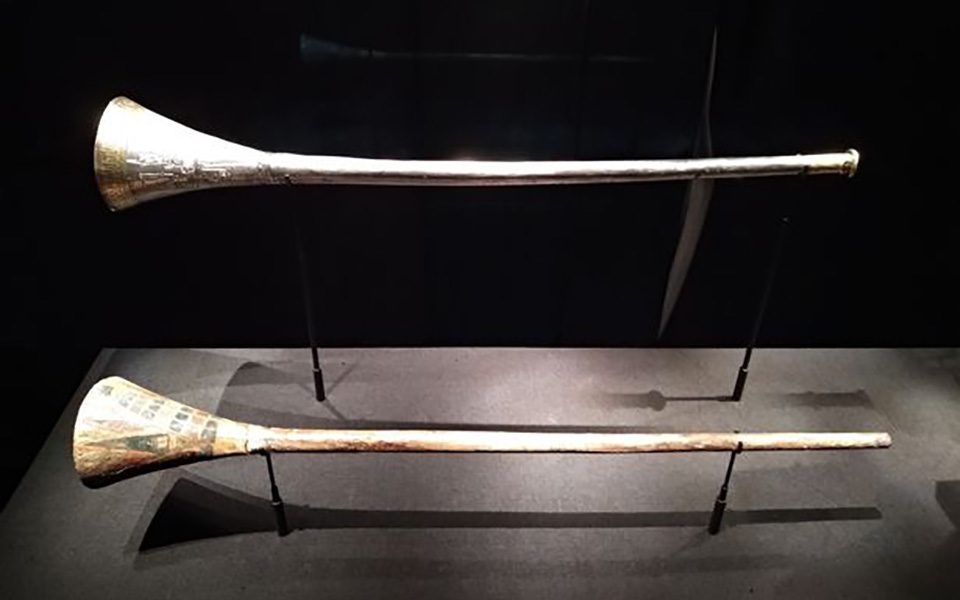
Egyptian trumpets found in King Tutankhamun’s tomb

But before I repeat what else the docent said, let me say something about the opera itself. The orchestral instrumentation calls for 6 Egyptian trumpets. They play the melody of the now-famous “Triumphal March,” when the victorious Egyptian troops parade into the city of Thebes after defeating the Ethiopian army.

The docent’s story was that Verdi insisted that the orchestra use authentic period trumpets which had no valves. The lead trumpeter, however, did not want to use them. So, in rehearsals the trumpeters used the Egyptian instruments, but at the premier, they brought trumpets with one valve. Verdi was furious, but there was nothing he could do. These trumpets became known as “Egyptian trumpets” or “Aida trumpets.”

So, I spent my time on the fourth floor. Until then, I had thought that valves were not added to natural trumpets until the 1830s. But I was thinking three valves, and I had always wondered how trumpeters could play the “Trumpet Voluntary,” written by the English composer, Jeremiah Clarke in the 1690s, without valves. Well, it turns out that that piece was the originally written for keyboard instruments. An organist would simply use the trumpet stop. [Maybe trumpeters at that time used keyed trumpets—but that’s another story for me to learn.] I did not see any four-valved trumpets on display.

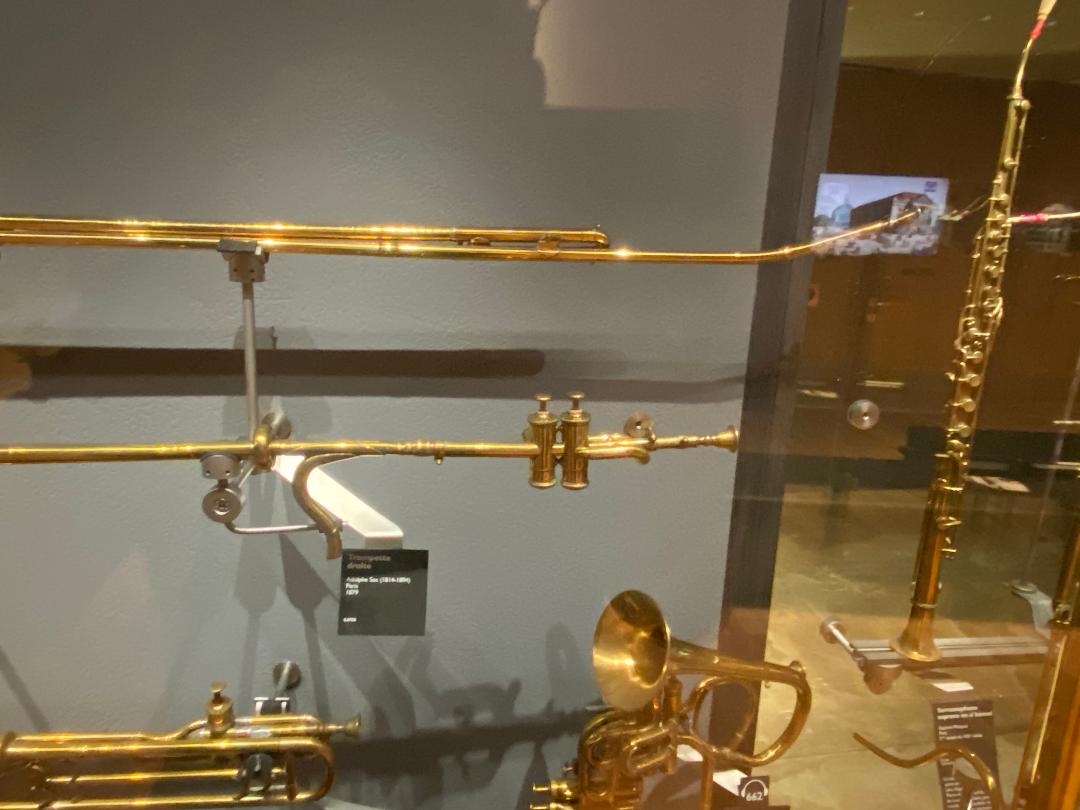
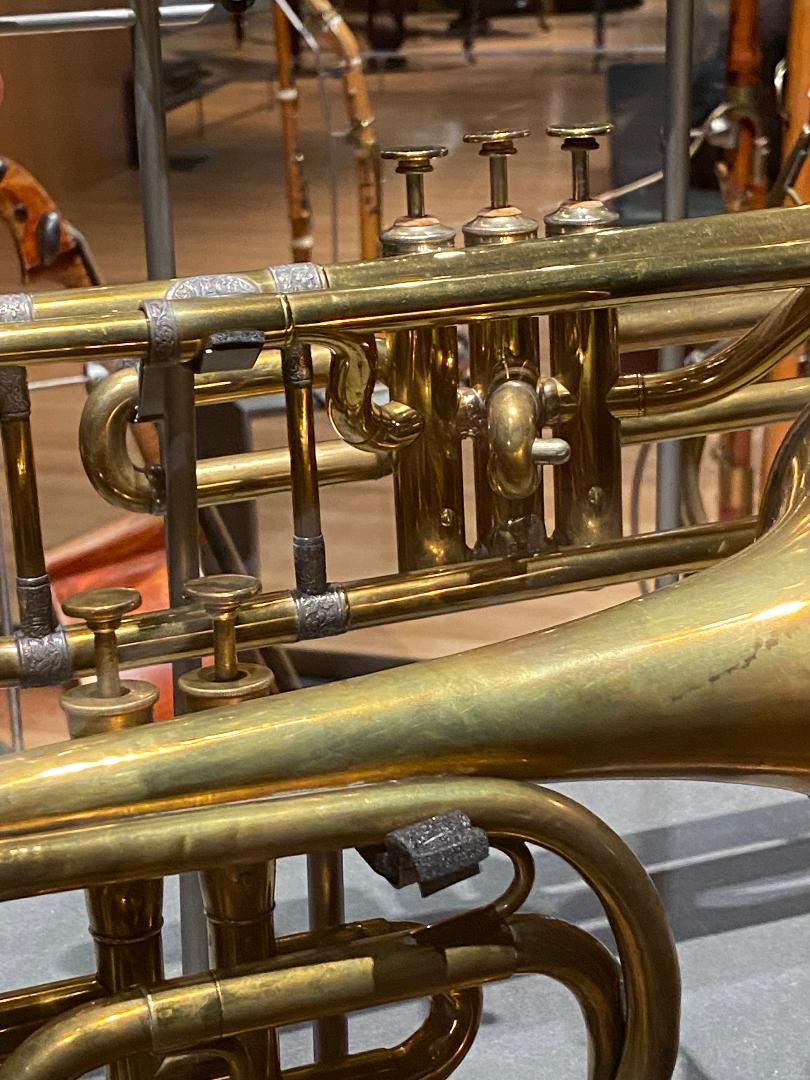
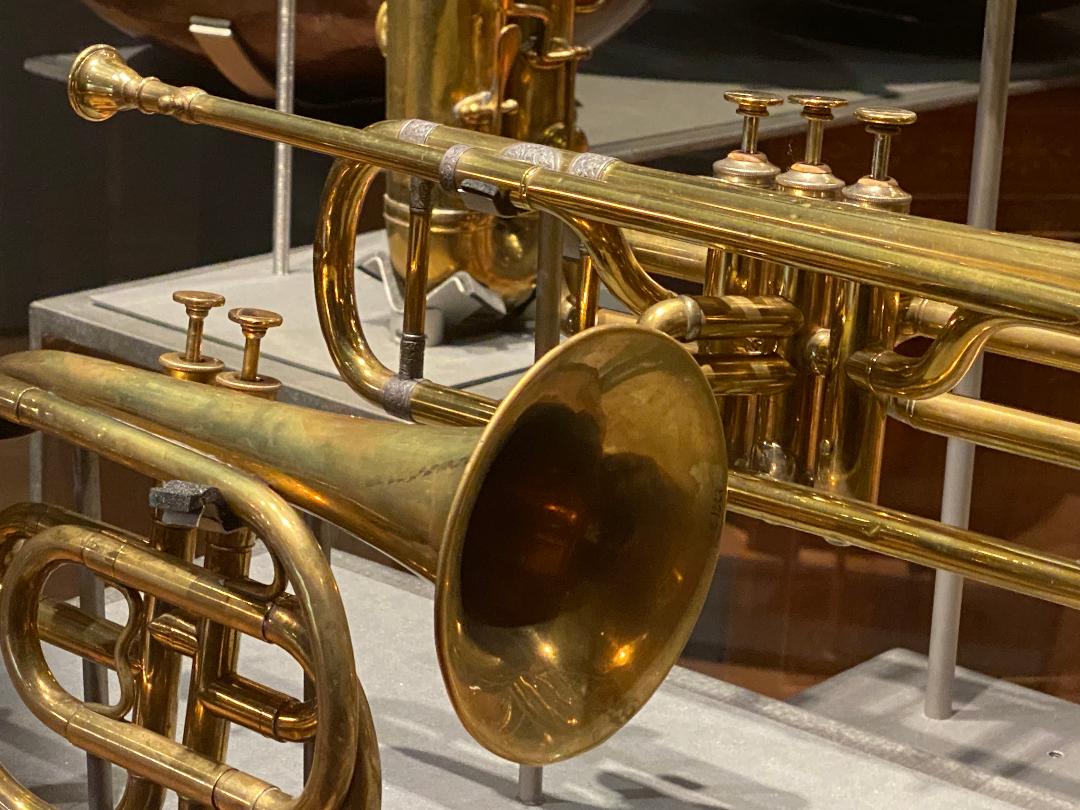
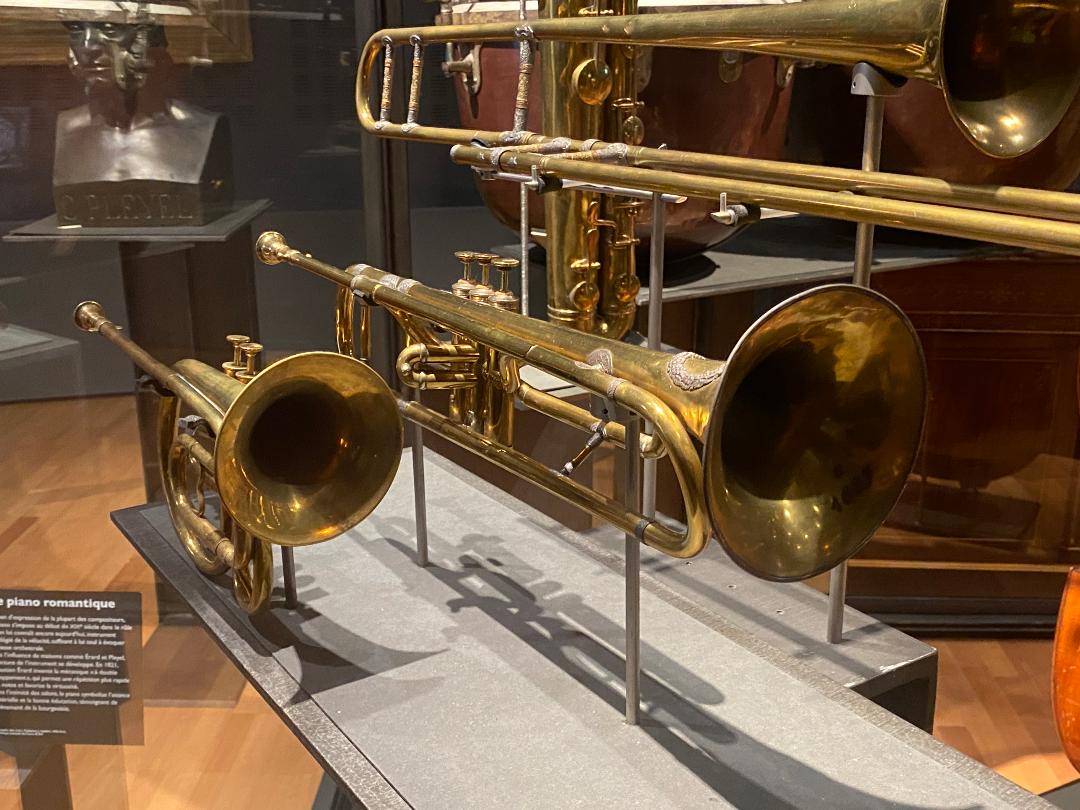
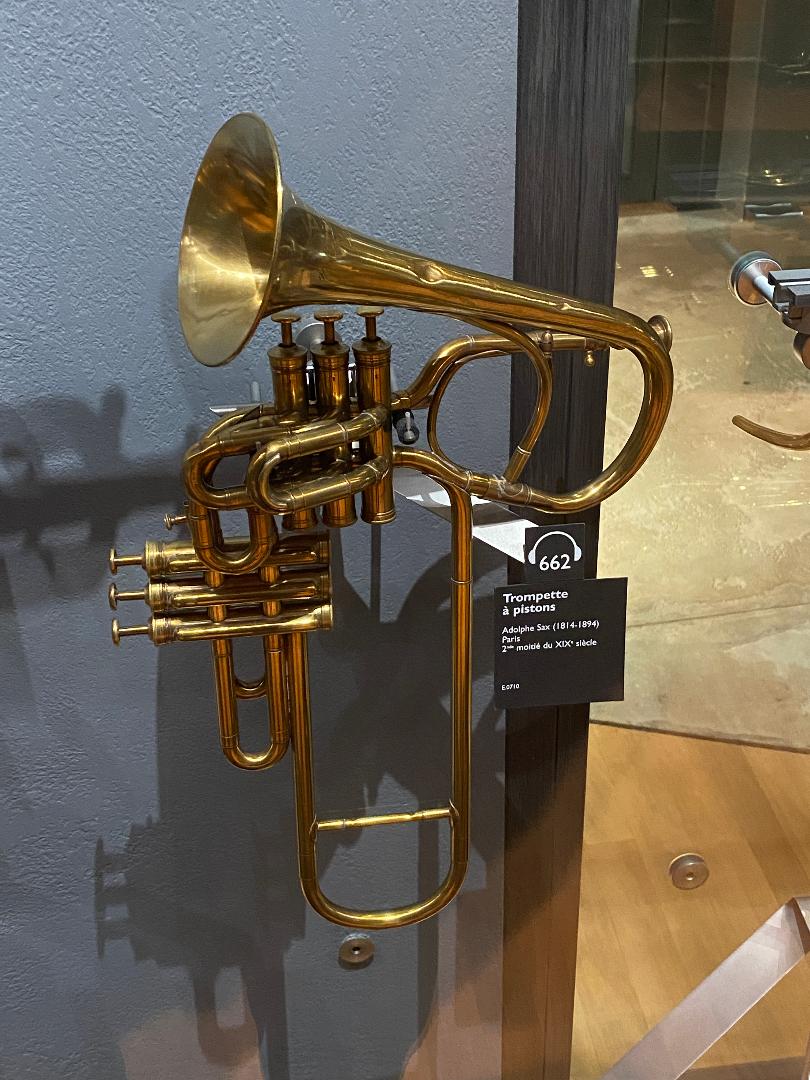
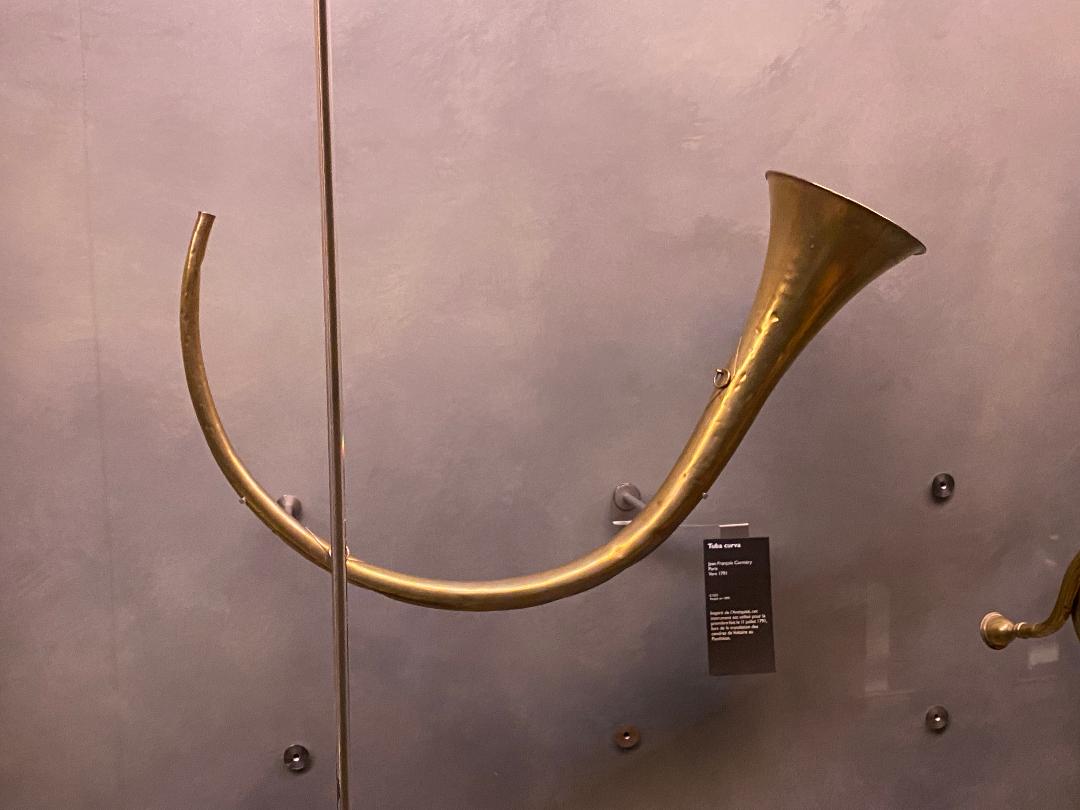
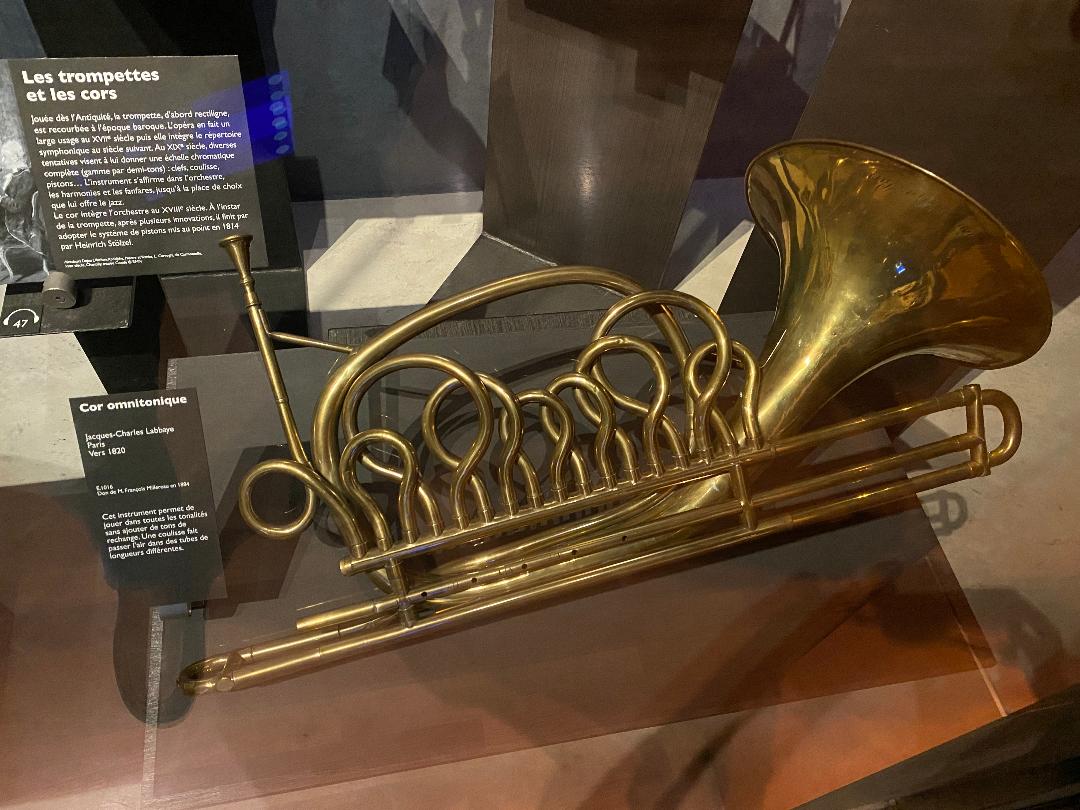
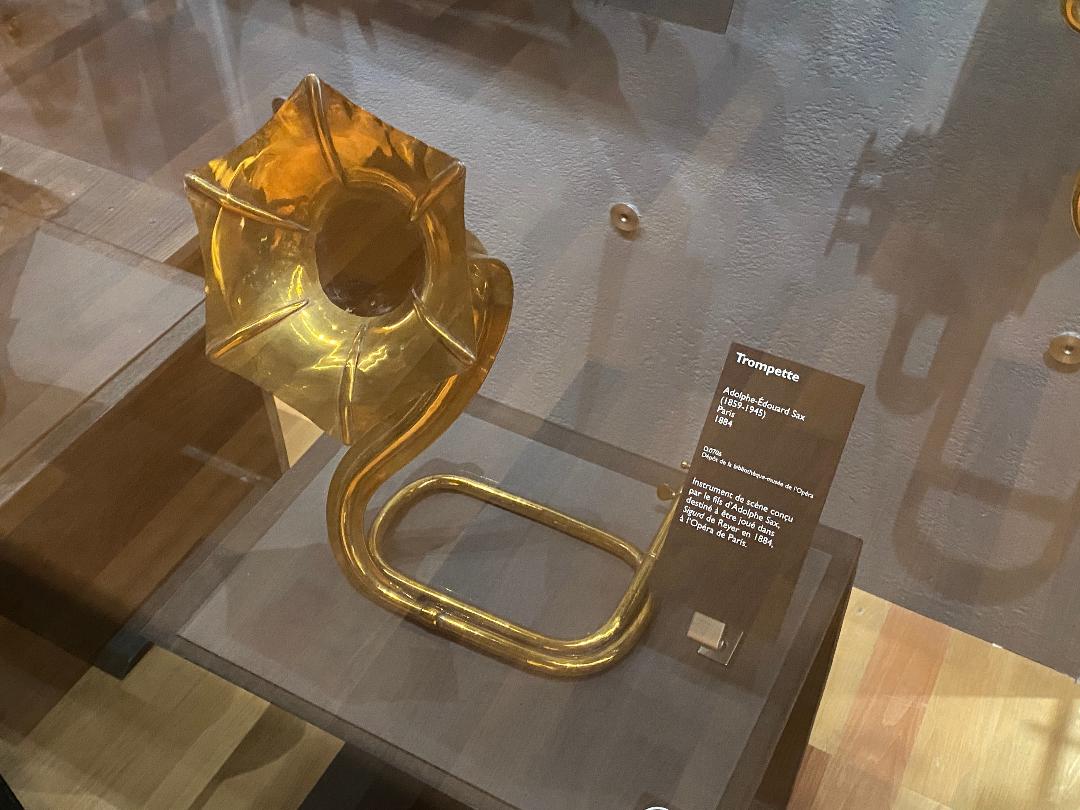
It also turns out that the transformation of the trumpet (from its natural straight or curved tubal shapes without values to curved, looped shapes with valves) did not take one giant leap from no valves to three valves in the 1830s. In other words, it did not suddenly leap from being able to sound only harmonic tones (like a bugle) to sound all notes in the chromatic scale. It progressed from having no valves to one valve, to two valves, to three valves during the period 1788-1830s. And for the first time in my life, I saw samples of such trumpets in the Paris Music Museum!

Classic 1871 “Egyptian” or “Aida” trumpet
Is this the display spoken of by the Museum Docent?

When did trumpeters begin to play “Trumpet Voluntary” on actual valved trumpets—does it take one, two or three values to play it? In the key of C, I think you could play it on a two-valved trumpet, if the first value permitted you to play the Ds and Fs and the second value permitted you to play the A (along with the first valve) and F#.

The most prolific baroque composer for trumpet was Giuseppi Torelli. He is thought to have composed his Sinfonia with Trumpet in D (G. 8) in the 1690s. Henry Purcell’s The Fairy-Queen was first performed in 1692. Handel’s Water Music Suite No. 2 heavily features trumpets. It premiered in 1717. Vivaldi composed his Concerto for Two Trumpets in ~1720s. Jean-Joseph Mouret composed his Suite de Symphonies in 1729. Its Rondeau is used as the theme music for PBS’s program, Masterpiece. Handel composed his Messiah in 1741. His Music for the Royal Fireworks (1749), especially movements 1 and 4, features trumpets. Leopold Mozart composed his Concerto for Trumpet in D Major in 1762. Hadyn composed his Trumpet Concerto in E-flat major in 1796. Hummel composed his Trumpet Concerto in E Major in 1803. Beethoven composed his Ninth Symphony in 1822-24. What kind of trumpets did trumpeters play for each of these? The first valve was invented in 1788. The second valve was added in 1815.

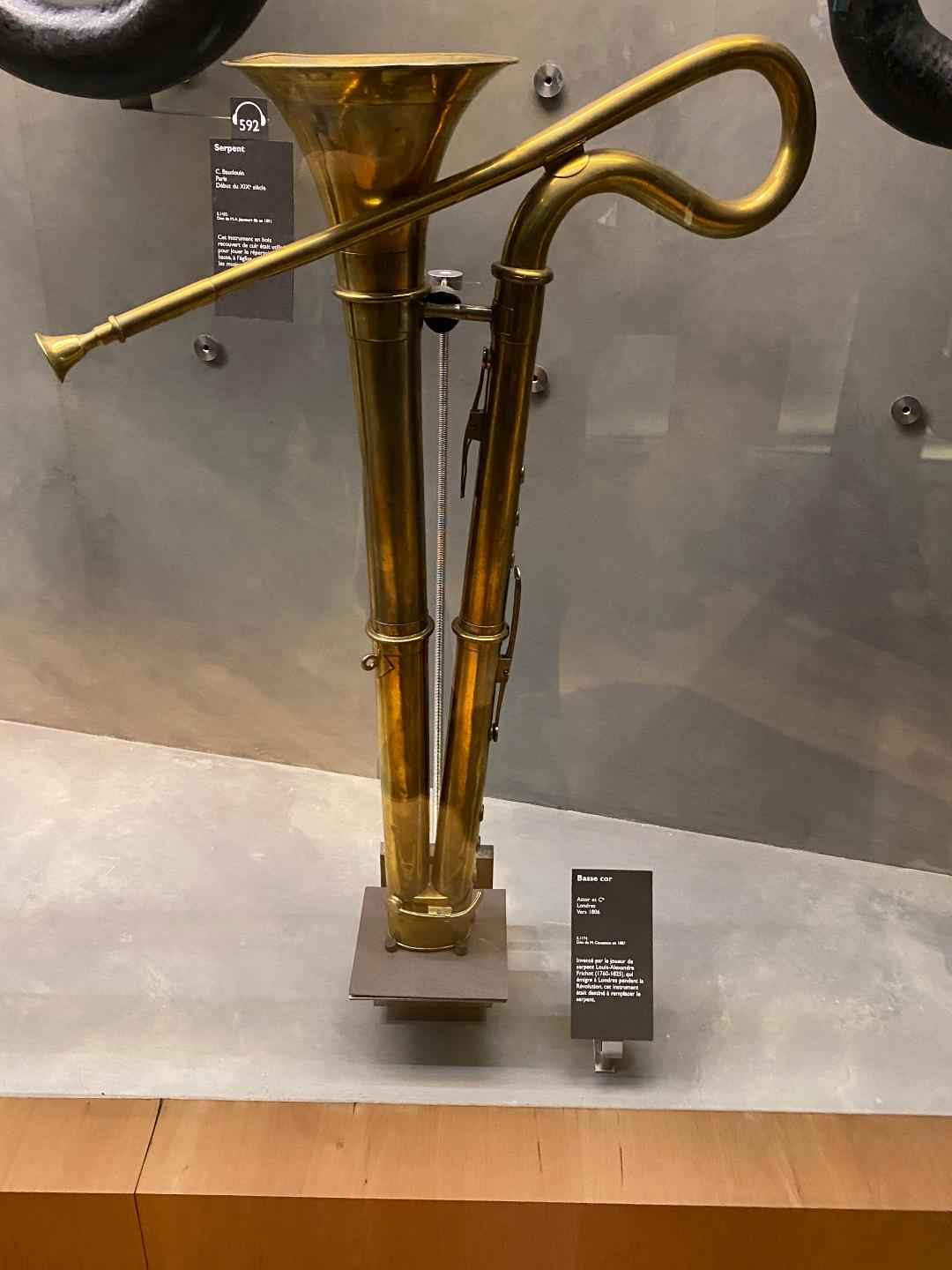
In the museum, I took many photos so that I can now give you a rudimentary tour showing the evolution of the trumpet. There are photos of some very weird-looking instruments, as well as shots of Chopin’s piano, some portraits of composers, and a video of a guest musician playing a forerunner to the French horn that looks somewhat like the modern mellophone. Please click on any photo to enlarge it.

Posted in Museums, trumpets | Tagged: , , , , , , , , , , , , , , , , , , , | 2 Comments »

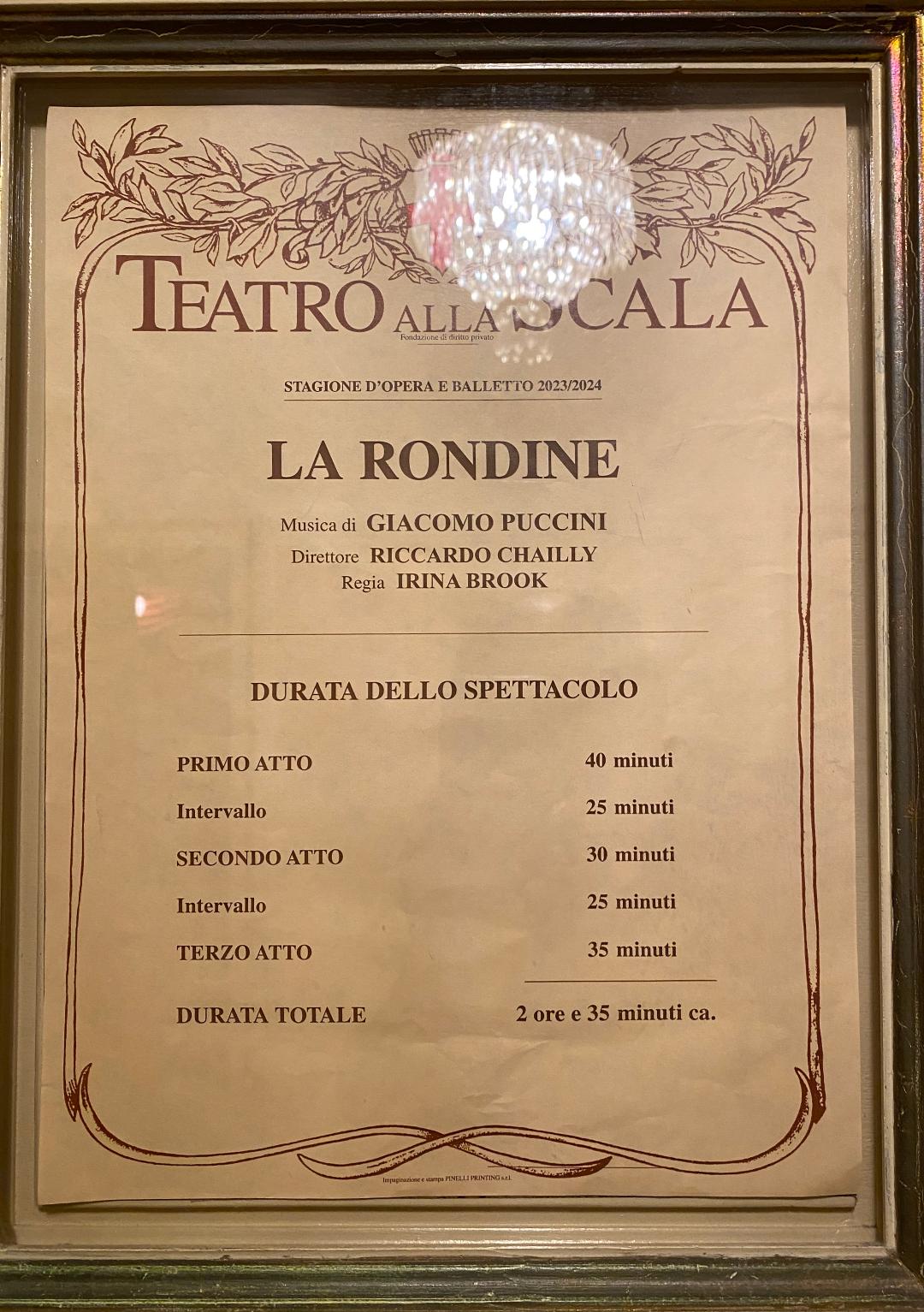
Puccini in Milan, Vivaldi in Venice!

Posted by glennled on June 15, 2024

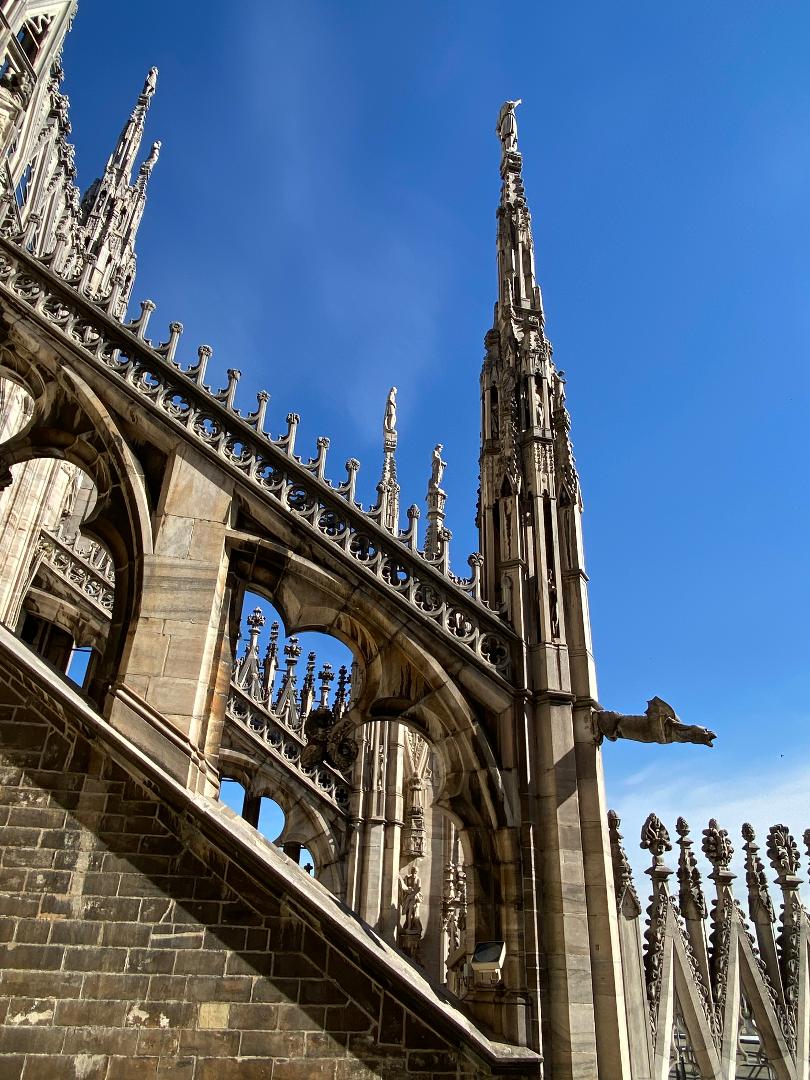
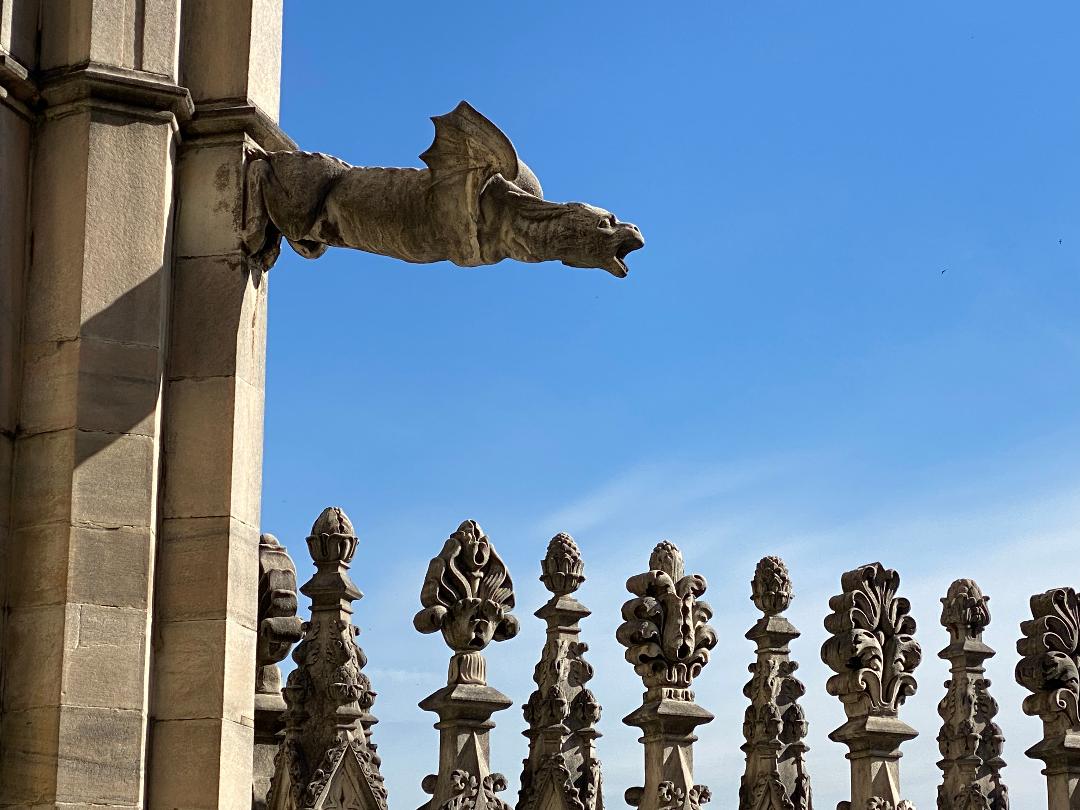
Milan Cathedral (Duomo di Milano)
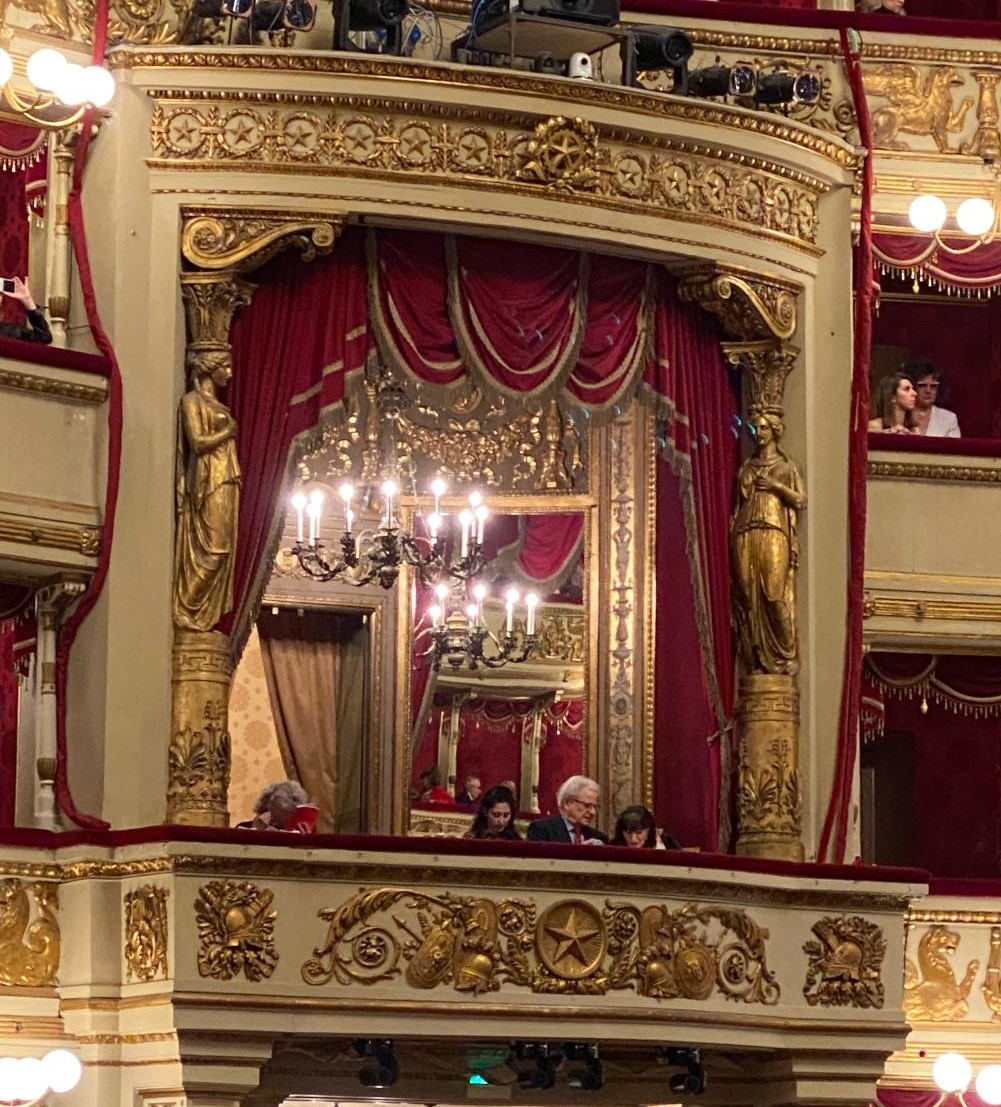
Teatro Alla Scala Opera House, Milan

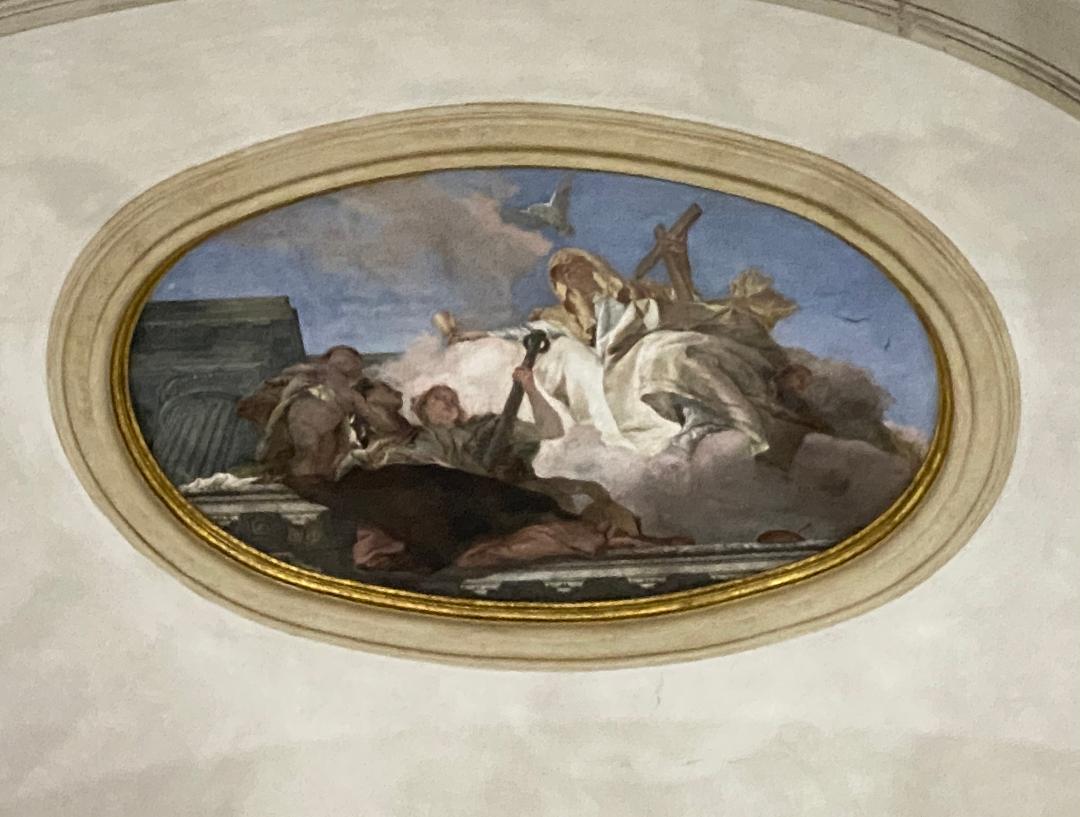
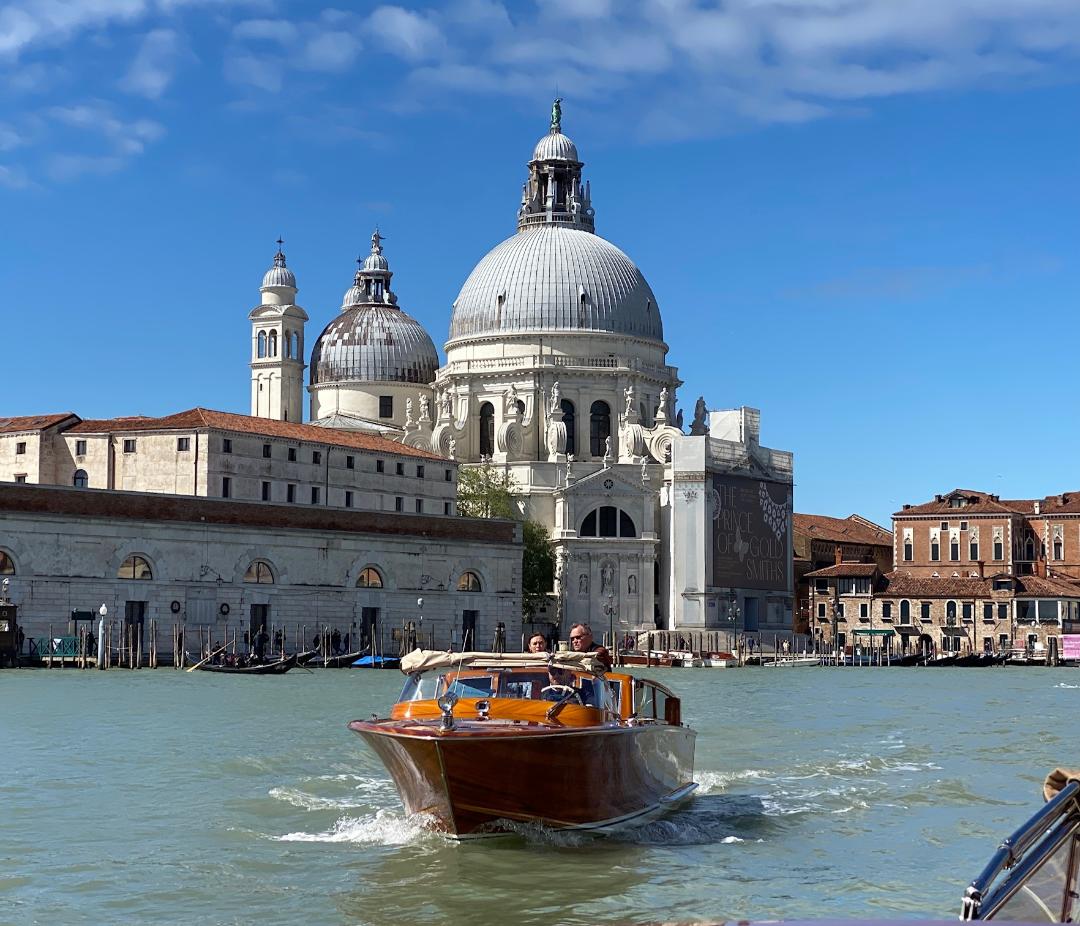
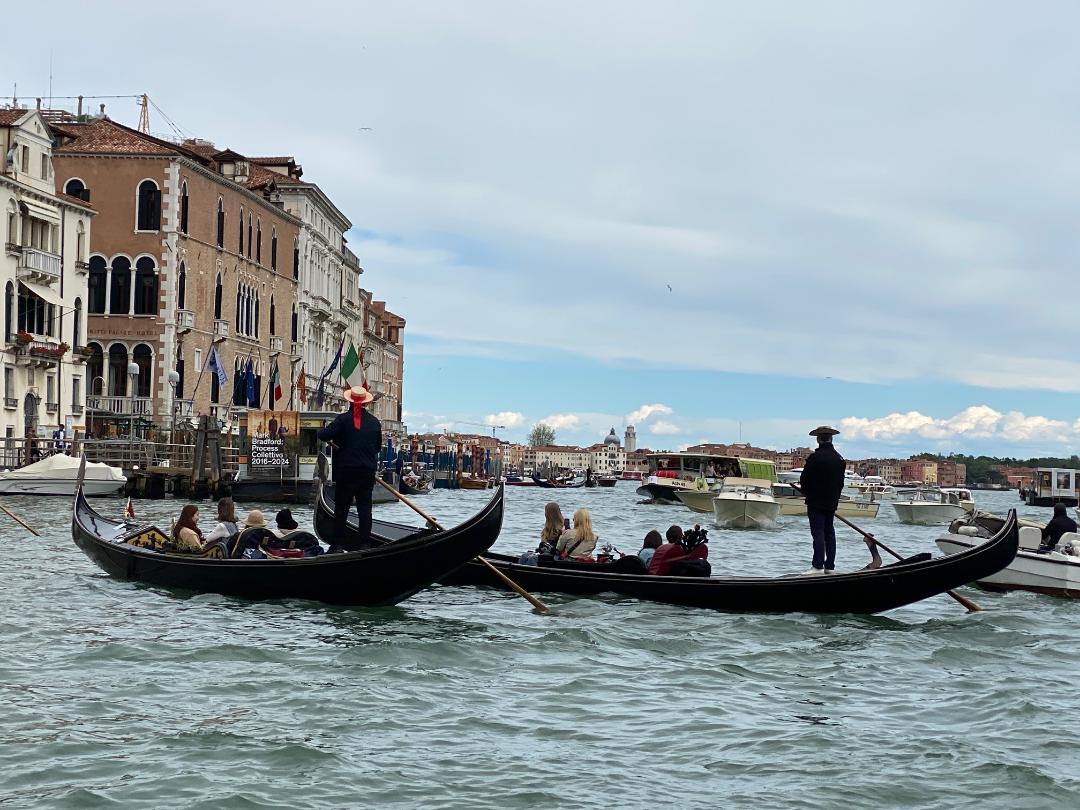
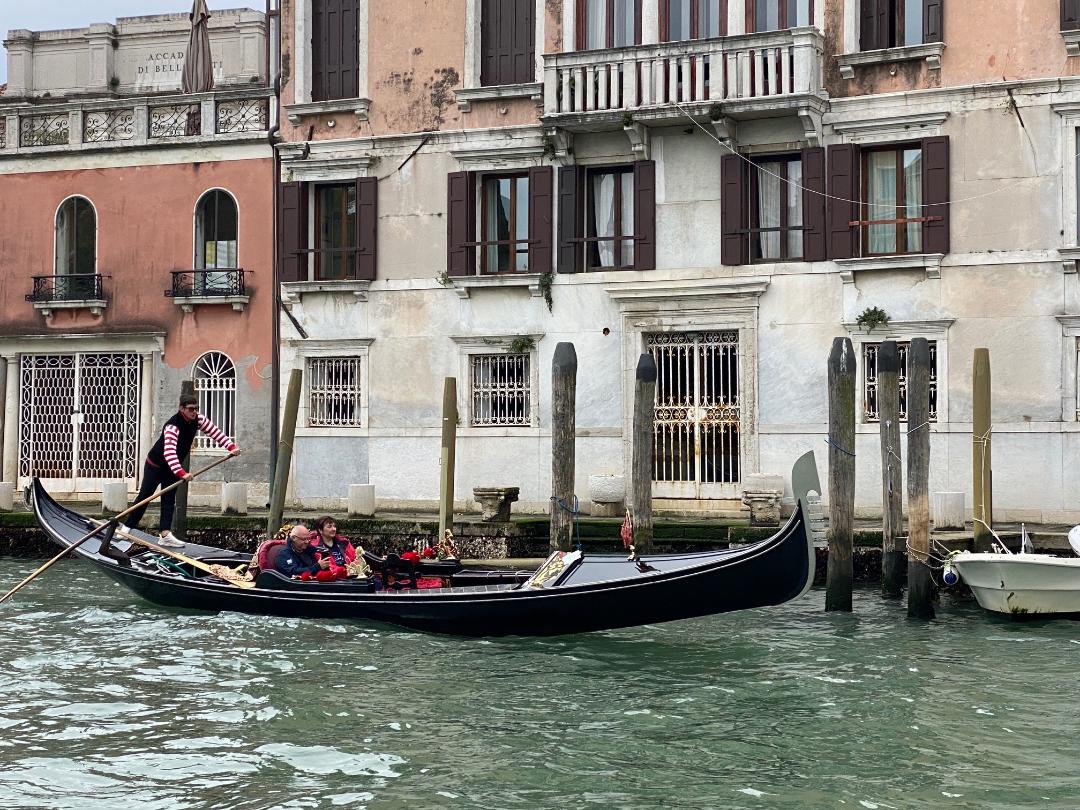
In April, my wife and I went to Italy for the first time–Milan, Venice, and Florence, wow! Our overseas travels have usually been to the UK and Paris in July-August. But a huge magnet drew us into Italy this spring—our granddaughter was studying in her freshman year at New York University’s campus in Florence and her 19th birthday was in late April.

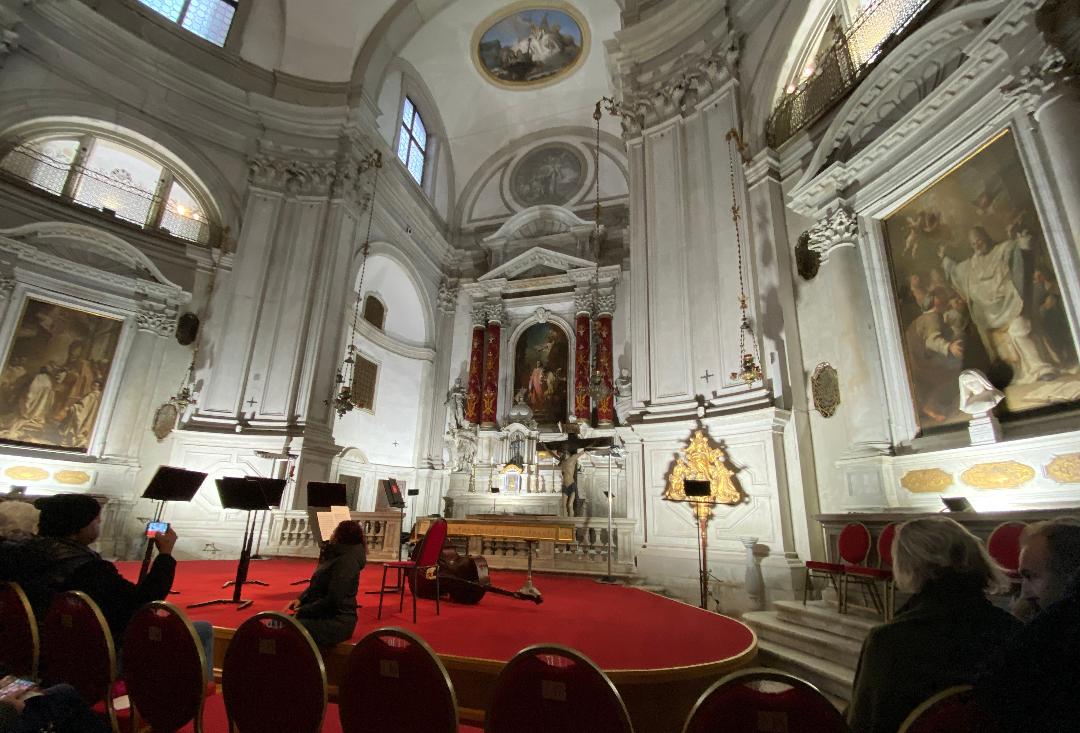
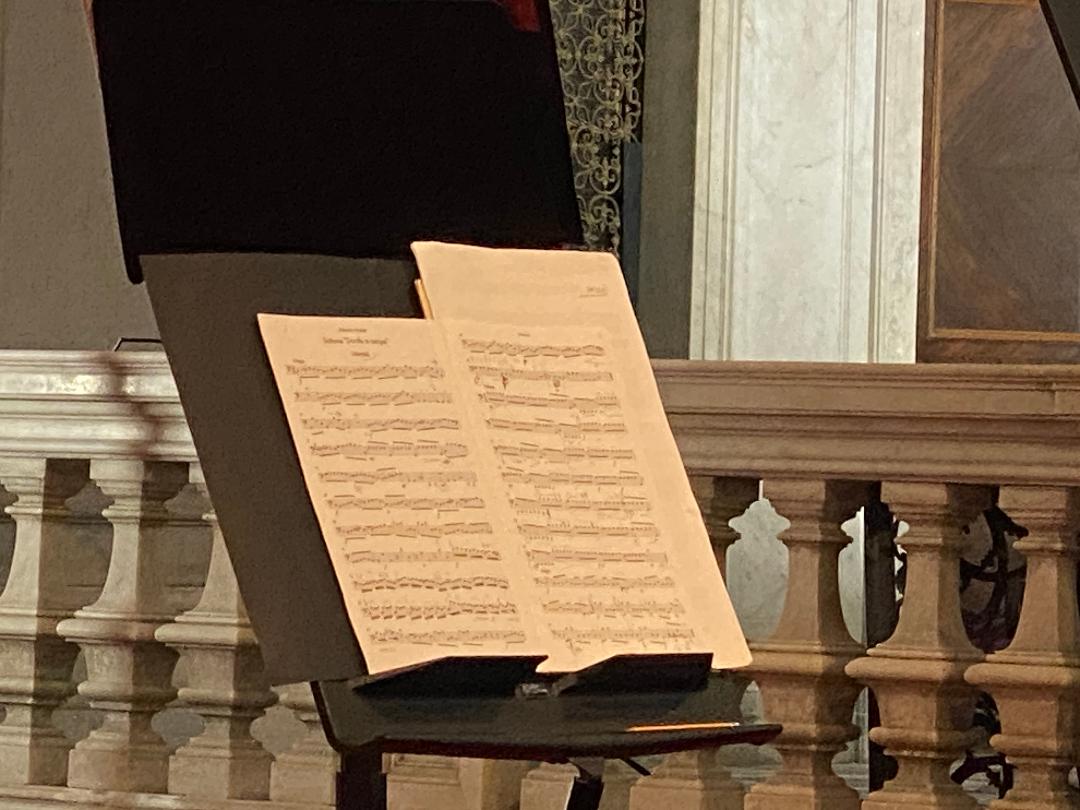
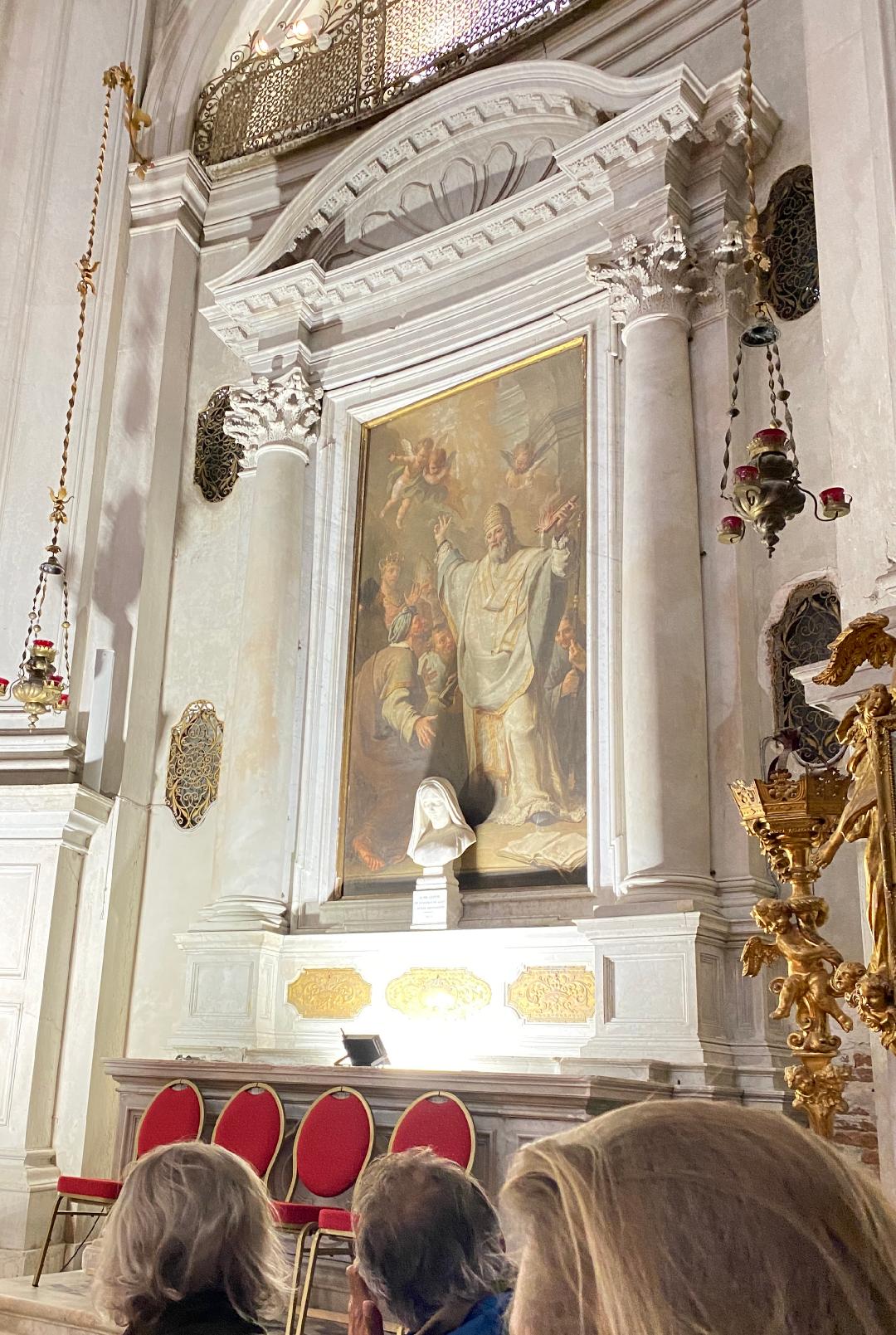
Stage before concert, Vivaldi’s Church, Venice

Our first stop was Milan to see the magnificent Milan Cathedral. Then we saw “The Last Supper” painting by Leonardo da Vinci at St. Maria delle Grazie church. Next, we attended an opera at the fabulous Teatro Alla Scalla. At the cathedral, we saw not only the interior but also a portion of the rooftop. At the opera house, we saw Giacomo Puccini’s La Rondine (The Swallow).

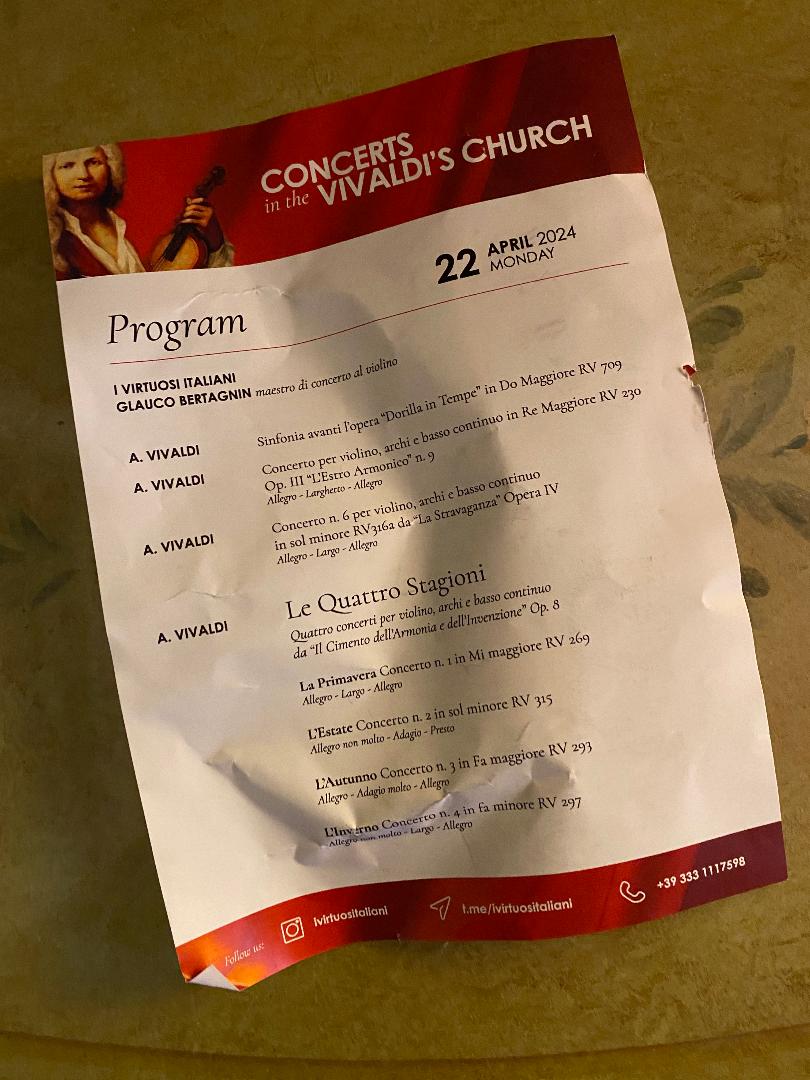
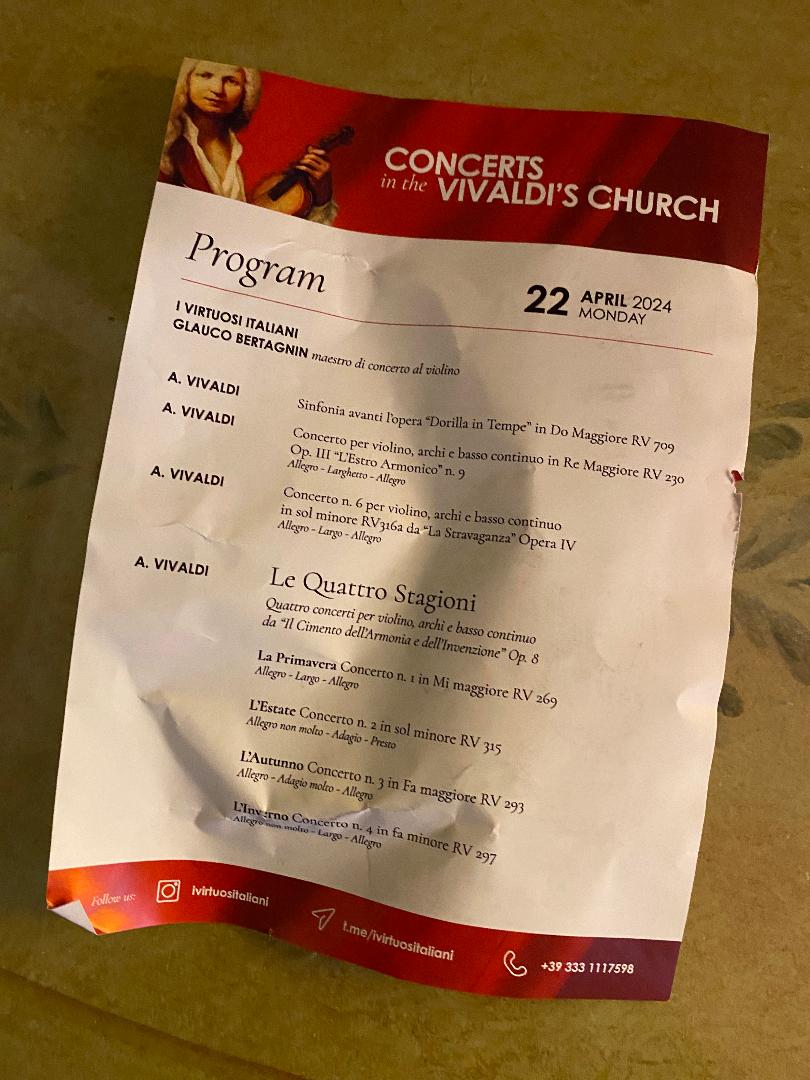
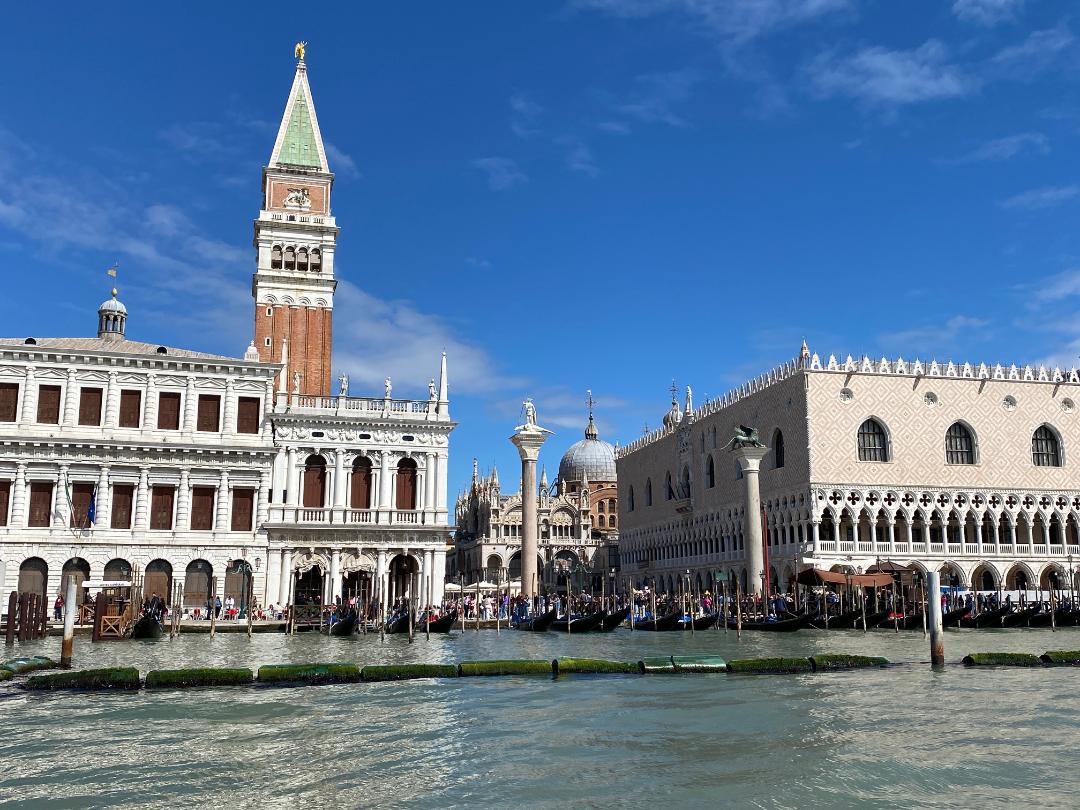
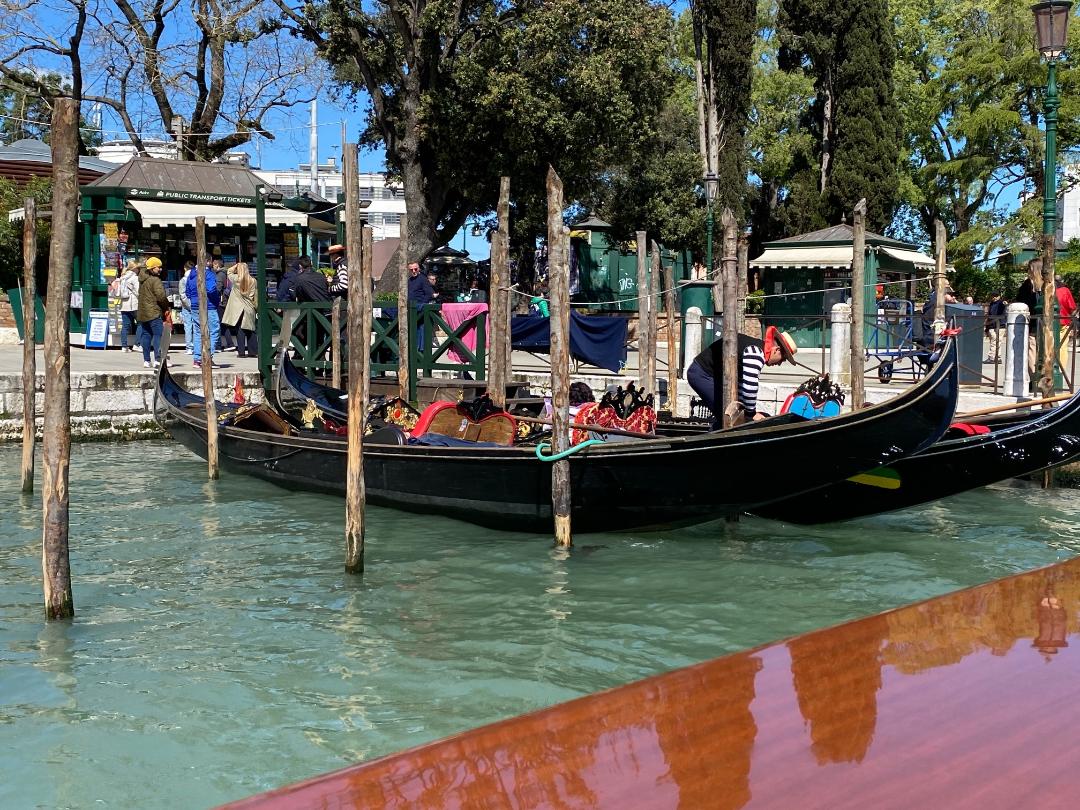
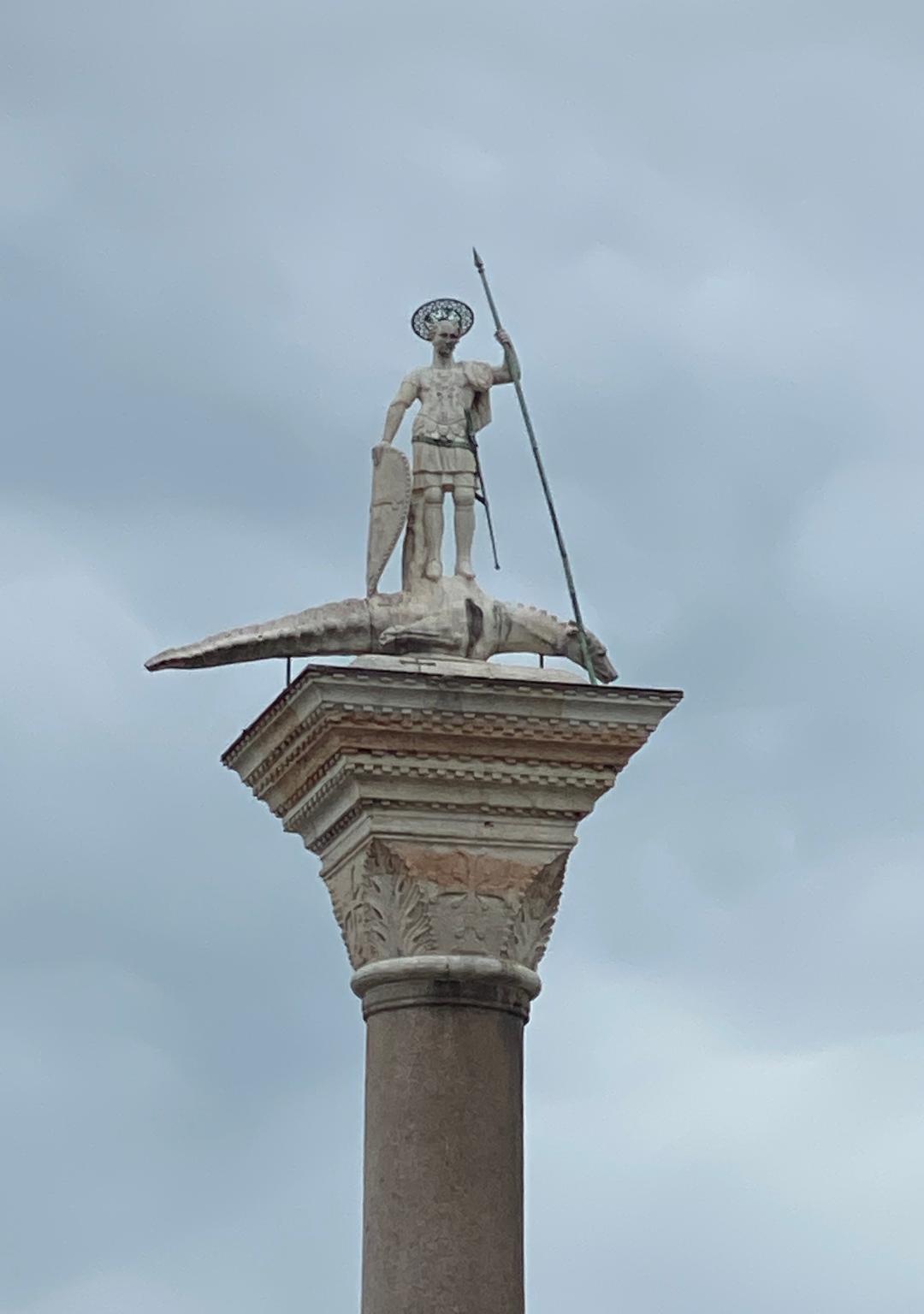
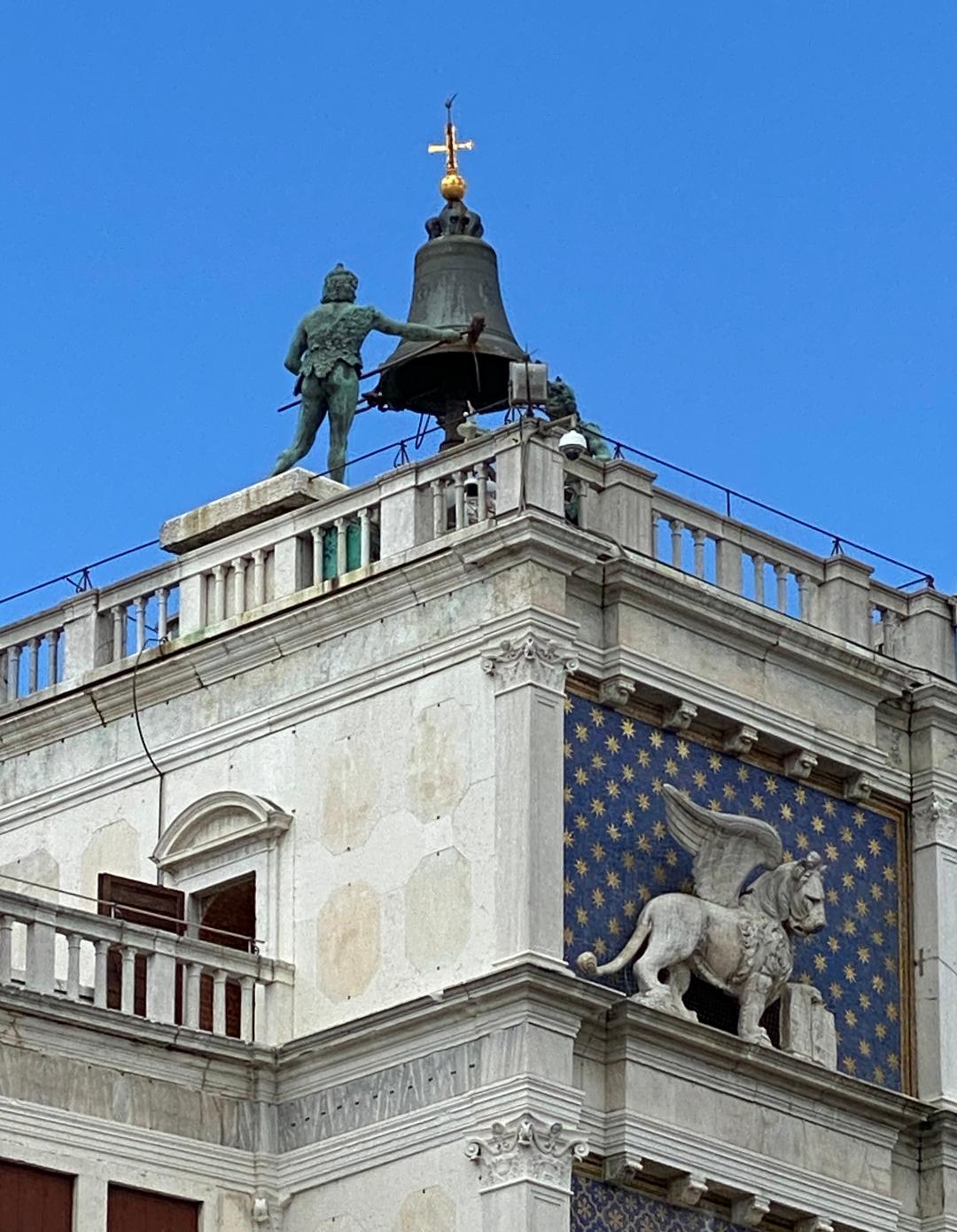
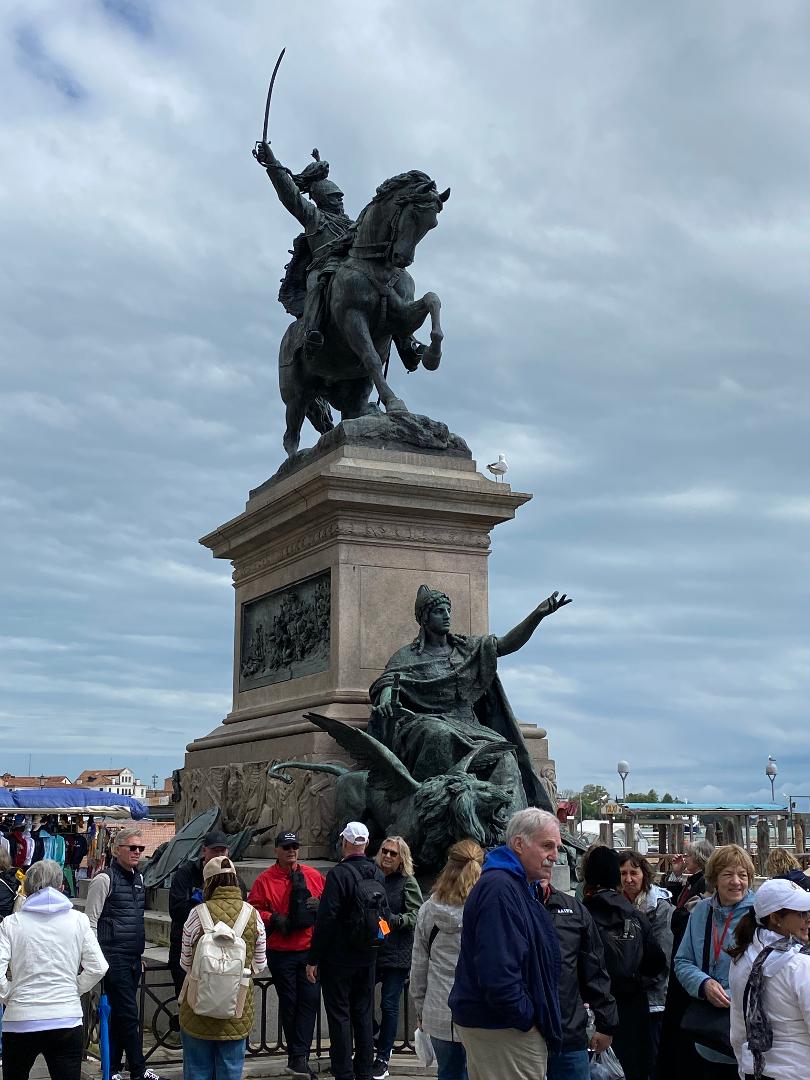
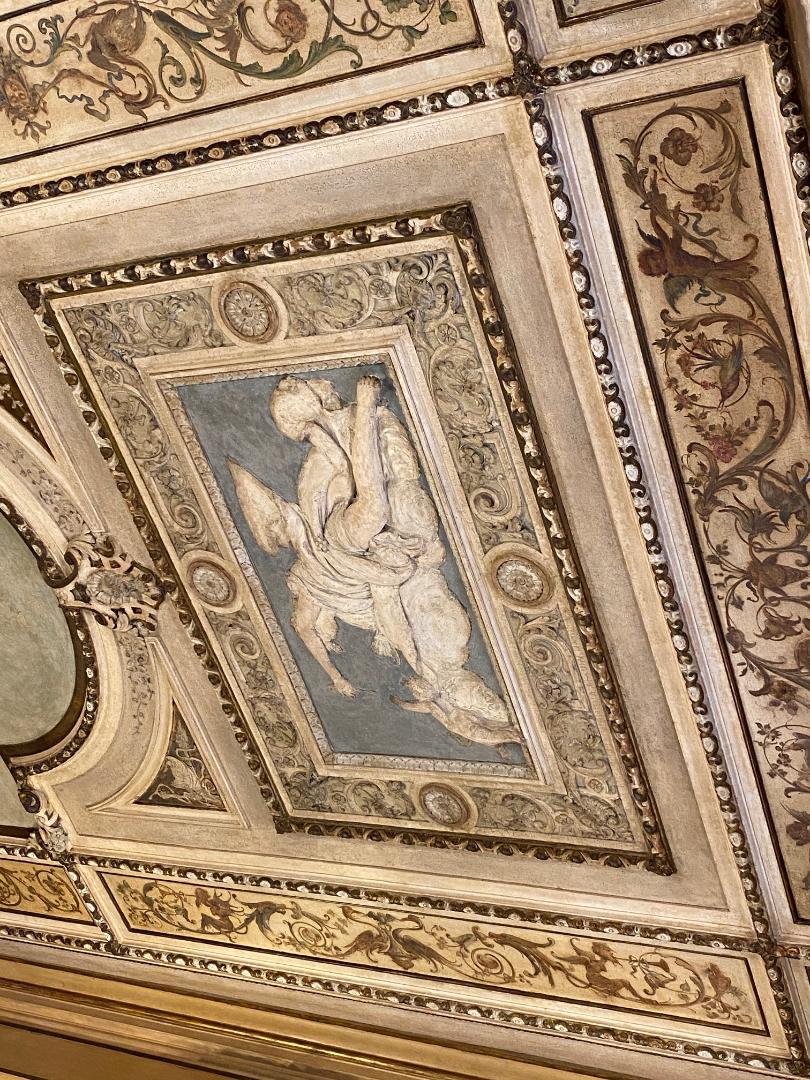
Next was Venice, where our hotel was near the Piazza San Marco. Also, nearby was Church of the Pietà – Saint Mary of the Visitation. It’s known as “Antonio Vivaldi’s Church” because he became a priest there so that he could compose, teach and perform music. He was there, with several interruptions, between 1703 and 1740. He produced over 500 compositions. On 22 April, we attended an evening concert by the renowned ensemble, I Virtuosi Italiani (The Italian Virtuosos)—superb entertainment!

For more information, please see:

Please click on any photo to enlarge it. [Photos during the performances are not permitted.]

Teartro Alla Scala Opera House, Milan:

Last Supper and Atop Milan Cathedral:

Concert at Vivaldi’s Church, Venice:

Venice Scenes:

Posted in Church Music, Professional Concerts | Tagged: , , , , , | Leave a Comment »

Wow! Arturo Sandoval at Dimitriou’s Jazz Alley in Seattle

Posted by glennled on August 16, 2021

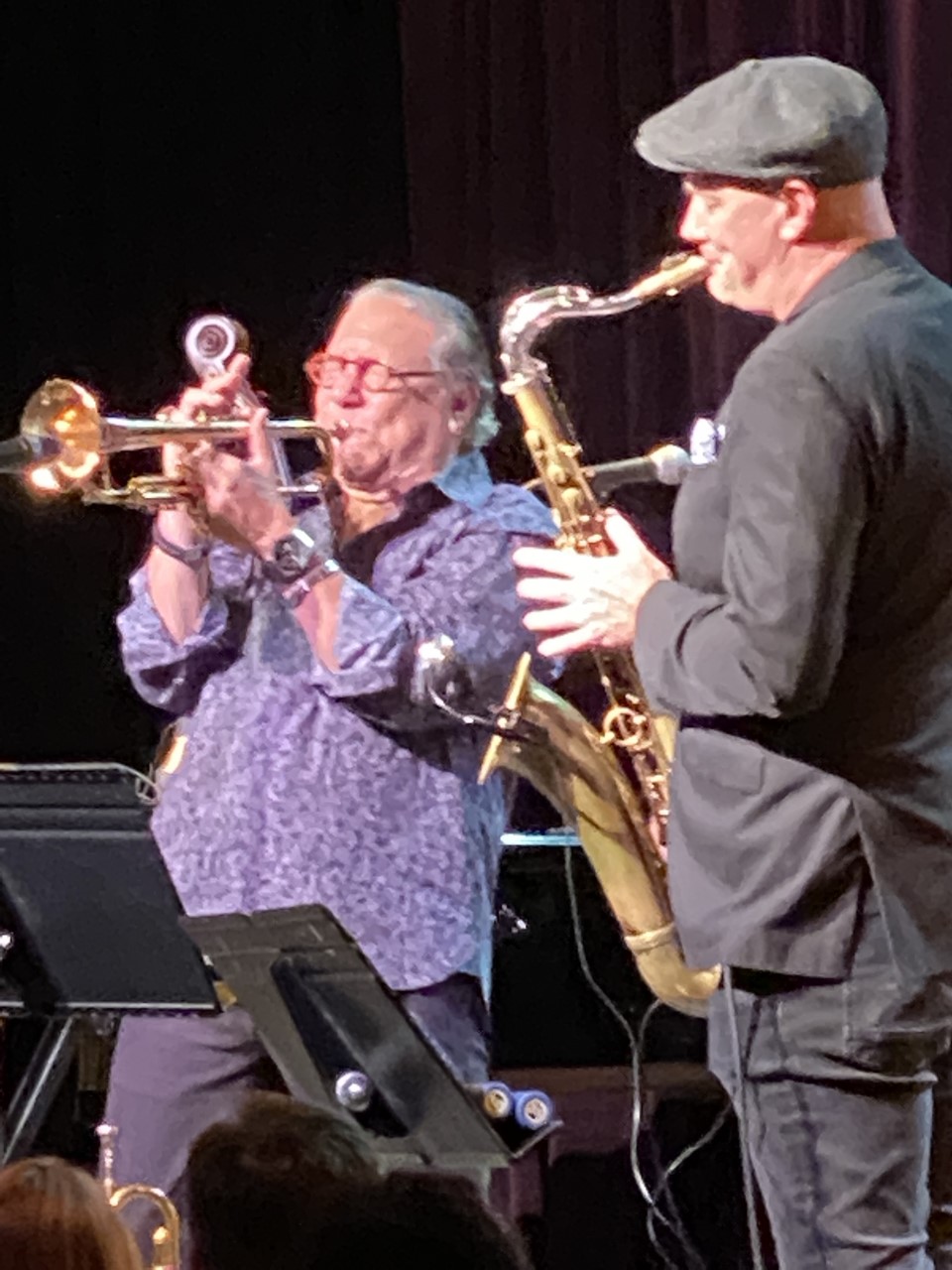
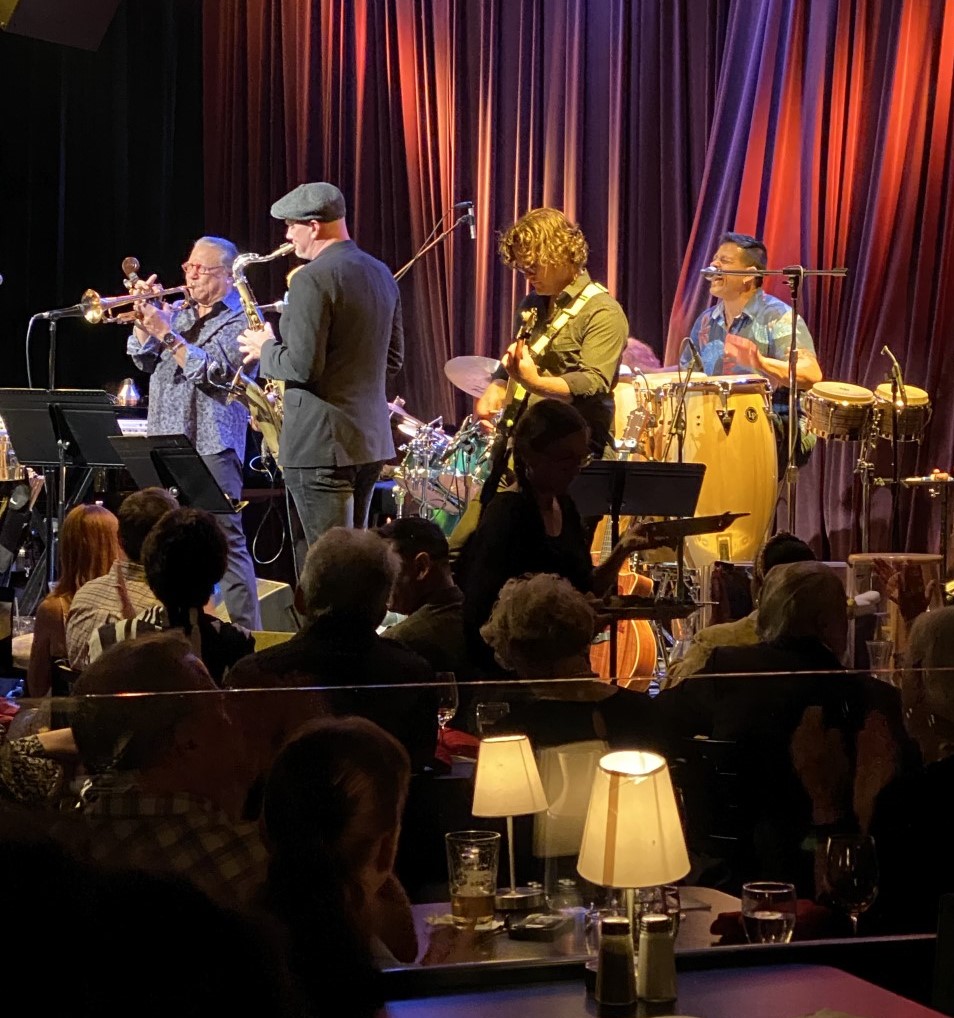
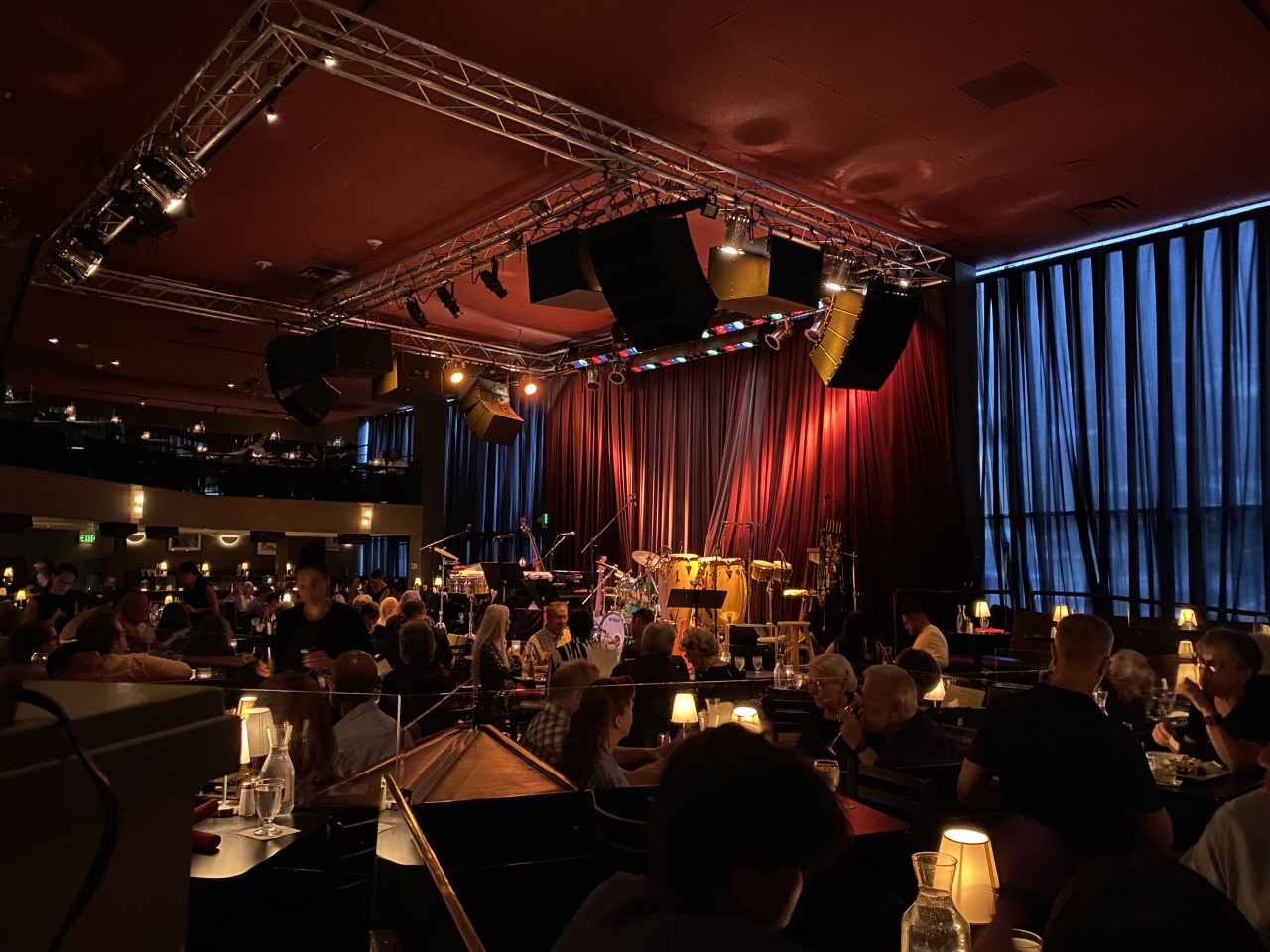
Trumpet superstar Arturo Sandoval came to town, so my wife and I went to hear him play at Dimitriou’s Jazz Alley in Seattle on 22 July. He was there Thursday through Sunday nights, playing one set on the first night and two on the others. We had dinner and enjoyed the show. I confess—I’ve seen his exercise books in the music stores and heard more about him than actually heard him play, and I was very curious to listen and learn.

The music was highly energetic most of the time, but occasionally, things would slow down, like when he would insert his mute but most notably when he left the stage and wandered through the audience singing, “When I Fall in Love,” made most famous by Nat King Cole.

I had not realized how versatile, multi-talented, and widely accomplished Arturo is. I had thought of him mostly as a screamingly-high trumpeter, amazing improvisor, and fast-riff performer. But that evening, I heard him sing, saw him move, listened to him play drums, piano, and synthesizer. And his band—five guys just like him! The man on the bongos was my favorite. The sax player and guitarist are great technicians, but I’m mostly a brass and piano fan.

Arturo talked about coming to the USA from his native Cuba in his 40s, learning to speak English, and about now finally emerging from Covid isolation back into live performances at his age (72)—how good it feels and how much it means to him to be back in front of people, making music, with his band. And his avid fans adore him. It was great to be there!

Posted in Professional Concerts | Tagged: , , , , , , , , , , | Leave a Comment »

My Student Performs in “Cracking the Jazz Code” Concert in Bellevue

Posted by glennled on July 23, 2019

IMG_0636 (5)

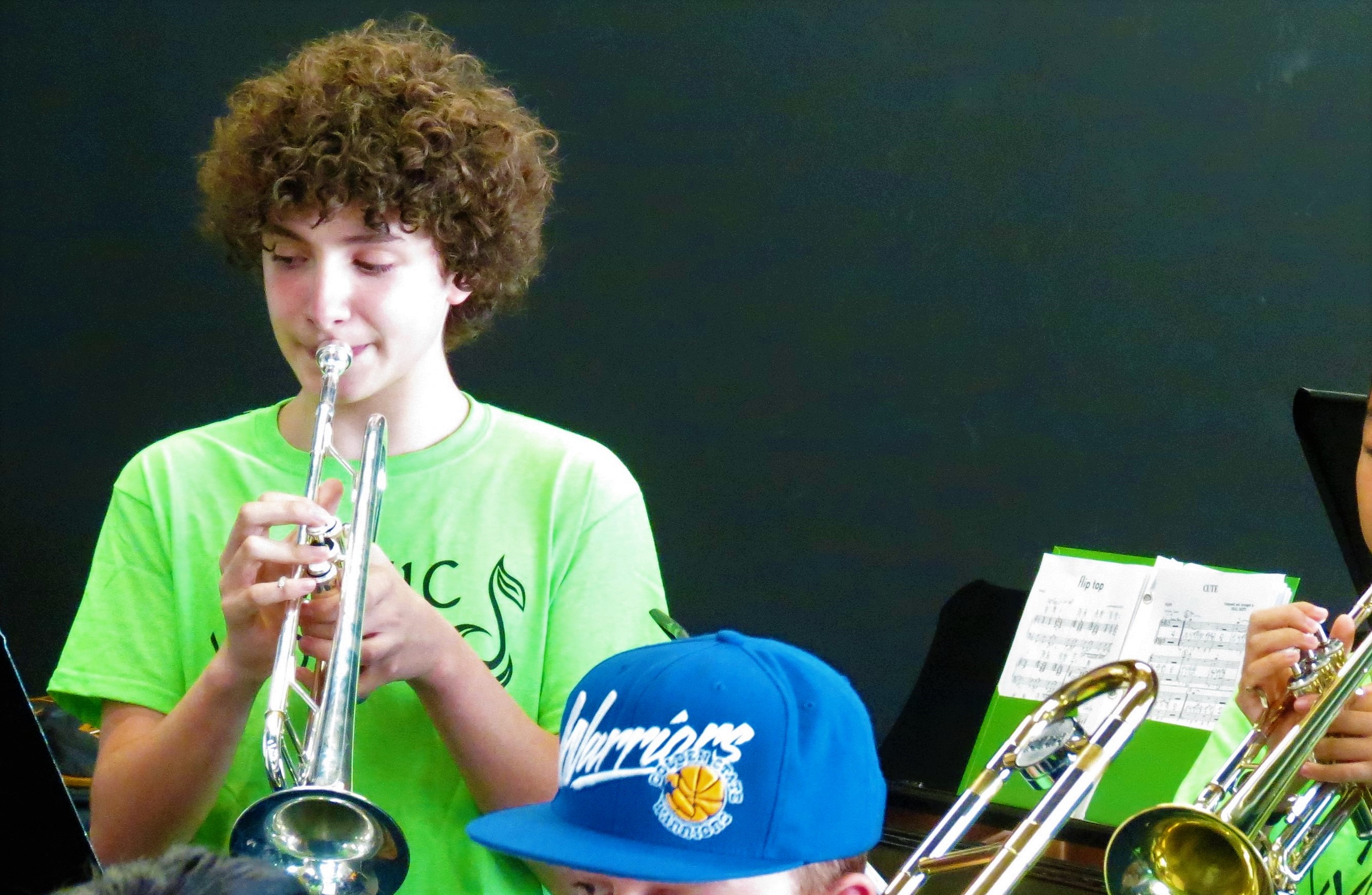
At “Crack the Jazz Code” band camp, Music Works Northwest, Bellevue


My 8th-grade trumpet student from Mercer Island has played in six recitals—one with a piano accompanist—but needed to get some ensemble experience to prepare him for joining a band when he gets to high school. You see, there is no band program at St. Monica’s Catholic School, where he is now a student. So, his parents enrolled him in a one-week jazz band camp held at Music Works Northwest in Bellevue. The camp is for ages 11-15 (middle and high school) at the level of two years of school band or orchestra.

The “Crack the Jazz Code” camp culminated in a concert on Friday afternoon, 19 July. The camp director, Christian Pincock, trombonist, led the 15-member group in a program of six pieces:

  • “Flip Top” by Ted Curson, trumpeter
  • “Cantaloupe Island” by Herbie Hancock, pianist
  • “Cute” by Count Basie, pianist
  • “Comparsa” by Candido Camero, percussionist (bongos and conga drums)
  • “Watermelon Man” by Herbie Hancock, pianist
  • “C-Jam Blues” by Duke Ellington, pianist

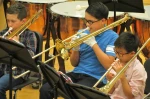
At the concert, the brass section was comprised of 7 trumpeters and two trombonists.

Music Works Northwest offers two dozen summer camps. For more information, please see http://www.musicworksnw.org/ and http://www.christianpincock.net. For previous posts about my trumpet student, please see my blog posts of 10 May 2019, 21 May 2018, and 18 November 2017. This was his first experience playing jazz in an ensemble.

Please click on any photo to enlarge it.

Posted in Seminars, Lectures & Workshops | Tagged: , , , , , , , , , , , , | 4 Comments »

Fifth Grade Band Performs Third and Final Concert at Skyview Middle School in Bothell

Posted by glennled on June 23, 2019

IMG_0437

5th Grade Band, Skyview Middle School, 06-05-2019

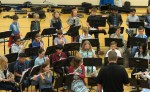
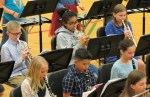
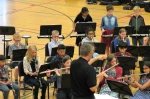
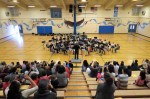
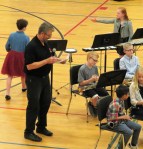
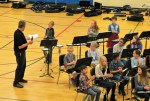
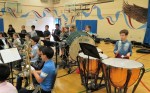
The 44-member fifth grade band performed its third and final concert of the school year under the direction of Dan Carlson on the evening of 5 June at Skyview Middle School in Bothell. The audience of family members, relatives and friends totaled more than 100.

The program was comprised of five pieces:

  • “Frere Jacques” (4-part round)
  • “Major Scale Skill” (Concert Bb Major)
  • “Montego Bay” (Calypso song)
  • “Regal March” (by Bruce Pearson)
  • “Eye of the Tiger” (arr. by Gerald Sebesky)

Mr. Carlson presented awards to 10 students among the three sections: percussion, woodwinds, and brass. The brass section consisted of 9 trumpeters and 7 trombonists. The award categories were Leadership, Most Improved, Most Inspirational, and Most Outstanding.

Please click on any photo to enlarge it.

Posted in School Concerts, Skyview Middle School | Tagged: , , , , , , , , | Leave a Comment »

“Taps” and “The Navy Hymn” for Burials-at-Sea in Puget Sound Off the Ferry, Spokane

Posted by glennled on May 11, 2019


IMG_4040

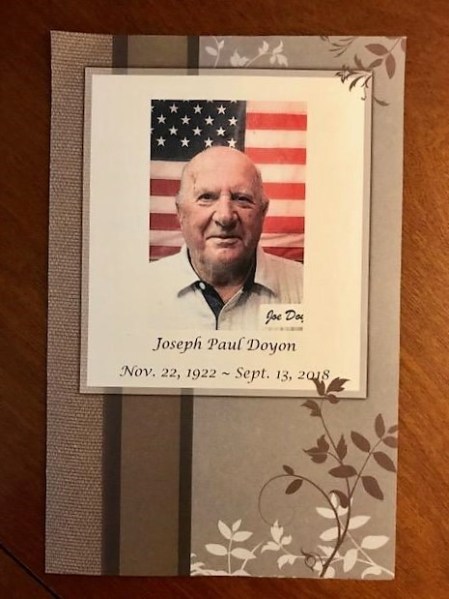
“Let me go”—Joseph P. Doyon, 1922-2018


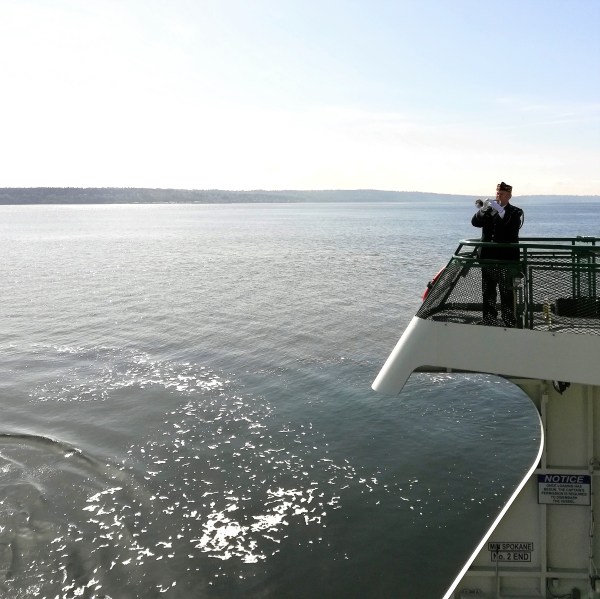
At about 9:50 a.m. on Saturday, 4 May, the Washington State Ferry, Spokane, enroute from Edmonds to Kingston, cut her engines and drifted for about five minutes in the ebb tide of Puget Sound while the ashes of Joseph P. Doyon and his oldest son, Paul, were committed to the sea. Joe died on 13 September 2018, age 95. His last home was in Tigard, Oregon, and his funeral service was held at Finley Sunset Hills Park and Mortuary in Portland on 7 October 2018. Paul died on 9 December 2017, age 62.
dav

Glenn Ledbetter plays “The Navy Hymn” aboard the ferry, Spokane

Joe was a World War II Navy veteran who participated in the D-Day landing at Normandy. I sounded “Taps” on my Getzen bugle, and the ferry captain gave three long blasts of the ship’s whistle in honor of him. As the ferry engines powered up and the ferry came up to speed, I closed the ceremony by playing “The Navy Hymn” on my Getzen trumpet. The family sang two verses:

Eternal Father, strong to save,
Whose arm hath bound the restless wave,
Who bids the mighty ocean deep
Its own appointed limits keep;
Oh, hear us when we cry to Thee,
For those in peril on the sea!

Lord, guard and guide the men who fly
And those who on the ocean ply;
Be with our troops upon the land,
And all who for their country stand:
Be with these guardians day and night
And may their trust be in thy might.

Dale, Joe’s younger son, and his wife, Michelle, arranged this event. Michelle said that Joe loved to fish, golf and dance and was very sociable all his life. She called him a great man with many friends, a very hard worker, and a true gentleman. He spent many years writing the memoirs of his four years in the Navy and his WWII experiences. Dale intends to publish them soon. Michelle said that had Joe attended his own burial-at-sea ceremony, he would have said, “This is Marvelous!”

IMG_1473 - Joe Doyon (center with pistol in hand) - note caption (2)

Joe Doyon is standing (center) with pistol in hand during the Normandy invasion, 6 June 1944. The caption reads, “German prisoners were carried back to the west bank of the Rhine in landing boats. Prisoners on the boat fish some comrades out of the drink.”

IMG_2273 - Joe Doyon

Joseph Paul Doyon, 1922-2018, U.S. Navy veteran, WWII

Fourteen family members attended; one daughter, JoAnn Watson, traveled from Arizona. Among others taking photos was a step-grandson, Matthew, an Eagle Scout and a trumpeter.

Joe was born in Augusta, Maine in 1922, and served in the Navy from 1943-1946. He became a Motor Machinist Mate Second Class. At age 21, he was aboard one of the first amphibious landing boats at Normandy on D-Day, 6 June 1944. Joe was awarded many medals (see photo). He was a member of the U.S. LST Association (see https://www.uslst.org/). He lived in Edmonds, Washington for about 45 years and had a 41-year career at University Swaging, shaping and joining metals for its clients. In 1987, he retired as Vice President and Manager of the Boat Division. He also lived for several years on a houseboat on Lake Union. Joe and Paul often fished in Appletree Cove and off Apple Cove Point near Kingston. It was Joe’s favorite spot. Paul’s death was devastating to his father. Joe had six children (two boys and four girls), four step-children, 12 grandchildren, and 12 great-grandchildren.

Burial-at-Sea Memorial Services

If approved by the Washington State Ferry Service, burial-at-sea memorial services are free but subject to the ferry captain’s final discretion due to weather or unforeseen operational issues. Cancelled services may be moved to another vessel or rescheduled. Advanced reservations are required, and memorials are permitted on six routes only: IMG_2884 (2)

  • Seattle/Bremerton
  • Seattle/Bainbridge
  • Edmonds/Kingston
  • Mukilteo/Clinton
  • Anacortes/Friday Harbor/Orcas
  • Port Townsend/Coupeville

Permissible times are during non-peak hours only:

  • Monday – Friday, 10 a.m. to 1 p.m.
  • Saturday/Sunday, prior to 10 a.m.

Ashes must be contained in so-called “journey urns” which dissolve quickly after being dropped in the water.

Reflections

Memorial ceremonies call us, compel us, to reflect upon our own mortality. Each person who participated in or witnessed the Doyon burial-at-sea had his/her own memories and thoughts about the deceased father and son, life, and death. I did not know the Doyons, but here are my personal thoughts, brought up from the deep to the surface of me by this burial-at-sea.

First, Joe’s military service. I am immensely grateful to Joe and his generation. Without their values and fortitude, we Americas probably would now be speaking German or Japanese. Joe was a veteran who served with honor and survived D-Day. And as Jose N. Harris wrote, “A Veteran is someone, who at one point in their life, wrote a blank check payable to the United States of America for an amount up to, and including, their life.” And as Jesus said, “Greater love hath no man than this, that a man lay down his life for his friends.” And as Raelynn Ricarte of Hood River, Oregon, who lost her son, a Marine Corps Captain, says, “Be an American worth dying for.” The Doyon family lost such a man—Joe. I bugle for such men and women. IMG_4135
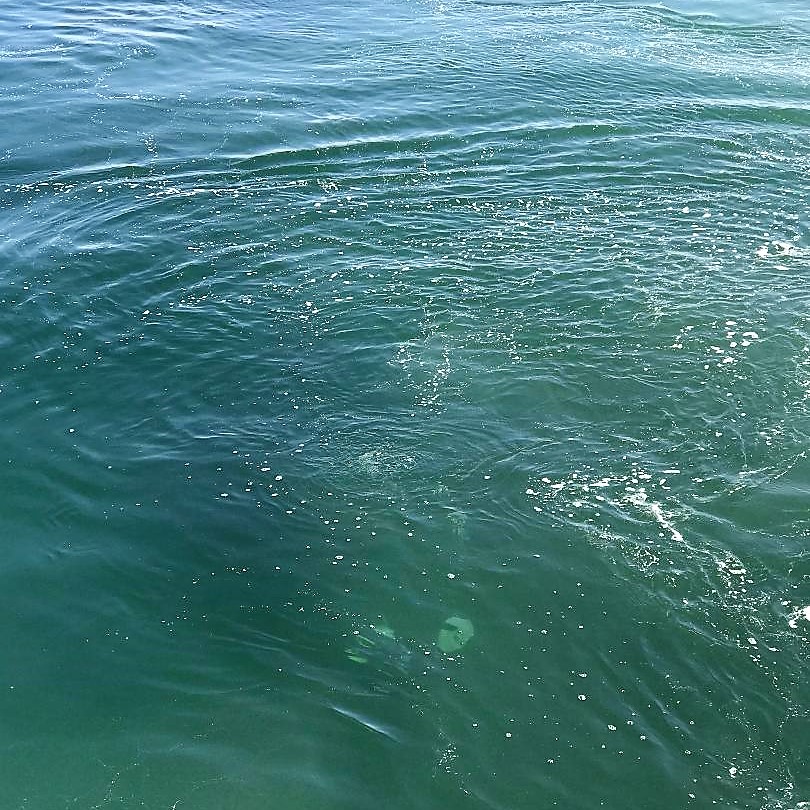
Second, Joe’s disappearance. Through cremation, the major parts of the bodies of Joe and Paul were combusted, vaporized, and oxidized. Their ashes (mostly pulverized bone fragments) have now been separated, mixed and scattered in 3-D salt water. Their particles may someday settle to the sea bottom, or circulate in the North Pacific gyre, or be taken up into the atmosphere and fall again in the rain on a distant continent or ocean, circulating here and there around the globe throughout the ages. At various times in various places, their particles probably will be chemically broken down into their inherent molecules and even reformed into other compounds. By choice, Joe’s and Paul’s bodies are no more, vanished without trace, except in memories and images. “Let me go” was Joe’s last message, expressed in the program at his funeral service in Portland last fall. Last Saturday, his and Paul’s ashes blended with nature.

IMG_0923[1]

Dale and Michelle Doyon hold Dale’s father’s ashes in the biodegradable urn as the ferry, Spokane, approaches the Edmonds landing

Third, Joe’s life lessons for me—the afterlife. Job said, “Naked I came from my mother’s womb, and naked shall I return there” (Job 1:21). God said to Adam, “…for dust thou art, and unto dust shalt thou return” (Gen 3:19). But wait—the assemblages of organic matter that were identified as Joe and Paul are disintegrated, lost, gone. And my body, also, will be cremated. But wait again—Joe left his memoirs. Was he a believer? I don’t know. But it’s clear that Joe pondered such things in his heart. There is a saying, “There are no atheists in foxholes.” In other words (according to the saying), when under extreme stress, all people believe in, hope for, even call upon and appeal to a higher power. Joe certainly had been in the line of fire. How did it form him or change him, spiritually? Perhaps his memoirs will tell us.

But wait yet again—Joe is gone. I will follow, but for now, I’m still here, still vertical, still thinking, feeling, and kicking, “Stayin’ Alive, Stayin’ Alive,” as the Bee Gees sing. Is death the end of me? C.S. Lewis said, “You don’t have a soul. You are a soul. You have a body.” Ah! Despite cremation and even burial-at-sea, our distinct, individual identities, our being, are preserved.

Change is the only constant in life, said Heraclitus, a Greek philosopher. “To every thing there is a season, and a time for every purpose under the heaven” (Ecclesiastes 3:1). And Lord Alfred Tennyson writes in his poem, The Brook, about how the water keeps on flowing after we are gone. The brook is the narrator:

I chatter, chatter, as I flow
To join the brimming river,
For men may come and men may go,
But I go on forever.

“Change…a season…a time…heaven…forever…” The tide comes in and goes out. Day changes to night, and winter passes into spring. Years turn into eons. Millions multiply into billions, and so on. We die, and life goes on without us. But no, ultimately, the brook also will not survive. Scientists say that Earth itself will be consumed by the expanding Sun. The Sun, too, will die. The whole Milky Way Galaxy will be swallowed by a Black Hole. Everything—an atom, a toothpick, an aircraft carrier, a solar system, a galaxy—has a life cycle. Perhaps even a Black Hole. Perhaps even our entire universe. But, by definition, not Heaven. There dwells the Absolute, the Infinite, the great I AM, in Eternity. Endless time. No more cycles. Everlasting life in love, peace and joy. Justice—the triumph of Good. The promised ideal, made possible only by Grace.

In Mere Christianity, C.S. Lewis said, “I am trying here to prevent anyone saying the really foolish thing that people often say about Him: I’m ready to accept Jesus as a great moral teacher, but I don’t accept his claim to be God. That is the one thing we must not say. A man who was merely a man and said the sort of things Jesus said would not be a great moral teacher. He would either be a lunatic—on the level with the man who says he is a poached egg—or else he would be the Devil of Hell. You must make your choice. Either this man was, and is, the Son of God, or else a madman or something worse. You can shut him up for a fool, you can spit at him and kill him as a demon or you can fall at his feet and call him Lord and God, but let us not come with any patronizing nonsense about his being a great human teacher. He has not left that open to us. He did not intend to.”

In his song, “Gotta Serve Somebody,” Bob Dylan sings:

ce2c2640992bb117c2677db77efb7cd5--fashion-sketches-sketch-inspiration[1]

“Laughing Jesus” by Segura

“You may be an ambassador to England or France
You may like to gamble, you might like to dance
You may be the heavyweight champion of the world
You may be a socialite with a long string of pearls…

“You may call me Terry, you may call me Timmy
You may call me Bobby, you may call me Zimmy
You may call me R.J., you may call me Ray
You may call me anything but no matter what you say

“You’re gonna have to serve somebody, yes
Indeed you’re gonna have to serve somebody
Well, it may be the devil or it may be the Lord
But you’re gonna have to serve somebody”

The fool says in his heart, “There is no God” (Psalms 53:1). Jesus saith unto him, I am the way, the truth, and the life: no man cometh unto the Father, but by me (John 14:6). No man can come to me, except the Father which hath sent me draw him: and I will raise him up at the last day (John 6:44). In my Father’s house are many mansions: if it were not so, I would have told you. I go to prepare a place for you. And if I go and prepare a place for you, I will come again, and receive you unto myself; that where I am, there ye may be also (John 14:2-3). Let not your heart be troubled, neither let it be afraid (John 14:27). Then he [one of the two criminals who were crucified with Jesus] said, “Jesus, remember me when you come into your kingdom.” He replied, “Truly I tell you, today you will be with me in Paradise” (Luke 23:42-43). In a moment, in the twinkling of an eye, at the last trump: for the trumpet shall sound, and the dead shall be raised incorruptible, and we shall be changed…O death, where is thy sting? O grave, where is thy victory? (I Corinthians 15:52,55).

Photos are courtesy of the Doyon family. Please click on any photo below to enlarge it.

Posted in Ceremonies & Celebrations | Tagged: , , , , , , , | 10 Comments »

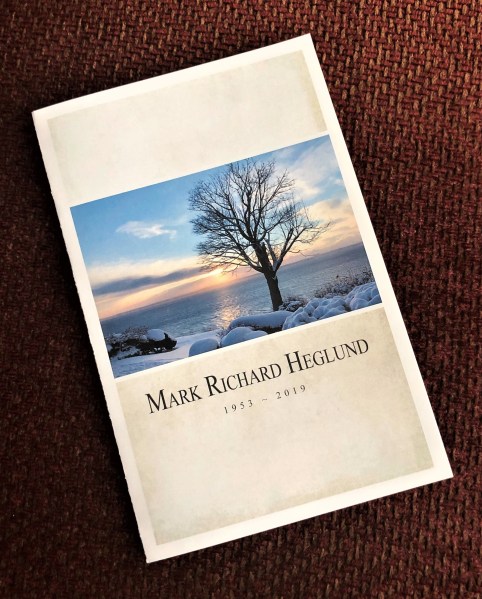
Five Trumpet Pieces for the Mark R. Heglund (65) Funeral at Evergreen-Washelli in Seattle

Posted by glennled on March 2, 2019

Last week, the weather forecast for Thursday, 28 February, was for snow. Oh, no! I was booked to play three pieces at the funeral service of Mark Richard Heglund (65) at Evergreen-Washelli Funeral Home and Cemetery in north Seattle. One piece would be inside the chapel, and the other two would be outdoors. Thankfully, it turned out to be a sunny-bright day with a clear, deep-blue sky and a cool, calm 45 degrees. Perfect! IMG_2782

The program called for a trio to present “Pie Jesu” by Andrew Lloyd Webber—Laurie Geyer (soprano soloist), accompanied by Laurie McFarland (pianist) and me on my Getzen trumpet (see my blog post of 14 December 2015). Laurie sang in Latin, and the title, Pie Jesu (Pious Jesus) is usually translated, “O Sweet Jesus.” Here, He is asked for forgiveness, mercy, peace and rest.

Mark’s surviving sister, Helene (Heglund) Reed, chose the music. I was referred to her by the very professional funeral director, Ryan Rasmussen. She gave a moving eulogy for her older brother and presented a lovely video about him and their family. He was born on 15 May 1953 and died on 11 February 2019, after suffering during his last years from cancer and pneumonia. He was a successful commercial real estate agent, investor, developer, and landlord. He loved basketball, Seattle Supersonics, Golden State Warriors, demolition, Chinook’s Restaurant, University Presbyterian Church, family, friends, people, jokes, road trips, art history, antiques, trumpet, Herb Alpert, and Jesus. Mark was a gifted musician, playing drums and trumpet in the school band. In Boy Scouts, he loved “Reveille” and “Taps” and earned the “esteemed Eagle Scout rank.” A good man who lived a good life. While I’m no Herb Alpert, I am grateful to have been chosen to play Mark’s favorite instrument at his memorial service.

When the service ended and the pallbearers carried the casket to the coach waiting outside the chapel, I played “Amazing Grace.” At the grave site, I played the bugle call, “Funeral March,” as the pallbearers carried the casket to the grave. There, Laurie (Mark’s cousin), sang “The Lord’s Prayer.” At the close of the service, I played “Il Silenzio” (The Silence), a song written in 1965 by Italian trumpeter, Nini Rosso, which became a worldwide hit and is now a standard.

Finally, as the casket was lowered into the grave, I played “O Come, O Come, Emmanuel.” One of the verses has been translated from the Latin thus:

O come, O Branch of Jesse’s tree,
free them from Satan’s tyranny
that trust thy mighty power to save,
and give them victory o’er the grave.

Rejoice! Rejoice! Emmanuel
shall come to you, O Israel.

Here are links to some worldwide favorite renditions of “Pie Jesu” and “Il Silenzio”:

Pie Jesu https://www.youtube.com/watch?time_continue=4&v=K6RSB39DMfM

Il Silenzio:   https://www.youtube.com/watch?v=CmK-uaYFBJc


Posted in Uncategorized | Tagged: , , , , , , , , , , , | Leave a Comment »

My 44th Trumpet Student Came and Went

Posted by glennled on December 25, 2018

dc8Mgnjgi[1]My first weekly trumpet lesson with my 44th trumpet student was on 4 December. Two weeks later, he dropped. But no worries—all is not lost. He’s also taking piano lessons (and has for the past two years), but taking lessons on both instruments is just more than he and his family want to handle at his young age (10). Besides, his sister is taking piano and guitar, too, so there’s a lot of music being played in their home.

He’s a 4th grader at Wedgewood Elementary School in Seattle. At our first lesson, I asked him what attracted him to trumpet. “It’s size and weight,” he answered. He walks to and from school daily, and he simply did not want to carry something like a cello. When we started, he already had Bruce Pearson’s Standard of Excellence, Book 1, Trumpet, so we began with that, learning how to make notes on a brass instrument. During our last lesson, I gave him the music for the first four bars of “Happy Birthday,” which he managed quite well.

We parted amicably, and I encouraged him and his mother, saying that he can still become a good trumpet player if he wants to take band in the 5th grade. In my experience, it’s very rare that a fourth-grade trumpeter will stay with private lessons. They burn out. They simply need to grow and develop just one more year, and then most of them will make it. There are many good reasons why almost all elementary schools start band classes in the fifth grade. The kids are bigger and stronger, their hands have grown, and they have more maturity, discipline, and motivation. My 44th student pleasantly accepted this, and indeed, he may join band class next year. He certainly has had a good head start. Good luck, warm regards, so long for now, Merry Christmas and Happy New Year!


Posted in New Students - Intro Posts | Tagged: , , , , , , , , , , | Leave a Comment »